Cleansing Balms and Oils: Emulsifying, Rinsing and Product Residue
Use cleansing balms and oils as intended by checking dry or wet application, emulsifying, rinsing and residue without prolonged rubbing.
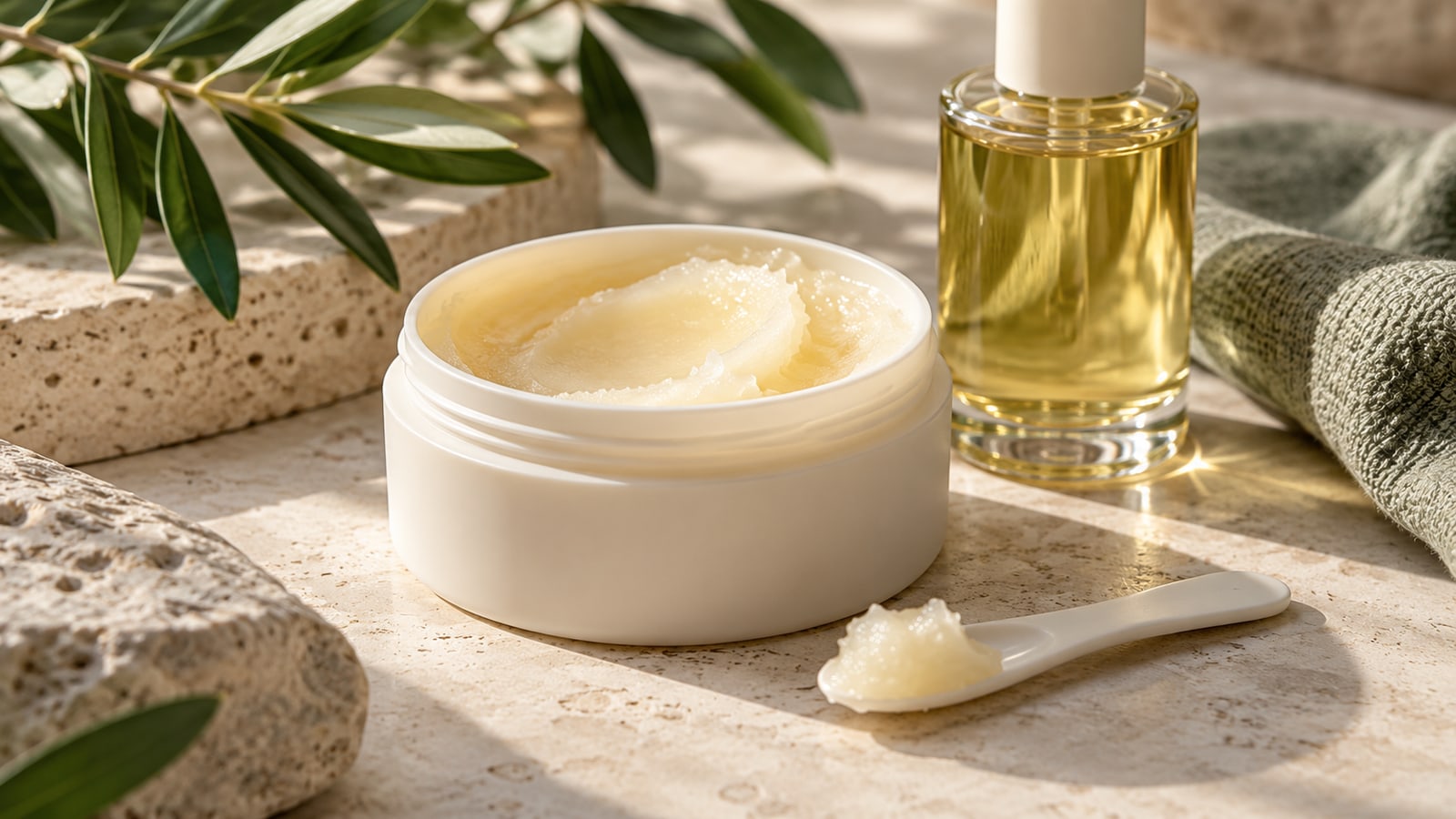
A cleansing balm may begin as a solid texture, melt as you use it and become milky when water is added. A cleansing oil may start as a liquid. The important practical question is how the particular formula is intended to lift make-up and then leave the skin.
Using more pressure or adding an automatic second cleanser is not always the answer to residue. Start with the directions, the amount used and the removal method. This guide explains the role of emulsifying and how to troubleshoot without scrubbing.
Key takeaways
- A formulated cleansing oil is different from a plain facial oil.
- Some products begin on dry skin; others have different instructions.
- Emulsifying helps oily material disperse during removal.
- Rinse or remove the product as its label directs.
- Comfortable skin matters more than a squeaky finish.
On this page
- Distinguish a cleanser from an oil you leave on
- Check whether to start with dry or wet skin
- What emulsifying means in this context
- Give rinsing the attention it needs
- Separate a soft feel from unwanted residue
- Read, loosen, disperse, remove
- Do not turn massage into extraction
- Protect the product and your skin
- Common questions
- Sources and further reading
Distinguish a cleanser from an oil you leave on
A cleansing oil is formulated for cleansing and removal. A plain oil intended to remain on the skin may not disperse or rinse in the same way. Similar appearance or a shared ingredient does not make them interchangeable.
DermNet explains that surfactants help remove oil-soluble material and affect the feel and rinsing behaviour of a cleanser. The combination of ingredients matters, rather than the presence of one fashionable oil alone.
Our guide to facial oils and moisturisers explains those separate roles. Do not assume a leave-on product can replace a formulated make-up remover simply because both feel oily.
Check whether to start with dry or wet skin
Read the directions before adding water. Some balms are intended to be warmed between clean hands and applied to a dry face; other products have different methods. The correct sequence is the one specified for the product you have.
For example, The Ordinary’s published directions for Squalane Cleanser describe starting with dry skin, warming the product in the hands and rinsing afterwards. This is a product-specific example, not an endorsement or a rule for every balm.
If a familiar product is reformulated, check the instructions again. Packaging, texture and application may change. Keeping an old routine without reading the new pack can make an otherwise suitable product harder to use.
What emulsifying means in this context
In simple terms, emulsifying helps oily material mix into a form that can be removed with water. A review of cutaneous cleansers describes this role in lifting oil and other material from the skin surface.
Some oil or balm cleansers turn visibly milky as water is introduced. Follow the directions for that step and continue removal as instructed. The colour change is part of how some formulations behave; it is not a measurement of how much dirt was on your face.
Not every cleanser produces the same visual effect. A product that stays relatively clear is not automatically defective, and a dramatic milky appearance does not prove that it cleans better than another suitable formula.
| What happens | What to check | What to avoid |
|---|---|---|
| Make-up is difficult to lift | Dry or wet starting instructions and intended use | Increasing pressure immediately |
| A heavy film remains | Amount, emulsifying and removal directions | Assuming every residue needs a scrub |
| Eye discomfort | Whether the product is intended for that area | Repeated rubbing of the eyelids |
| Skin feels sore afterwards | The whole routine and possible irritation | Adding stronger cleansers to chase a squeaky finish |
Give rinsing the attention it needs
Use the water temperature and removal method recommended for the formula. The American Academy of Dermatology’s general face-washing advice favours lukewarm water, a gentle touch and avoiding scrubbing.
Notice easily missed areas such as the hairline and sides of the nose, without rubbing them aggressively. If the label calls for rinsing, do not leave a thick layer behind because the ingredients also appear in moisturisers.
If a cloth is part of the intended method, keep it clean and use it gently. A rough cloth or prolonged rubbing introduces another variable when you are trying to understand why the skin feels irritated.
Separate a soft feel from unwanted residue
Skin does not need to feel stripped or squeaky after cleansing. At the same time, a heavy or uncomfortable film may mean that the method or product is not working well for you. Describe the actual sensation rather than assuming all softness is leftover dirt.
Check one factor at a time: whether you used the intended amount, whether you added water at the correct stage and whether you removed the product thoroughly. If the experience remains unpleasant, another cleansing format may be a simpler choice.
Our guide to double cleansing discusses a separate decision about a second step. Adding another product should solve a specific need rather than compensate indefinitely for a first cleanser you dislike.
Read, loosen, disperse, remove
- Read: Check starting conditions and areas of use.
- Loosen: Use the product gently as directed.
- Disperse: Add water at the instructed stage if required.
- Remove: Finish the recommended rinse or removal step.
Do not turn massage into extraction
There is no need to keep massaging until particles appear or to treat a balm as a way to empty every pore. Long rubbing sessions can make it harder to distinguish product residue from irritated or shedding skin.
If blackheads, acne or persistent bumps are the concern, ask about appropriate assessment and treatment. A cleanser has a role, but an elaborate removal ritual is not a substitute for understanding the condition.
Our guide to adult acne covers that wider discussion. Avoid introducing several strong products simply because an oil cleanser did not change a bump.
Protect the product and your skin
Follow storage and opening-date instructions. Keep jars and tools clean, and do not add water to the container to alter the texture. Use a clean spatula if the product supplies or recommends one.
Check eye-area restrictions and avoid using a product on broken skin unless specifically advised. If it causes a persistent reaction, stop and seek appropriate advice rather than repeatedly testing whether more rinsing will make it tolerable.
A useful cleanser is one you can use comfortably, remove properly and fit into your everyday routine. You do not need a particular texture to make that routine complete.
Common questions
Is plain facial oil the same as cleansing oil?
No. A cleansing formula is designed for removal and may behave differently with water.
Should every balm start on dry skin?
No universal rule applies. Read the specific directions.
What does emulsifying do?
It helps oily material disperse so it can be removed more easily.
Must the cleanser turn white?
No. Visible changes vary by formulation.
Does soft skin mean the cleanser remains?
Not necessarily. Assess actual residue and comfort rather than seeking a stripped feeling.
Must I use a second cleanser?
Not automatically. Consider whether another step serves a real removal need.
Should I massage until particles appear?
No. Prolonged rubbing is not a required cleansing endpoint.
Can I leave a rinse-off balm on overnight?
Follow its intended use; a cleanser is not automatically a leave-on moisturiser.
Sources and further reading
Sources checked 22 October 2026. Manufacturer instructions illustrate formulation-specific use and are not a product endorsement.
Keep exploring
Double Cleansing: When a Second Cleanse May Be Useful
Assess whether a second cleanse adds value to your routine, with practical guidance on resistant make-up, product choice and avoiding over-washing.
Micellar Water: Should You Rinse It Off After Cleansing?
Decide whether to rinse micellar water by checking the product directions, make-up removal needs, residue and skin comfort rather than a universal rule.
A Simple Skincare Routine: The Essentials Before You Add More Products
A practical starting point for cleansing, moisturising and sun protection, with room for your skin’s needs and your budget.
How to Choose a Facial Cleanser for Your Skin’s Needs
Choose a facial cleanser by its purpose, instructions and comfort, with practical checks for labels, budget and your existing skincare.