Sunscreen Under Make-Up: Applying Both Without Relying on SPF Cosmetics
Apply sunscreen beneath make-up with adequate coverage, manageable layering and a practical reapplication plan rather than relying on light SPF cosmetics.
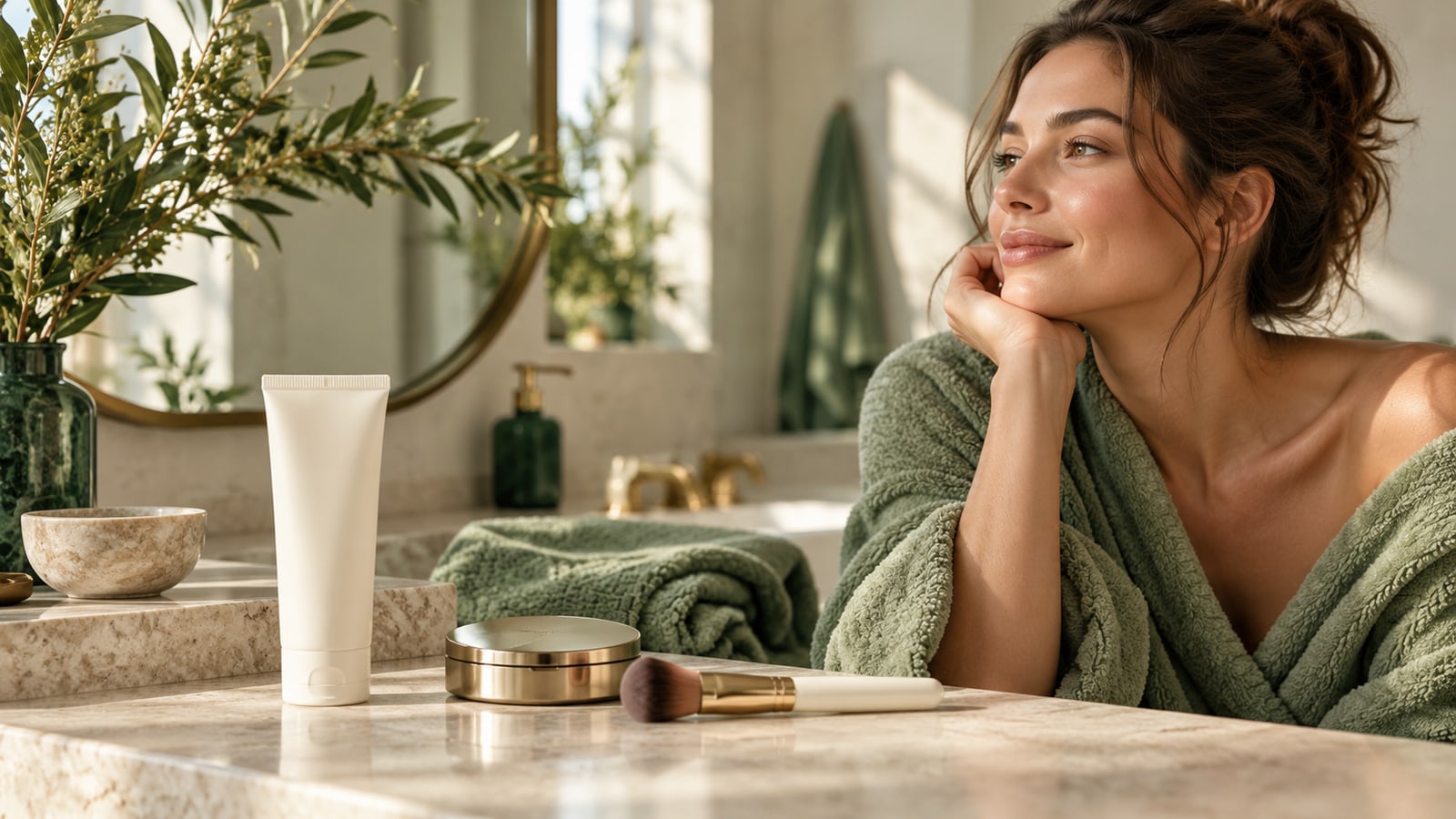
Sunscreen under make-up works best when sun protection is treated as a complete step in its own right. A foundation with an SPF label can be useful, but the small amount applied for a particular finish may not provide the protection shown on the packaging.
The practical challenge is to keep adequate, even sunscreen coverage while achieving a finish you like. That may involve simplifying other products, changing the texture of a sunscreen or planning a convenient way to reapply during time outdoors.
Key takeaways
- Do not rely on a light application of SPF cosmetics as your whole protection plan.
- Apply sunscreen according to its directions before make-up.
- Give the layer time to settle before working over it.
- Preserve the required sunscreen amount when troubleshooting texture.
- Plan reapplication as well as the first application.
On this page
- Start with the protection label
- Why SPF make-up is not a straightforward substitute
- Build a sequence you can repeat
- Let the finish settle without chasing a universal timer
- Protect, settle, finish, refresh
- Deal with pilling without reducing protection
- Make reapplication realistic
- Common questions
- Sources and further reading
Start with the protection label
NHS guidance recommends sunscreen with at least SPF 30 and adequate UVA protection, including a four-star or higher UVA rating. Shade and suitable clothing remain part of sun protection. A pleasing finish is useful only if the product is also suitable for the exposure you expect.
Our guide to sunscreen labels explains the information to check. Look at directions, expiry and any water-resistance claim before considering how the product sits beneath foundation.
Think about the whole area exposed that day. A cosmetic base may cover the centre of your face while leaving ears, the hairline, neck and other exposed areas outside your make-up routine. Include those areas in your protection planning.
Why SPF make-up is not a straightforward substitute
Cleveland Clinic explains that people commonly use less make-up than would be needed to obtain its labelled sun protection. Cosmetic coverage and sunscreen coverage answer different questions: enough foundation to even your complexion is not necessarily enough product for its SPF claim.
This does not make an SPF foundation pointless. It means you should avoid treating a light cosmetic application as proof of adequate protection. A separate sunscreen step makes its directions and intended amount easier to follow deliberately.
For example, someone who uses concealer only around their nose and eyes has made a cosmetic choice about those areas. That choice provides no reason to leave the rest of their exposed face out of a sunscreen routine.
Build a sequence you can repeat
The American Academy of Dermatology places moisturiser or sunscreen before make-up in its general application sequence. Follow the directions for your particular sunscreen and any prescribed treatment; a broad order-of-products chart cannot settle every formulation or medical question.
Keep each product in its intended step rather than inventing a combined mixture in your palm. If you are unsure whether a product is designed to be mixed, ask its manufacturer. A convenient homemade blend has not automatically been tested in the same way as the original sunscreen.
Our product-order guide can help you identify which steps are necessary. You may find that several optional serums and a heavy primer make the routine harder to manage without adding something you actually need.
| Situation | Practical adjustment | Check afterwards |
|---|---|---|
| Foundation drags across wet skincare | Allow the earlier layer to settle | Was the sunscreen applied evenly? |
| Several products roll into particles | Simplify optional layers | Has protective coverage been disturbed? |
| Only a little SPF foundation is wanted | Use a deliberate sunscreen step | Are all exposed areas included? |
| A long afternoon outdoors is planned | Pack sunscreen and arrange touch-up time | Can you reapply adequately? |
Let the finish settle without chasing a universal timer
Cleveland Clinic advises allowing sunscreen to settle before applying make-up. The purpose is to avoid immediately disturbing the fresh layer. Read the product’s own instructions about application before exposure rather than assuming every formula has the same timing.
Try the combination when you are not rushing. Apply the intended amount, observe the finish and then add make-up gently. Record which sunscreen and base you used if you are comparing combinations; changing several products at once makes the result harder to interpret.
A useful routine should fit an ordinary morning. If it requires repeated removal and restarting, consider a simpler combination or another suitable sunscreen instead of making the process more elaborate.
Protect, settle, finish, refresh
- Protect: Apply a suitable sunscreen as directed.
- Settle: Allow the layer to become ready for the next step.
- Finish: Apply the cosmetics you want without excessive rubbing.
- Refresh: Reapply protection when needed during exposure.
Deal with pilling without reducing protection
If products form little rolls, identify when it starts. Does sunscreen pill on its own, only over a serum or only when foundation is added? That observation gives you a more useful starting point than declaring an entire ingredient family incompatible.
Our guide to skincare pilling explains a measured investigation. Avoid solving the visible problem by using far less sunscreen. A smoother appearance should not depend on abandoning its directions.
If substantial product has rolled away or been wiped off, do not assume the remaining finish is adequate. Re-establish appropriate coverage and consider whether that combination is practical for future use.
Make reapplication realistic
NHS advice includes reapplying sunscreen every two hours and after swimming, sweating, towel drying or rubbing it off. A morning application beneath make-up therefore does not settle the whole day outdoors.
Before an outdoor event, decide what you can realistically carry and use. You may prefer lighter make-up, a suitable tinted sunscreen or time to remove and refresh cosmetics. Convenience matters, but a quick dusting or mist should not be assumed to provide full labelled protection without following that product’s application requirements.
Plan shade breaks and suitable clothing too. Reapplication becomes easier when it is part of the outing rather than an unexpected interruption after your original layer has already been disturbed.
Common questions
Does foundation SPF mean I can skip sunscreen?
Not if your cosmetic application is too light or patchy to meet the product’s protection directions.
Should sunscreen go before foundation?
Generally yes; follow the sunscreen instructions and allow it to settle before cosmetics.
Must every routine include primer?
No. It is optional, and removing it may make your chosen combination easier to use.
Can I use less sunscreen to improve the finish?
Preserve the required amount and adjust other layers or the formulation instead.
What if I only wear concealer?
Include all exposed skin in protection planning, not only the areas receiving concealer.
Is a fixed waiting time necessary?
Follow the product directions; there is no universal cosmetic settling interval for every combination.
Can make-up stay perfect through reapplication?
Perhaps not. Choose a workable finish and allow time to refresh it when protection needs renewing.
Should I test a new combination before an event?
Yes, an ordinary day gives you room to assess comfort and application without pressure.
Sources and further reading
Sources checked 22 October 2026. Product directions remain important; cosmetic finish is not used as a measure of SPF.
Keep exploring
Why Skincare Products Pill: Application, Layering and Troubleshooting
Troubleshoot rolling skincare particles by identifying the step, simplifying optional layers and checking application while preserving sunscreen coverage.
Soap Bars and Syndet Bars: Understanding the Formulation Difference
Understand how soap and syndet bars differ, why format and foam do not define gentleness and when dry or eczema-prone skin needs specific washing advice.
Cleansing Balms and Oils: Emulsifying, Rinsing and Product Residue
Use cleansing balms and oils as intended by checking dry or wet application, emulsifying, rinsing and residue without prolonged rubbing.
Double Cleansing: When a Second Cleanse May Be Useful
Assess whether a second cleanse adds value to your routine, with practical guidance on resistant make-up, product choice and avoiding over-washing.