Squalane and Squalene: Understanding the Difference on Product Labels
Compare squalane and squalene, understand stability and safety claims, and check the full product formula and source before adding an oil.
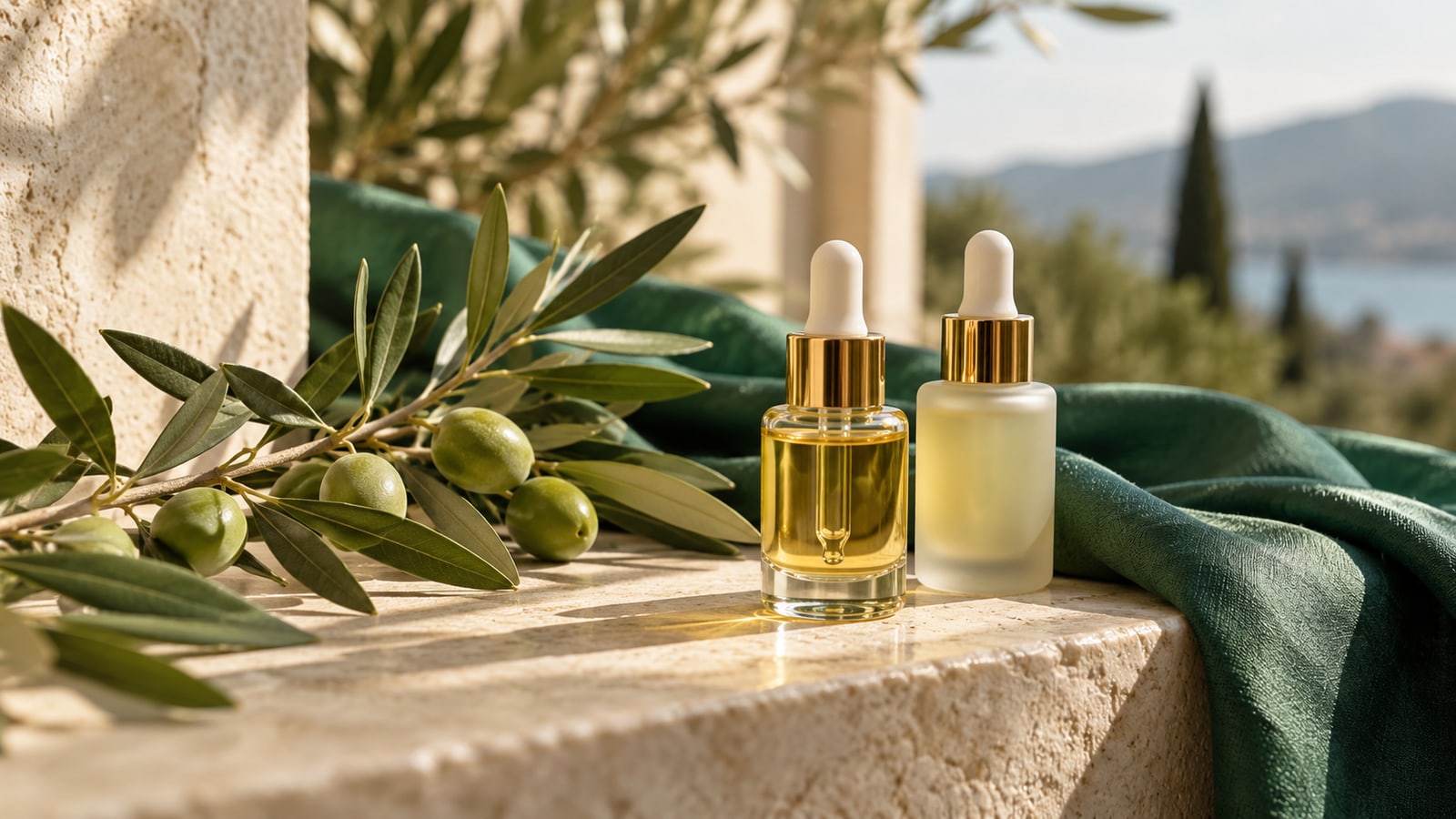
Squalane and squalene differ by one letter, but they are not two spellings of the same ingredient. Both appear in discussions of skin oils and cosmetics, and the similar names can make a product label harder to interpret than it needs to be.
Understanding the difference helps you ask better questions about a formulation. It does not tell you that one bottle will suit everyone, reveal the origin of a raw material or prove a claim about treating a skin condition.
Key takeaways
- Squalane and squalene are related but distinct substances.
- Squalane is the saturated, more oxidation-stable form.
- The ingredient name alone does not establish a product’s sourcing claims.
- Ingredient safety and product effectiveness are different questions.
- Consider the full formula and your existing routine before adding another oil.
On this page
- What does the letter change mean?
- Why they appear in skincare discussions
- Read the full formula
- Ask about origin separately
- Stability does not mean unlimited shelf life
- Consider whether you need an additional product
- Four checks before buying
- Keep reaction claims proportionate
- Common questions
- Sources and further reading
What does the letter change mean?
Squalene has an unsaturated chemical structure. Squalane is a saturated derivative, which makes it more resistant to oxidation. A 2024 review of microbial squalene production describes this distinction and the different routes by which these materials can be produced.
You do not need to memorise a molecular formula to use that information. The practical point is to read the actual ingredient name rather than assuming that a description of one substance applies word for word to the other.
A spelling difference on a retailer page may also be a mistake. If the webpage and the packaging disagree, ask the brand to confirm the current formula before relying on the description.
Why they appear in skincare discussions
The Cosmetic Ingredient Review’s published safety assessments describe the use of squalane and squalene in cosmetics. Its 2023 review reaffirmed the safety conclusion for the practices and concentrations described in the report. This is an assessment of ingredient safety in those uses, not a clinical trial proving that every finished product improves a particular skin condition.
That distinction matters when a marketing page moves from a familiar ingredient name to a broad promise about “repair”, “balance” or “anti-ageing”. Ask what the claim means in measurable terms and whether the evidence concerns the actual product.
A comfortable texture can be a valid reason to like a product. It does not need to be converted into a claim that the ingredient is medically necessary or that your current moisturiser is incomplete without it.
Read the full formula
A bottle sold as a facial oil may contain one ingredient or a blend. A cream containing squalane may also contain water, humectants, emulsifiers, preservatives and other ingredients. The name featured on the front does not describe all of those choices.
Government guidance for consumers in Great Britain identifies the ingredient list among the information to look for on cosmetic packaging. Keep the carton if that is where the list appears, particularly when comparing products or discussing a reaction.
Our guide to facial oils and moisturisers explains why these formats should not automatically be treated as substitutes. Start with the role you need a product to play.
| Label detail | Useful information | Question still open |
|---|---|---|
| Squalane | Identifies the saturated ingredient | How will the whole formula suit me? |
| Squalene | Identifies a different, unsaturated ingredient | What evidence supports this product’s claims? |
| A plant-source statement | Describes the brand’s sourcing claim | Can the brand substantiate that statement? |
| A prominent ingredient on the front | Shows the marketing emphasis | What else is in the formulation? |
Ask about origin separately
The production review describes animal, plant and microbial sources in the wider squalene supply chain. The relationship between source and manufacturing route is more complex than assuming that every bottle with a botanical picture has the same origin.
If animal sourcing is important to your decision, ask for a clear statement about the ingredient used in that particular product. If you want confirmation that the whole product meets a vegan standard, ask about the whole formula rather than only its featured oil.
Likewise, a statement about one raw material does not by itself establish every environmental claim about packaging, manufacturing and distribution. You can ask what a sustainability statement covers without needing to conduct a full supply-chain investigation yourself.
Stability does not mean unlimited shelf life
Greater oxidation stability is a useful chemical distinction, but it should not be turned into a promise that a finished product lasts forever. The formulation, packaging and manufacturer’s storage instructions remain relevant.
Check the date or period-after-opening information provided with the product and keep track of when you first opened it. Avoid inventing a longer usable life because an online article describes one ingredient as stable.
If a product changes unexpectedly or its packaging is damaged, contact the manufacturer for advice. Do not mix old and new bottles together simply to make storage tidier; doing so makes the age and identity of the contents harder to track.
Consider whether you need an additional product
Before adding an oil, describe the problem you are trying to solve. Is the existing routine uncomfortable, inconvenient or simply less exciting than a new product launch? These are different reasons to shop and may call for different responses.
If your skin is comfortable with a straightforward routine, there is no requirement to add squalane or squalene. Our guide to skincare essentials offers a way to review what you already use.
If you decide to try a product, follow its instructions and change one part of the routine at a time where practical. That makes it easier to describe what happened if the experience is uncomfortable or simply not useful.
Four checks before buying
- Name: Read squalane or squalene carefully.
- Formula: Check the entire ingredient list and format.
- Claim: Separate safety, performance and sourcing statements.
- Purpose: Decide what useful role it would have in your routine.
Keep reaction claims proportionate
No short ingredient description can guarantee that every person will enjoy every finished formula. If a product causes persistent discomfort or a rash, stop relying on a “gentle” marketing label and seek appropriate advice.
Bring the full ingredient list and explain where and how the product was used. Do not immediately blame the ingredient highlighted on the front when the formulation contains several other substances.
Our guide to home spot tests and medical patch testing explains why these are different processes. A reassuring small-area trial is not a certificate that future use can never cause a problem.
Common questions
Are squalane and squalene the same ingredient?
No. They are related substances with different chemical structures.
Which is more resistant to oxidation?
Squalane is the saturated, more oxidation-stable derivative.
Does that mean a squalane product never expires?
No. Follow the finished product’s storage and use-life information.
Can the ingredient name confirm its source?
Ask the brand for a specific sourcing statement rather than assuming.
Does a safety assessment prove a moisturising claim?
No. Safety and performance require different evidence.
Is a cream containing squalane identical to a facial oil?
No. The full formula and product format matter.
Must I add it to a routine that already works?
No. It is an optional product choice.
What should I do if a product irritates my skin?
Seek advice for persistent symptoms and keep the full product details available.
Sources and further reading
Sources checked 22 October 2026. Published safety-review and production-review information informed this guide; sourcing and performance claims require product-specific confirmation.
Keep exploring
A Simple Skincare Routine: The Essentials Before You Add More Products
A practical starting point for cleansing, moisturising and sun protection, with room for your skin’s needs and your budget.

How to Choose a Facial Cleanser for Your Skin’s Needs
Choose a facial cleanser by its purpose, instructions and comfort, with practical checks for labels, budget and your existing skincare.
Humectants, Emollients and Occlusives: What a Moisturiser Actually Does
Understand the different jobs moisturiser ingredients perform and how to assess a finished product without buying unnecessary extra steps.
Niacinamide in Skincare: Uses, Evidence and Possible Irritation
Read niacinamide claims in context, understand what small trials studied and assess a finished formula without assuming stronger is better.