Skincare Expiry Dates: Period-After-Opening Symbols and Sensible Storage
Read period-after-opening symbols and durability dates, record when skincare was opened and follow practical storage and handling instructions.
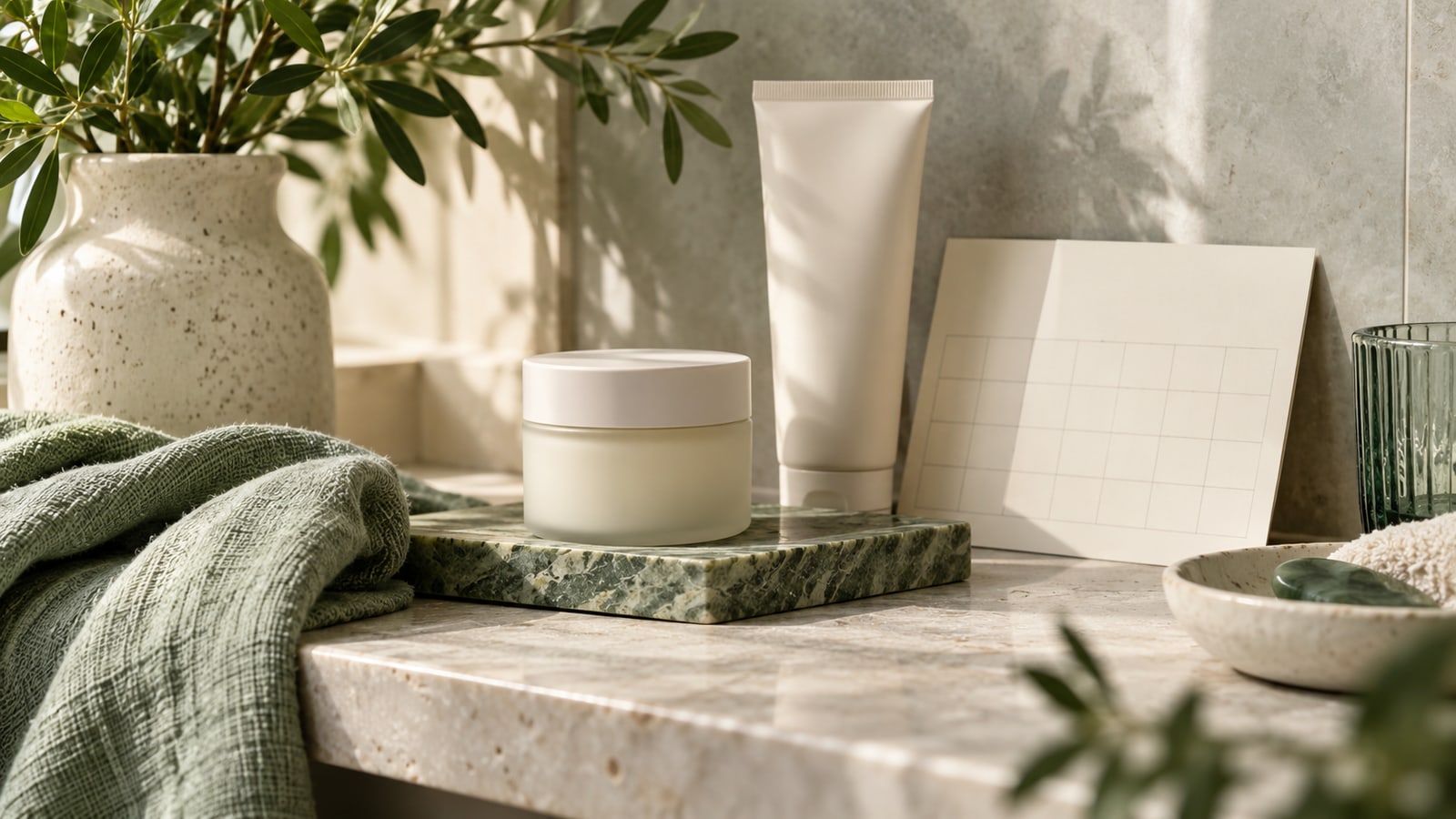
A small open-jar symbol can be easy to overlook until you find a half-used moisturiser at the back of a cupboard. Skincare dates are useful, but only when you know which date you are reading and how the product has been stored.
This guide explains period-after-opening information, practical storage habits and the questions to ask when a label is unclear. There is no single expiry timetable that safely covers every cleanser, cream, sunscreen and treatment.
Key takeaways
- A period-after-opening symbol relates to time since first opening.
- A printed minimum-durability date is a different type of information.
- Follow the specific label and storage instructions.
- Do not add water to revive an old product.
- Appearance and smell alone cannot guarantee safety.
On this page
Start by finding the full label
Look at the container, its base, the outer carton and any enclosed leaflet. A small pack may place important information somewhere other than the front. Photograph the instructions before recycling the box if they are difficult to retain.
Government guidance for cosmetics in Great Britain describes symbols for a best-before date, a period after opening and enclosed information. These symbols serve different purposes. A batch identifier is also useful for contacting the manufacturer, but it is not automatically a consumer expiry date.
Our guide to reading an ingredient list explains another part of the label. Ingredients, directions, warnings and durability information should be read together rather than treating one symbol as the whole safety assessment.
Understand period after opening
An open-jar symbol with a number followed by M indicates a number of months after opening. For example, 12M means twelve months after the product is first opened, subject to its instructions and appropriate handling. It does not mean twelve months from every subsequent use.
Write the opening date on the pack or keep a brief note on your phone. This is especially helpful when you rotate between products or use something seasonally. A receipt can show when you purchased it, but purchase and opening are not necessarily the same event.
If you cannot remember the opening date, do not invent one because plenty remains. Ask the manufacturer if its batch information can help clarify the product’s age and instructions. It may still be impossible to establish the history of an already opened item.
Read a printed date separately
A best-before or minimum-durability date is not interchangeable with the opening date. Some products use one form of durability information and some include more detail. Do not assume that a missing open-jar symbol necessarily means the product can be kept indefinitely.
Where there is both a date and an after-opening instruction, follow both. Opening a product shortly before its printed limit does not create an automatic extra year. If the wording seems contradictory, ask the responsible company rather than relying on an unrelated online shelf-life calculator.
Products used as medicines may have different requirements. Follow the dispensing label and leaflet for a prescribed treatment, and ask a pharmacist about its expiry and storage. A skincare article cannot replace the instructions for a medicine.
| Information | What to do | Common misunderstanding |
|---|---|---|
| Open jar with a period | Record when you first opened it | Counting from the latest use |
| Printed durability date | Follow the stated date and conditions | Assuming opening resets the date |
| Batch number | Keep it for manufacturer enquiries | Treating every code as an expiry date |
| Storage instructions | Choose a suitable location | Assuming every product belongs in a fridge |
Storage changes the context
The US Food and Drug Administration explains that temperature changes, sunlight, air and moisture can affect cosmetics. It also describes how microorganisms can enter through use and how formulations can change over time. These practical observations do not make US labelling law the rule for British products.
Choose a place that follows your product’s instructions. A sunny windowsill, a hot car or a frequently wet shelf may be poor storage even if the unopened carton looked reassuring. Close the lid properly and avoid leaving the pack open while you complete the rest of your routine.
There is no need to buy a dedicated skincare fridge simply to make a shelf look organised. Check whether the manufacturer recommends refrigeration. More cooling is not automatically better, and a storage change should not be used to extend a date yourself.
Keep handling simple and clean
Use clean hands or the applicator intended for the product. Avoid sharing cosmetics and do not introduce water to loosen something that has thickened or dried. The FDA specifically advises against adding water or saliva because this can introduce microorganisms and dilute preservation.
For travel, a manufacturer-supplied small pack can make the original instructions easier to retain. If you transfer a product, label the new container and keep the original information. Do not mix the remainder of an old jar with a fresh purchase just to clear cupboard space.
A smaller collection can make this easier. Our guide to a simple skincare routine helps you decide which items you actually use before buying several overlapping products.
Read, record, store, review
- Read: Find dates, warnings and storage instructions.
- Record: Note the first opening date.
- Store: Keep the pack closed under the stated conditions.
- Review: Check the history before returning an old product to use.
Know what a visual check cannot prove
An unexpected change in colour, texture or smell is a reason to stop and seek product-specific advice or discard the item. However, the absence of a visible change does not certify that an old product is safe. A home smell test cannot measure contamination or remaining protection.
Do not use an expired or poorly stored sunscreen simply because it spreads normally. Follow its label and replace it when necessary. Our guide to sunscreen labels explains why labelled protection depends on more than the number printed on the front.
Make uncertainty cheaper next time
Before buying a large pack, consider how quickly you will realistically use it. A discount on several jars may offer little value if most will remain open and forgotten. Start one replacement when the previous product is finished rather than opening every purchase immediately.
Keep a short list of products that suit you, their opening dates and any relevant reaction. This need not become a spreadsheet or a daily inspection ritual. The aim is simply to make an ordinary decision easier when an unfamiliar jar turns up months later.
Common questions
What does 12M mean?
Twelve months after first opening, alongside the product’s other instructions.
Does each use restart the clock?
No. Record the original opening date.
Is a batch code the expiry date?
Not necessarily. Ask the manufacturer to explain unclear coding.
Can I judge safety by smell?
No. A normal smell cannot establish that an old product remains suitable.
Can I add water to a dried product?
No. This can introduce contamination and change the formulation.
Should all skincare go in the fridge?
No. Follow the specific storage instructions.
Do prescribed creams follow the same rules?
Follow their dispensing labels and medicine leaflets, and ask a pharmacist.
What if I cannot remember opening it?
Do not guess a reassuring date. Seek manufacturer advice and replace uncertain products where necessary.
Sources and further reading
Sources checked 22 October 2026. GB consumer label guidance is distinguished from US information about general product deterioration.
Keep exploring
A Simple Skincare Routine: The Essentials Before You Add More Products
A practical starting point for cleansing, moisturising and sun protection, with room for your skin’s needs and your budget.
How to Choose a Facial Cleanser for Your Skin’s Needs
Choose a facial cleanser by its purpose, instructions and comfort, with practical checks for labels, budget and your existing skincare.
Humectants, Emollients and Occlusives: What a Moisturiser Actually Does
Understand the different jobs moisturiser ingredients perform and how to assess a finished product without buying unnecessary extra steps.
Niacinamide in Skincare: Uses, Evidence and Possible Irritation
Read niacinamide claims in context, understand what small trials studied and assess a finished formula without assuming stronger is better.