Scalp Psoriasis: Symptoms, Treatment Discussions and Hair Care
Understand scalp psoriasis symptoms and discuss treatment that fits your hair, styling routine and practical needs without forceful scale removal.
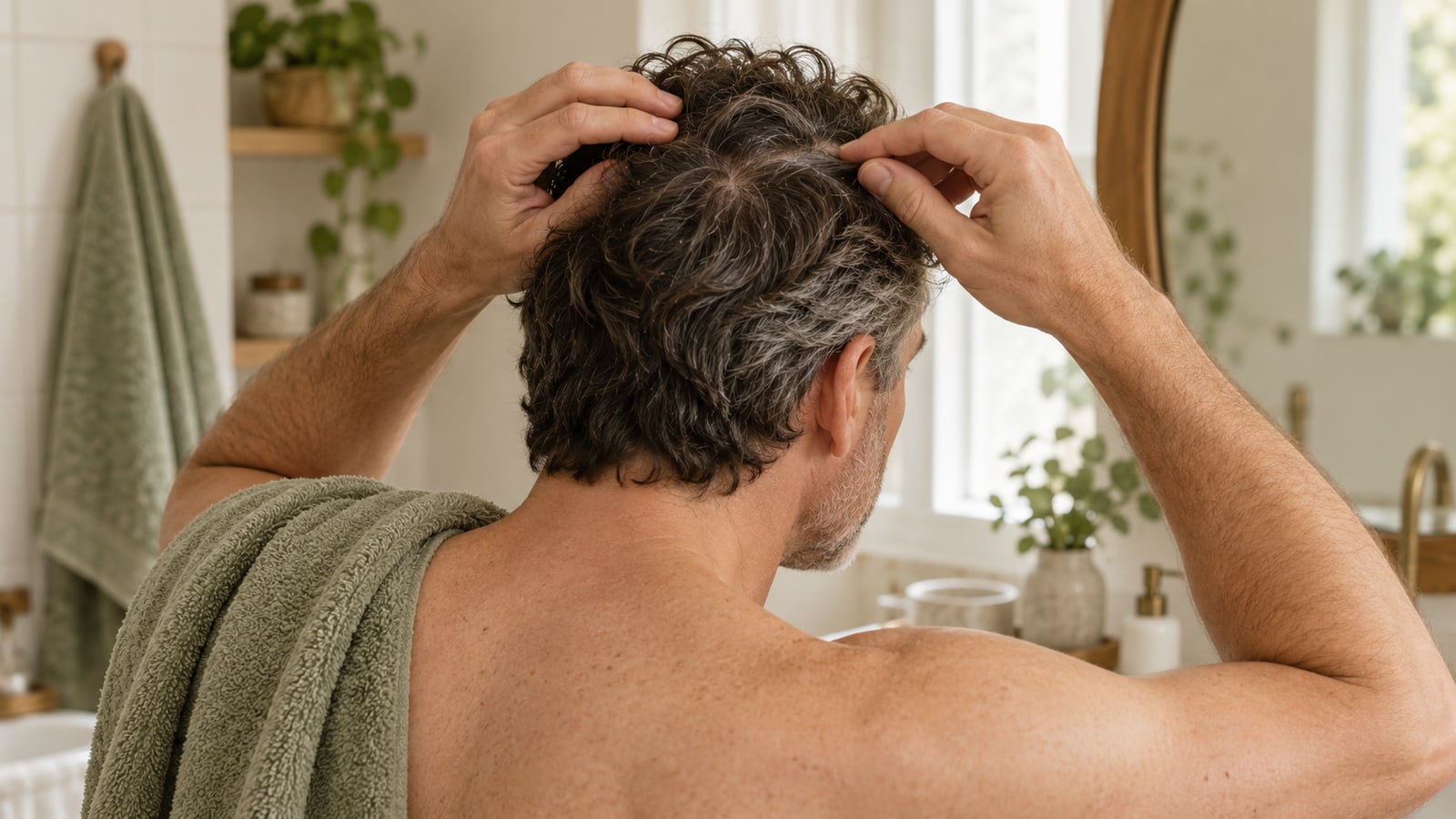
Scalp psoriasis can be difficult to manage because the affected skin is hidden by hair. A product may end up coating the hair rather than reaching the scalp, and a routine that looks straightforward on paper may be awkward around washing, styling or work.
The aim is to understand the condition and obtain a treatment plan you can actually use. This guide covers symptoms to discuss, questions about prescribed products and ways to make everyday hair care gentler. It does not diagnose a flaky scalp from its appearance.
Key takeaways
- Scalp psoriasis can cause scaling, itch, soreness and patches extending beyond the hairline.
- Psoriasis is not contagious or a sign that you have failed to wash properly.
- Treatment needs to reach the affected scalp, with instructions suited to your hair and routine.
- Forcefully picking scale can aggravate the skin and pull out hair.
- Tell a clinician about persistent hair loss, treatment problems or recurring joint symptoms.
On this page
Recognising a pattern worth assessing
The NHS describes psoriasis as a condition involving dry, itchy or painful scaly patches. Its appearance varies with skin tone: patches may appear pink or red on lighter skin and grey or darker on brown or black skin. Nails can also develop changes such as small pits. The condition tends to fluctuate and cannot be caught from another person.
Look beyond the flakes on your shoulders when explaining the problem. Tell your GP where the discomfort is, whether the skin feels thickened, whether it affects sleep and whether there are patches elsewhere. If you have used an anti-dandruff shampoo, bring its name and describe how you used it and what changed.
Our dandruff and dry-scalp guide explains why these descriptions can overlap. Persistent scaling, soreness or hair loss should not be reduced to a guessing game about the colour of a flake.
Why the scalp needs its own practical plan
Guy’s and St Thomas’ NHS Foundation Trust explains that hair can obstruct treatment and trap scale. Scalp psoriasis can extend to the forehead, behind the ears or the back of the neck. Treatment selection should take hair type, styling practices, daily routines and physical limitations into account.
That gives you good reasons to discuss practical barriers. If parting your hair hurts, washing daily is unrealistic or you cannot reach the back of your head, say so. Do not wait until the treatment has been labelled unsuccessful. Ask for a demonstration of where the product should go and how to measure the prescribed amount.
Write separate instructions for the scalp and any nearby facial skin. A product intended for thick scalp skin may not be suitable around the face or ears. It is safer to clarify the boundary than to assume that every visible patch can receive the same preparation.
What a treatment discussion may include
Options described by Guy’s and St Thomas’ include topical steroids, vitamin D preparations, coal tar products and approaches to softening scale. They come in different forms, including lotions, gels, mousses and shampoos. Some combination preparations contain a steroid even when the name does not make that obvious. Ask the pharmacist to identify each product’s purpose and precautions.
| Part of the plan | What to ask | What to write down |
|---|---|---|
| Treating active patches | Where should this go, and where should I avoid it? | The body areas and amount specified for you |
| Softening thick scale | Do I need this step, and how do I do it gently? | The recommended product and sequence |
| Medicated shampoo | How long should this particular product stay on? | Its own contact time and washing frequency |
| Review and maintenance | When should I report lack of improvement or side effects? | A review date and instructions for after the flare |
Do not copy another person’s steroid schedule or use a shampoo’s instructions for a leave-on preparation. If the written plan and package leaflet seem inconsistent, ask the prescriber or pharmacist to resolve it. Bring up pregnancy, plans for pregnancy and breastfeeding before using treatment because suitability can change.
Gentle handling matters more than removing every flake
The American Academy of Dermatology’s scalp self-care guidance advises against scratching, vigorous shampooing and picking scale. A suitable scale-softening treatment can help, but it needs to be used gently. If itching is unbearable, ask for the treatment plan to be reviewed rather than repeatedly scraping the area for relief.
Make the application space convenient: good lighting, the product instructions within reach and a mirror if useful. If someone helps you, explain the directions together before starting. A helper’s role is to make the prescribed routine easier, not to remove stubborn scale by force.
Ask how to reach the affected scalp through your usual hairstyle.
Keep leave-on treatments and wash-off products clearly distinguished.
Tell the clinician about pain, difficult application or a routine you cannot sustain.
Hair styling and concerns about hair loss
The AAD’s hair-styling guidance recommends gentle brushing, avoiding tight hairstyles and keeping heated tools away from the scalp. Colouring, chemical relaxing and similar services can irritate affected skin; it advises avoiding these during a flare and discussing suitability with a dermatologist.
If you have a regular stylist, explain that you have an inflamed scalp and what your clinician has advised. You can ask to postpone a chemical service, reduce pulling or stop if something hurts. There is no need to apologise for adjusting an appointment around a health condition.
AAD’s guidance on hair loss notes that hair often regrows once scalp psoriasis clears, but persistent loss can have another cause. Forceful scale removal can pull hair away. Tell your clinician if shedding continues, if you see distinct thinning areas or if treatment feels too harsh. Do not assume a supplement will explain or solve the problem.
If you are unsure whether you are seeing breakage or shedding, our hair breakage and hair loss guide can help you describe the pattern. Bring that account to the person assessing your scalp rather than changing treatment on the basis of a photograph alone.
What to mention at a review
Bring the actual products, your use instructions and a brief account of what has changed. Separate scalp comfort, visible scale and hair shedding rather than treating them as one result. Explain missed applications without embarrassment; the plan may need to become simpler or easier to apply.
The NHS advises medical review when treatment is not working or causes side effects, and when recurring joint pain, stiffness or swelling accompanies psoriasis. If you become acutely unwell or develop rapidly spreading skin changes, seek urgent medical advice rather than waiting for a routine hair appointment. Ask about emotional impact too: disrupted sleep and embarrassment are relevant to care.
For background on moisturising preparations, see our moisturiser functions guide. Follow scalp-specific directions instead of transferring a facial skincare routine onto inflamed scalp skin.
Common questions
Can someone catch psoriasis from my comb?
Psoriasis is not contagious. Its presence does not mean poor hygiene. Keep ordinary personal-item hygiene, but do not let fear of passing psoriasis to someone else stop you from discussing it openly.
How can I tell whether flakes are psoriasis or dandruff?
You cannot reliably settle that from a flake alone. Describe the scalp symptoms, pattern and response to previous products to a clinician. Our dandruff guide is background information, not a replacement for assessment.
Should I pick off thick scale before treatment?
No forceful picking. Ask whether scale softening is needed and obtain instructions for a gentle approach. Removing every visible flake at one sitting is not a useful target if it injures the skin.
Can I use scalp steroid treatment on my forehead?
Do not assume so. Some scalp preparations, including certain combination products, are unsuitable for facial or nearby delicate skin. Ask for separate directions for each affected area.
Will my hair definitely grow back?
Hair often regrows as scalp inflammation settles, but a guarantee would be misleading. Ongoing or unusual hair loss deserves assessment for additional causes rather than an indefinite wait for the psoriasis to clear.
Do I have to wash my hair every day?
Your washing schedule should fit the specific treatment and your hair needs. Ask the prescriber to explain how the plan works with your normal routine. Do not invent a universal frequency from another product’s directions.
Can I colour or relax my hair during a flare?
AAD advises avoiding these services while scalp psoriasis is flaring. Discuss timing with your clinician and stylist, including any existing irritation and the products involved, before restarting.
What if treatment is too complicated to keep using?
Ask for a review and identify the difficult step: application, smell, greasiness, washing or remembering different days. A specific practical problem is something the clinician can work with; silently abandoning the plan gives them less information.
Sources and further reading
Checked 21 October 2026. This adult guide supports treatment discussions; it does not prescribe a regimen or claim clinical review.
Keep exploring

Anti-Dandruff Shampoo Ingredients: What to Ask a Pharmacist
Ask a pharmacist about dandruff shampoo ingredients, contact time and hair texture, and recognise when persistent scalp symptoms need assessment.

Caring for Curly and Coily Hair While Protecting the Scalp
Build a manageable curly or coily hair routine with gentle detangling, scalp cleansing, lower-tension styling and advice on when to seek assessment.
Clarifying Shampoos: Product Build-Up, Uses and Irritation Risks
Decide whether clarifying shampoo fits your routine, distinguish residue from scalp symptoms and avoid unnecessary cleansing or irritation.
Heat Styling and Hair Damage: A Practical Care Guide
Review heat settings, repeated styling and combined processing, with practical ways to reduce hair damage and recognise concerns needing assessment.