Heat Styling and Hair Damage: A Practical Care Guide
Review heat settings, repeated styling and combined processing, with practical ways to reduce hair damage and recognise concerns needing assessment.
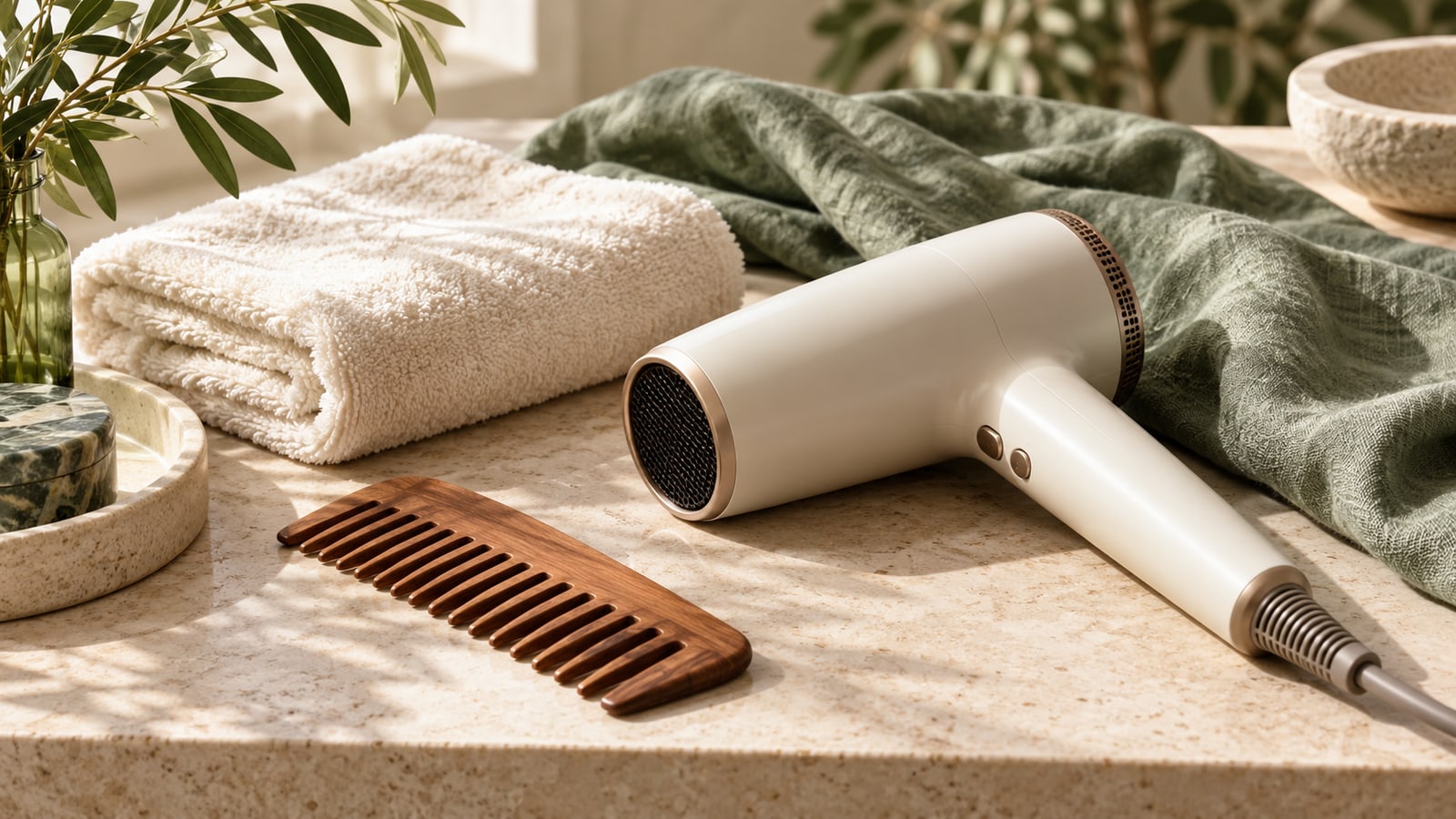
Heat can make hair easier to shape, but repeated exposure can also leave the lengths rough, brittle or prone to breakage. The useful question is not whether one tool is universally good or bad. It is how temperature, contact time, frequency and the condition of your hair combine.
A practical care plan reduces avoidable damage while respecting the styles you prefer. It also recognises when a change may involve the scalp or hair follicles and needs assessment rather than another styling product.
Key takeaways
- Heat exposure is affected by temperature, duration and repetition.
- Lower heat and less frequent use can reduce unnecessary stress on hair.
- Conditioning helps manageability but does not make unlimited heat harmless.
- Chemical processing and tight styling can add to the overall burden.
- New thinning, scalp pain or persistent breakage deserves appropriate advice.
On this page
- Distinguish the hair shaft from the scalp
- Think about the whole exposure
- What laboratory research can tell us
- Prepare the hair without rough handling
- Use products for their actual role
- Account for chemical processing and tension
- Make a realistic lower-heat plan
- Know when to seek assessment
- Judge progress by comfort and reduced damage
- Common questions
- Sources and further reading
Distinguish the hair shaft from the scalp
The visible hair length is different from the living structures that produce it. A change in how the lengths feel does not tell you everything about what is happening at the scalp. Short broken strands and increased shedding can also be difficult to distinguish at home.
Our guide to hair breakage and hair loss explains useful observations to bring to an assessment. Describe what you see rather than deciding that every change must come from heat styling.
If the scalp is sore, a patch is thinning or a hairline is changing, include that information when seeking help. A new conditioner may improve the feel of the lengths without addressing the underlying concern.
Think about the whole exposure
The American Academy of Dermatology advises using lower heat settings, limiting contact with hot tools and using them less often. These measures address different parts of the exposure: how hot the tool is, how long it acts and how frequently the process is repeated.
A single temperature number is not a complete safety rule. Hair that has been chemically processed or already damaged may respond differently from untreated hair. Tool design and technique also matter.
Review an ordinary week rather than only your most elaborate styling day. Blow-drying, straightening and repeated touch-ups can accumulate. Noticing those small sessions can reveal an easier place to reduce heat without changing every part of your routine.
What laboratory research can tell us
A 2011 study tested hair tresses through repeated washing and drying under different conditions. Surface damage increased as drying temperature rose. The study also found differences in deeper structural measures between natural drying and particular dryer conditions.
This is useful evidence that the drying method matters, but it was not a trial following people with different textures, styling histories and scalp conditions. Its exact experimental distances and times should not be treated as a universal home prescription.
The sensible interpretation is to avoid simplistic claims that every form of air-drying is always superior or that a dryer is harmless if held at one exact distance. Use manufacturer instructions and adapt technique with an appropriately experienced professional when necessary.
| Part of the routine | Question to ask | Possible adjustment |
|---|---|---|
| Heat setting | Am I using more heat than needed? | Use a lower suitable setting |
| Repeated passes | Am I reheating the same section? | Reconsider the technique and desired finish |
| Frequency | How often do small touch-ups happen? | Build in days with less heat |
| Other treatments | Is the hair also relaxed, coloured or tightly styled? | Discuss the combined routine |
Prepare the hair without rough handling
The American Academy of Dermatology recommends conditioning after shampooing and avoiding vigorous towel rubbing. Gentle handling matters because a heat-conscious routine can still involve unnecessary pulling or friction.
Detangling technique should account for texture. Tightly curled or coily hair often needs a different approach from straight hair. Our guide to curly and coily hair care discusses conditioning, sections and scalp access.
Organise the routine so that you are not rushing through knots just before using a tool. A manageable appointment or wash-day plan can make careful handling more realistic than simply buying another product.
Use products for their actual role
A conditioner or styling product may improve the feel of the hair or make it easier to manage. That does not establish that the hair can tolerate any temperature or repeated passes indefinitely.
Read the product’s directions and the tool instructions together. If a product is intended for a particular stage of drying or styling, do not assume it can be used interchangeably with another preparation.
Be cautious about claims that an instant cosmetic improvement proves all structural damage has been reversed. A smoother appearance can be useful, but it should not become a reason to continue a routine that is causing breakage.
Account for chemical processing and tension
The British Association of Dermatologists warns that combining practices such as chemical relaxing, heat and tight styling can increase damage. Its Afro-textured hair guidance emphasises reducing the cumulative burden and using experienced professionals for chemical treatment.
Tell the stylist about recent colour, relaxers and other processing, including services carried out elsewhere. If you are unsure what was used, explain that uncertainty rather than guessing.
Our guide to hair dye reactions and testing addresses a separate risk. Heat damage, irritant reactions and allergy are not interchangeable explanations for discomfort after an appointment.
Make a realistic lower-heat plan
Choose one or two changes that fit your life. You might reduce touch-ups, reserve a particular tool for selected occasions or discuss a style that needs less daily heat. The best starting point is the part of the routine you can actually change.
Consider work requirements, exercise, weather and how long the routine takes. A plan that ignores those constraints can become difficult to maintain. An experienced stylist may help find alternatives that suit the appearance you want without repeating the same stress every day.
Do not replace heat with a style that pulls painfully. Different forms of damage can coexist, and reducing one does not justify increasing another. Comfort at the scalp belongs in the plan.
Know when to seek assessment
If changes to the routine do not help, or there is noticeable thinning or a bald patch, seek medical advice. The American Academy of Dermatology recommends assessment when hair-care changes fail to improve the problem, especially when hair loss is a concern.
Bring a brief history: when the change began, where it appears and which treatments or tools have been used. Photos may help describe progression, but you do not need an extensive collection before arranging an appointment.
Significant pain or a burn from a tool is an injury rather than a normal styling effect. Stop the exposure and obtain appropriate medical advice instead of applying more heat or covering the area with another procedure.
Judge progress by comfort and reduced damage
A change in routine may be easier to notice through fewer difficult tangles or less repeated breakage than through a dramatic before-and-after photograph. Keep expectations realistic and ask a professional which signs are useful in your situation.
There is no need to punish yourself for past styling choices. The practical task is to understand the current pattern, reduce avoidable exposure and seek help when the concern may extend beyond the lengths.
Count heat sessions, touch-ups and other processing.
Reduce heat, repetition and rough handling where practical.
Seek help for persistent breakage, pain or hair loss.
Common questions
Is there one safe temperature for everyone’s hair?
No. Hair condition, tool design, duration and technique all matter.
Do brief daily touch-ups count as heat exposure?
Yes. Consider the whole routine, including repeated small sessions.
Does conditioner make unlimited heat safe?
No. Manageability and protection from every possible exposure are different claims.
Is every short strand evidence of heat damage?
No. Breakage and hair-loss concerns may need professional assessment.
Should I tell a stylist about previous chemical processing?
Yes. The full history helps them assess the combined routine.
Is air-drying always better in every circumstance?
Research is more nuanced; technique and the outcome being measured matter.
Can I replace heat with a very tight style?
A painful or high-tension style introduces another risk and is not a good substitute.
When should I ask a clinician for help?
For persistent problems, new thinning, bald patches, scalp symptoms or an injury.
Sources and further reading
Sources checked 22 October 2026. The laboratory study does not establish a universal safe temperature or drying distance. Clinical review is not claimed.
Keep exploring

How Often Should You Wash Your Hair? Scalp Needs and Hair Texture
Choose a hair-washing routine around scalp comfort, texture and product build-up, with guidance on persistent symptoms and medicated shampoos.
Clarifying Shampoos: Product Build-Up, Uses and Irritation Risks
Decide whether clarifying shampoo fits your routine, distinguish residue from scalp symptoms and avoid unnecessary cleansing or irritation.

Anti-Dandruff Shampoo Ingredients: What to Ask a Pharmacist
Ask a pharmacist about dandruff shampoo ingredients, contact time and hair texture, and recognise when persistent scalp symptoms need assessment.
Caring for Curly and Coily Hair While Protecting the Scalp
Build a manageable curly or coily hair routine with gentle detangling, scalp cleansing, lower-tension styling and advice on when to seek assessment.