Micellar Water: Should You Rinse It Off After Cleansing?
Decide whether to rinse micellar water by checking the product directions, make-up removal needs, residue and skin comfort rather than a universal rule.
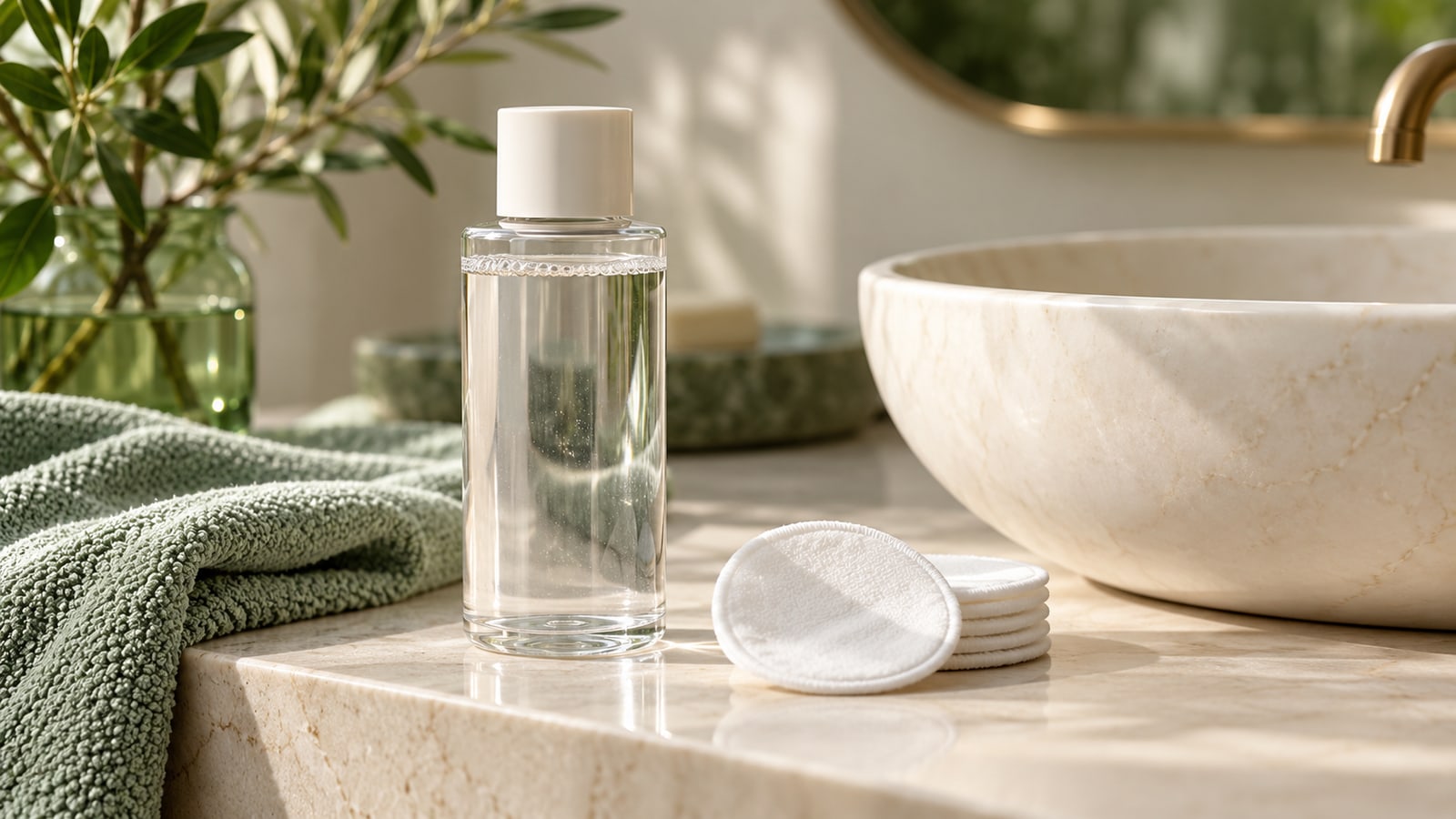
Many micellar waters are designed to be used without rinsing, so leaving one on is not automatically a mistake. The useful answer depends on the particular product, what you are removing and how your skin feels afterwards.
A no-rinse label is not a promise that every formula suits every person or removes every type of make-up. This guide explains how to make a practical rinsing decision without turning a simple cleansing step into an elaborate routine.
Key takeaways
- Micellar water is a cleanser, not plain water.
- Follow the instructions for the specific formulation.
- Many products are intended for no-rinse use.
- Heavy or resistant make-up may need another suitable removal step.
- Persistent stinging is a reason to stop and reassess, not keep wiping.
On this page
- What micellar water does
- Read the directions before choosing a rule
- When leaving it on may be reasonable
- When a rinse or another cleanser may help
- Use a light touch
- Label, task, comfort, adjustment
- Be careful around the eyes
- Do not confuse a rinse with allergy prevention
- Common questions
- Sources and further reading
What micellar water does
Micellar water contains cleansing molecules that form small clusters called micelles. Cleveland Clinic explains that these help lift oil, dirt and make-up from the skin. The watery appearance does not mean the bottle contains only water.
DermNet describes surfactants as ingredients that help remove material that plain water does not easily lift. The whole formulation affects the feel of a cleanser and how it is used, so the word “micellar” alone does not tell you everything about a product.
Think of it as one possible cleansing format. You do not need to add it to an existing routine that already removes what you wear comfortably and effectively.
Read the directions before choosing a rule
Check whether the product says to rinse, whether it is intended for the eye area and how it should be applied. Some instructions refer specifically to make-up removal; others describe a wider cleansing role. Do not substitute a social-media rule for the label.
Also check warnings and ingredient information if you have known allergies. Our guide to ingredient labels explains what a list can tell you and what it cannot predict about tolerance.
If instructions are missing or unclear, contact the manufacturer. A product decanted into an unlabelled travel bottle is harder to assess, particularly if you cannot remember its age or intended use.
When leaving it on may be reasonable
Cleveland Clinic describes micellar water as typically not needing a rinse. If your product is intended for that use, removes the material you need to remove and leaves your skin comfortable, there is no universal requirement to add a rinse simply because somebody online does.
Pay attention to your actual routine rather than an idealised one. A light make-up day and a day with long-wear cosmetics may create different removal needs. The answer can change without making either routine inherently wrong.
A comfortable result means more than a clean-looking cotton pad. Notice whether skin feels sore, tight or persistently sticky, and whether you are having to use repeated firm strokes to achieve the result.
When a rinse or another cleanser may help
If you dislike a remaining film, a gentle rinse may make the routine more comfortable. If substantial make-up remains, consider a suitable remover or cleanser designed for that task instead of repeatedly rubbing the same area.
Cleveland Clinic notes that heavier or waterproof cosmetics can need additional cleansing. That is a product-removal question, not proof that everyone needs two full washes every evening.
Our facial-cleanser guide explores how to match the product to what needs removing. The aim is to remove what needs removing with as little unnecessary irritation as possible.
| What you notice | What to check | Reasonable next step |
|---|---|---|
| Comfortable skin after a no-rinse product | That the directions allow this use | Keep the routine simple |
| Unwanted residue | Amount used and product instructions | Try a gentle rinse or another suitable format |
| Make-up remains | Whether the product suits that cosmetic | Use an appropriate remover rather than hard rubbing |
| Stinging or a rash | Stop the product and assess the reaction | Seek advice if symptoms persist or concern you |
Use a light touch
The American Academy of Dermatology advises gentle cleansing and discourages scrubbing. That principle is relevant whether you use a rinse-off cleanser or a pad-based product. More pressure is not a reliable sign of better cleansing.
Use clean pads or applicators as directed, and do not keep dragging a heavily soiled pad across the skin. If using reusable pads, clean and dry them properly between uses according to their instructions.
Avoid treating every remaining mark on a pad as a reason for endless wiping. The pad itself, make-up, product residue and the amount of pressure can all affect what you see. Focus on effective removal and skin comfort rather than a ritual of making every pad perfectly white.
Label, task, comfort, adjustment
- Label: Check whether rinsing is required.
- Task: Consider the make-up and sunscreen being removed.
- Comfort: Notice residue, tightness or stinging.
- Adjust: Change one step rather than adding several products.
Be careful around the eyes
Use a product around the eyes only if it is intended for that area, and follow its precautions. Long-wear mascara may need a dedicated remover. Do not compensate for poor removal by pulling or rubbing the eyelid repeatedly.
If a product enters the eye or causes irritation, follow the label’s advice and seek appropriate help for persistent or concerning symptoms. A cosmetic labelled gentle is not a reason to dismiss discomfort.
People using treatment for an eyelid or eye condition should ask the responsible clinician about suitable cleansing. A general skincare routine cannot replace instructions for that condition.
Do not confuse a rinse with allergy prevention
Rinsing may remove residue, but it does not guarantee that a product cannot cause irritation or allergy. If the same formula repeatedly causes symptoms, stop using it rather than assuming a quicker rinse makes continued use suitable.
Our guide to home spot testing explains why a small trial is not a medical allergy test. Seek advice if a reaction persists, recurs or is difficult to interpret.
Keep other changes limited while assessing a new cleanser. Replacing several products at once can make it harder to know which change helped or aggravated the skin.
Common questions
Is micellar water just water?
No. It contains cleansing ingredients and other components of the formulation.
Must every micellar water be rinsed off?
No. Many are designed for no-rinse use; check the specific directions.
Can I rinse a no-rinse product if I prefer?
A gentle rinse may suit your routine, but follow any product-specific restrictions.
Will it remove every waterproof cosmetic?
Not necessarily. Use a suitable removal product if make-up remains.
Should I scrub until the pad is completely clean?
No. Repeated rubbing can irritate the skin.
Is it automatically safe around my eyes?
No. Check the intended area of use and precautions.
Does rinsing prevent an allergy?
No. Stop a product that repeatedly causes a reaction and seek advice.
Do I need it if my cleanser already works?
No. An extra product is optional, not a requirement for a complete routine.
Sources and further reading
Sources checked 22 October 2026. Rinsing advice is product-specific and does not establish universal tolerance.
Keep exploring
A Simple Skincare Routine: The Essentials Before You Add More Products
A practical starting point for cleansing, moisturising and sun protection, with room for your skin’s needs and your budget.
How to Choose a Facial Cleanser for Your Skin’s Needs
Choose a facial cleanser by its purpose, instructions and comfort, with practical checks for labels, budget and your existing skincare.
Humectants, Emollients and Occlusives: What a Moisturiser Actually Does
Understand the different jobs moisturiser ingredients perform and how to assess a finished product without buying unnecessary extra steps.
Niacinamide in Skincare: Uses, Evidence and Possible Irritation
Read niacinamide claims in context, understand what small trials studied and assess a finished formula without assuming stronger is better.