Keratosis Pilaris: A Guide to Rough, Bumpy Skin
Understand rough follicular bumps, gentle skincare and the limits of treatments for keratosis pilaris.
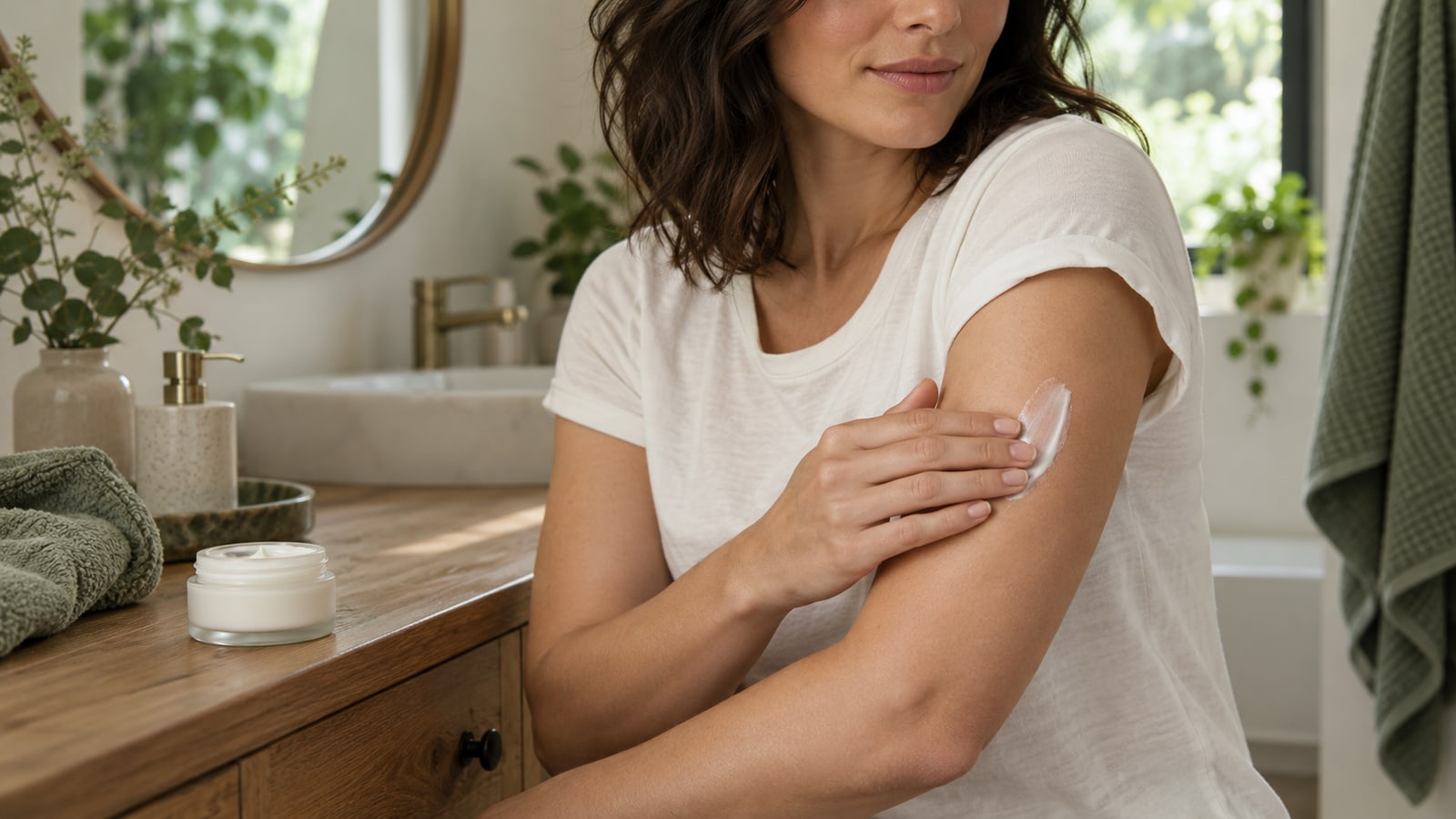
Small, rough bumps on the upper arms or thighs are often described as “chicken skin”. One common explanation is keratosis pilaris, or KP. Although it is harmless, the texture, dryness or appearance can still bother you, especially when products promise perfectly smooth skin.
The aim of care is usually to make skin more comfortable and, if you want, reduce roughness. It is not necessary to eliminate every bump. Start by checking that the diagnosis fits, then choose a routine that improves comfort without creating irritation.
Key takeaways
- KP involves small plugs around hair follicles and commonly affects the upper arms and thighs.
- It is not contagious and does not mean that your skin is dirty.
- Moisturising and gentle care may help, but treatment is optional.
- Exfoliating ingredients can irritate; more frequent use is not automatically better.
- Improvement often needs maintenance, and no product can promise permanent clearance.
On this page
What keratosis pilaris looks and feels like
The British Association of Dermatologists describes tiny plugs of keratin, a skin protein, blocking hair follicles. The surface may feel dry and rough, sometimes with surrounding redness or itching. KP often starts in childhood and becomes noticeable during adolescence. It can run in families and may coexist with conditions such as eczema.
A familiar distribution can help a clinician recognise it, but not every bumpy rash is KP. Explain whether the bumps are longstanding or new, whether they hurt and whether anything changed before they appeared. A rapidly changing or painful eruption should not simply be treated as a cosmetic texture problem.
It can be helpful to separate three concerns: roughness you can feel, colour around the follicles and general dryness. A product that improves one may leave another largely unchanged. This is a reason to define your goal before evaluating a treatment, rather than deciding that anything short of completely smooth skin is failure.
Why aggressive scrubbing can backfire
The American Academy of Dermatology advises gentle exfoliation and warns that scrubbing can irritate the skin and worsen KP. The practical distinction is how your skin responds. A routine that leaves persistent soreness or burning needs reassessment, even if the product is marketed specifically for bumps.
Review all the ways the same area is treated. An exfoliating wash, acid lotion, rough mitt and frequent shaving may each look modest on their own but create a demanding combined routine. Write them down before adding anything else. A quieter routine also makes it easier to identify which step helps.
Our guide to irritation and allergic skin reactions explains why new redness or a rash should not automatically be blamed on the original condition.
| Main concern | Useful first discussion | What to monitor |
|---|---|---|
| Dryness and tightness | A comfortable cleanser and moisturiser | Comfort after washing and during the day |
| Rough follicular bumps | Whether a suitable keratolytic is worthwhile | Texture alongside any irritation |
| Persistent visible colour | Whether the diagnosis and treatment target are clear | Colour separately from smoothness |
| Pain, a new rash or uncertainty | Clinical assessment before cosmetic treatment | Timing, spread and associated symptoms |
Moisturising is a reasonable starting point
The NHS describes regular moisturising and avoiding harsh washing as practical self-care. Ask a pharmacist about a product suited to your skin and circumstances. A comfortable, affordable formula you use consistently may be more useful than an elaborate routine you abandon after a few days.
Think about when dryness bothers you most. If it follows a hot shower, changing the washing routine may be as relevant as changing the cream. If a lotion feels unpleasant under clothing, a different texture or application time may make the plan easier to follow. These observations help refine care without assuming that every discomfort requires a stronger active ingredient.
Our explanation of how moisturisers work can help you interpret the label. People using emollients should also follow fire-safety advice: residue on fabrics can make them more flammable, so keep away from smoking and naked flames. Washing fabric does not remove the risk completely.
Understanding keratolytic ingredients
Keratolytic products help reduce the build-up of dead skin cells. Dermatology guidance discusses ingredients including urea, lactic acid and salicylic acid for KP. The exact product, concentration and instructions matter; a facial acid, foot cream and body lotion are not interchangeable simply because they share an ingredient.
Ask whether a product is appropriate for your age, the area involved and any eczema or other sensitivity. Follow the supplied directions or your clinician’s plan. If skin becomes irritated, seek advice about pausing or adjusting treatment rather than layering another exfoliant over it.
A useful review records both benefit and burden. Has the area become more comfortable? Is roughness less noticeable? Does the treatment sting or make dressing uncomfortable? A modest improvement with good tolerability may be preferable to pursuing a slightly smoother surface at the cost of ongoing soreness.
When to seek further advice
Arrange an assessment if the diagnosis is uncertain, symptoms are troublesome or reasonable self-care has not helped. Bring the products rather than relying on memory of their marketing names. Tell the clinician if the main concern is appearance, itch or another symptom so the discussion addresses what matters to you.
The NHS notes that procedures such as lasers and peels are not usually available for KP on the NHS because effectiveness has not been established sufficiently and private treatment can be expensive. If offered a procedure, ask what evidence supports the specific outcome being promised, what adverse effects are possible and how long any improvement is expected to last.
Review chemical peel considerations before assuming that a procedure is the inevitable next step. Choosing no further treatment remains reasonable when the condition is harmless and the likely benefit does not justify the effort or cost for you.
A manageable care-and-review cycle
Check the diagnosis when uncertain and identify the symptom you want to improve.
Use comfortable washing and moisturising, with any additional treatment chosen for your skin.
Keep what helps and reassess anything that causes persistent irritation.
For comparison photographs, use similar lighting and distance. Side lighting can exaggerate normal surface texture; a filtered image can hide it. Your own comfort and an agreed treatment goal provide a better benchmark than a polished advertisement.
Common questions
Is KP caused by poor hygiene?
No. It involves follicular keratin build-up, not dirt that needs scrubbing away. Washing more aggressively can make skin uncomfortable without addressing the problem.
Can another person catch it?
No. KP is not infectious. Its tendency to occur in families does not mean that it spreads through contact or shared household items.
Will it disappear as I get older?
It may become less noticeable, but that is not guaranteed. Treatment generally manages symptoms and appearance rather than providing a permanent cure.
Should I exfoliate every day?
There is no single schedule for every product and skin type. Follow product-specific or clinical instructions and consider the rest of your routine, especially if irritation develops.
Can I use my body treatment on my face?
Check the instructions and obtain advice first. The intended site and formulation matter. Do not assume that a product designed for rough body skin is suitable near the eyes or on sensitive facial skin.
Why do bumps return when I stop?
Improvement can require maintenance because treatment does not remove the underlying tendency. Discuss the least burdensome routine that keeps your chosen symptoms manageable.
Does laser treatment guarantee smooth skin?
No. Ask what evidence supports the proposed procedure for KP, which feature it targets and how durability and risks are assessed. A package of sessions is not a guarantee.
Do I have to treat it?
No. Once the diagnosis is clear, leaving harmless KP alone is an acceptable choice. Seek advice if symptoms change or if its effect on your confidence deserves support.
Sources and further reading
Sources checked 21 October 2026. Clinical review is not claimed.
Keep exploring
Hand Dermatitis: Managing Skin Irritation from Frequent Washing
Understand hand irritation from frequent washing, practical skin care and when persistent symptoms need assessment.

Sunburn: Sensible First Steps and Signs You Need Medical Advice
Learn sensible first steps for sunburn, when to seek urgent advice and how to recognise heat illness that needs emergency help.

Vitiligo: Pigment Changes, Treatment Choices and Support
Understand vitiligo, assessment, sun protection and treatment choices, with practical questions and support without pressure to change your appearance.

Persistent Itching Without an Obvious Rash: When to Get It Checked
Understand persistent itching without a visible rash, what to tell a GP, gentle comfort measures and symptoms needing prompt medical advice.