Hair Dye Allergy: Why Manufacturer Allergy Tests and Medical Assessment Differ
Understand why manufacturer allergy checks, hair strand tests and dermatologist patch testing answer different questions.
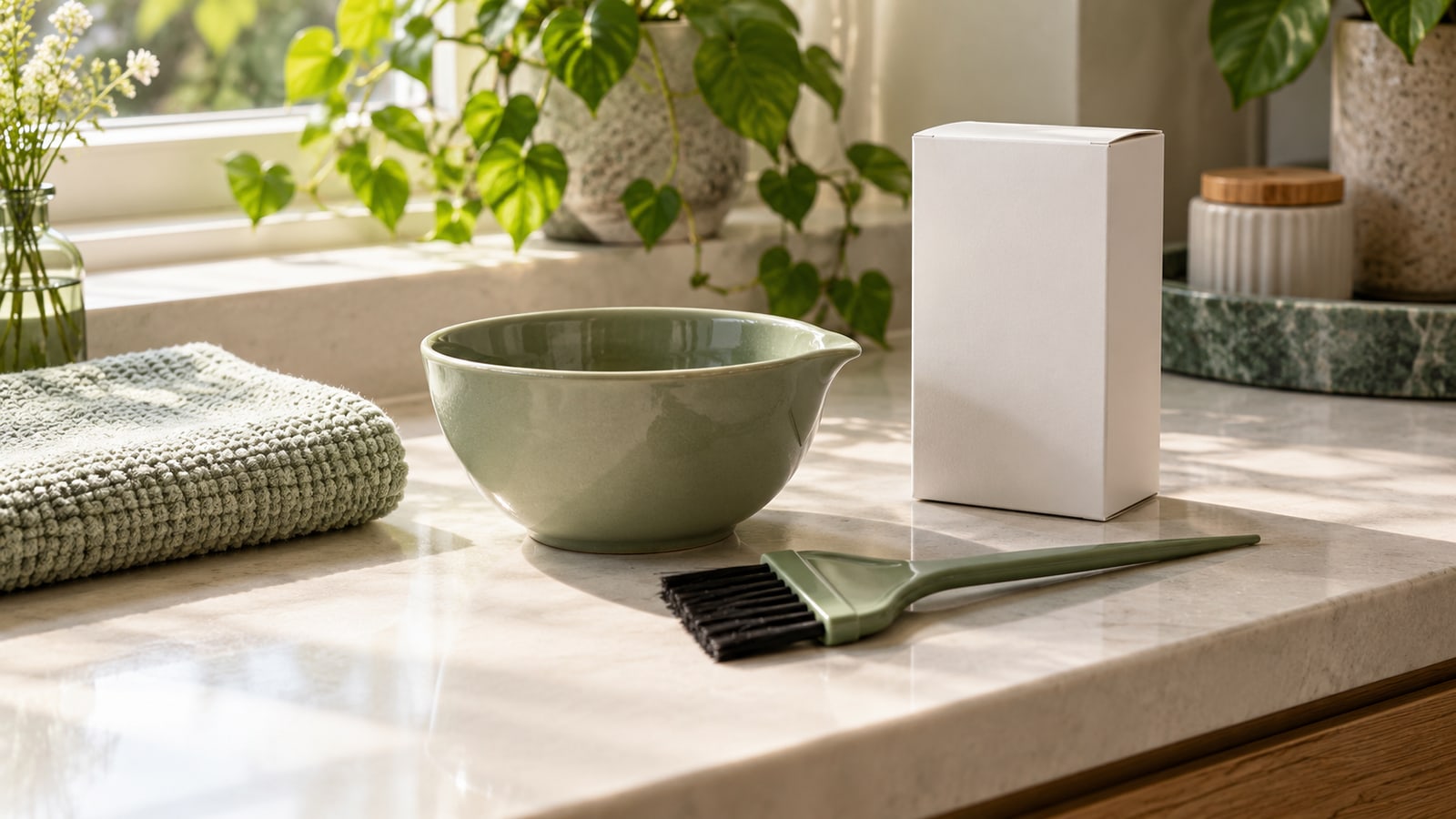
A manufacturer allergy-alert check and a dermatologist’s patch test are not the same procedure. One is a precaution described for a particular consumer product; the other is a medical investigation used to identify contact allergy and interpret its relevance to a skin problem.
The distinction matters after itching, swelling or a rash from hair dye. A negative home check does not erase a previous reaction or guarantee that the next full application will be safe.
Key takeaways
- Hair-dye reactions can involve irritation, allergy or both.
- Follow product precautions, but do not treat a manufacturer check as a medical diagnosis.
- A strand test for hair colour or condition cannot establish freedom from skin allergy.
- After a suspected reaction, seek advice before further exposure rather than testing the product again yourself.
- Sudden mouth or throat swelling, breathing difficulty or collapse needs emergency help.
On this page
- What a reaction can look like
- PPD is important, but it is not the only possibility
- What manufacturer checks can and cannot establish
- A strand test answers a different question
- What medical patch testing involves
- What to do when symptoms occur
- Plan future colouring after assessment
- Common questions
- Sources and further reading
What a reaction can look like
NHS guidance describes symptoms including itching, burning, tightness, soreness and blisters. A reaction may be delayed for up to seventy-two hours. Colour changes can look different or be harder to see on brown and black skin, so sensations and swelling are important details too.
Record whether symptoms affected the scalp, hairline, ears, eyelids or neck, and when they appeared relative to colouring. Keep the dye packaging and any developer or additional product used. The name of a colour shade alone may not identify all relevant ingredients.
Our guide to scalp itch without flakes explains why itching has several possible causes. A temporal link to colouring is useful information, but the precise mechanism still needs assessment.
PPD is important, but it is not the only possibility
Paraphenylenediamine, usually shortened to PPD, is found in many permanent and some semi-permanent dyes. It can irritate skin or cause allergic reactions. Previous exposure through a black henna tattoo can be relevant and should be mentioned when discussing a reaction.
DermNet notes that other dyes, preservatives and fragrances can also cause hair-dye allergy, while the formulation can cause irritant dermatitis. A product labelled PPD-free is therefore not automatically suitable for someone who has reacted to a different dye or ingredient.
Do not assume that a more natural-sounding product is a safe substitute without checking what it contains. Our fragrance and label-claims guide discusses why ingredient origin and allergy risk are different questions.
What manufacturer checks can and cannot establish
Products may specify an allergy-alert check before use. Follow the exact instructions supplied for that product, including its warnings and timing. Do not replace them with an informal salon habit, a social-media method or directions from another brand.
However, DermNet cautions that a negative consumer dye test does not guarantee freedom from a later reaction, and testing itself can sometimes sensitise the skin. It should not be used to overrule a history of a concerning reaction or professional advice to avoid an ingredient.
If you have already reacted, ask a clinician what assessment is appropriate before trying the dye again. This article does not provide a home re-exposure protocol. A small application is still exposure to the substance, not a consequence-free way to investigate it.
A strand test answers a different question
A strand test can help assess the colour result or effect on the hair. It does not replace an allergy-alert check or medical investigation. The word “test” can make these steps sound equivalent when they address different outcomes.
When discussing a previous test with a clinician or salon, describe what was actually done, where the product was applied and what happened. “I passed a patch test” may conceal very different procedures. Clear description is more useful than the label.
| Test | Main purpose | Important limit |
|---|---|---|
| Hair strand test | Assess colour or effect on hair | Does not establish skin-allergy safety |
| Manufacturer allergy-alert check | A product-specific precaution before use | A negative result is not a guarantee or diagnosis |
| Medical patch testing | Investigate delayed contact allergy to selected substances | Requires specialist interpretation and does not test every possible allergy |
What medical patch testing involves
The British Association of Dermatologists describes patch testing as a specialist dermatology procedure for contact allergy. Selected substances are applied to the skin and assessed at later appointments. The test series can include common allergens and additional substances chosen from your history.
The clinician considers whether a positive result explains the problem you experienced. A laboratory-style list without that interpretation is not enough to decide which future products you can use. Patch testing also does not investigate food allergy in the way that some people expect.
Bring the products, ingredient packaging and medicine information requested by the clinic. Tell them about the severity of any previous dye reaction and black henna exposure. The specialist can decide what to test and how to do it appropriately; do not prepare your own concentrated mixtures for application.
Follow the clinic’s instructions about appointments and preparation. Do not stop prescribed medicines or creams independently. If attending several visits is difficult, discuss this before the first appointment so the assessment can be planned properly.
What to do when symptoms occur
If you feel a reaction while dye is on the hair, NHS advice is to wash the hair and scalp thoroughly with mild shampoo. Seek advice about symptoms that continue or worsen. Do not leave the dye on simply to complete the colour time, and do not try another product immediately to correct the appearance.
Call 999 for sudden swelling of the lips, mouth, tongue or throat, breathing difficulty, collapse or other severe allergic symptoms. Do not wait for a salon callback or a home test result. A serious reaction needs emergency assessment.
For a less severe but persistent problem, a pharmacist or GP can help assess the next step. Our contact dermatitis guide explains why treatment should follow the likely cause rather than a repeated sequence of product trials.
Plan future colouring after assessment
If an allergy is confirmed, ask for written information about the substance and relevant alternatives or avoidance. Do not assume that a familiar brand name always represents the same formulation. Check the current package and seek clarification if an ingredient name is unfamiliar.
Share relevant advice with the person colouring your hair. A salon’s routine precaution does not replace a dermatologist’s recommendation, and pressure to keep an appointment is not a reason to repeat an exposure that remains uncertain.
Keep product details, timing and affected areas.
Use urgent care for severe symptoms and clinical assessment for persistent concerns.
Follow specific avoidance advice rather than relying on a negative home check.
Common questions
Is a salon allergy check the same as medical patch testing?
No. The purpose, substances, procedure and interpretation differ. Describe what was actually done when discussing the result.
Does a negative home check guarantee no reaction?
No. It cannot guarantee future tolerance or overrule a previous concerning reaction.
Can a strand test show whether I am allergic?
No. A hair strand test assesses a different outcome and does not establish skin-allergy safety.
Can I develop symptoms a day or two later?
Yes. Hair-dye reactions can be delayed. Record the timeline and seek advice if symptoms persist or worsen.
Is PPD the only ingredient that can cause allergy?
No. Other dyes, preservatives and fragrances may be relevant, and irritation is also possible.
Should I mention a previous black henna tattoo?
Yes. It can be relevant to PPD sensitisation and should be included in the history.
Should I repeat the product on a small area after reacting?
Do not deliberately re-expose yourself without professional advice. Keep the packaging and seek an appropriate assessment.
Which symptoms need emergency help?
Call 999 for breathing difficulty, sudden mouth or throat swelling, collapse or other severe allergic symptoms.
Sources and further reading
Sources checked 22 October 2026. Manufacturer precautions, strand tests and medical patch testing are distinguished. No home re-exposure protocol is supplied. Clinical review is not claimed.
Keep exploring

Anti-Dandruff Shampoo Ingredients: What to Ask a Pharmacist
Ask a pharmacist about dandruff shampoo ingredients, contact time and hair texture, and recognise when persistent scalp symptoms need assessment.
Caring for Curly and Coily Hair While Protecting the Scalp
Build a manageable curly or coily hair routine with gentle detangling, scalp cleansing, lower-tension styling and advice on when to seek assessment.
Clarifying Shampoos: Product Build-Up, Uses and Irritation Risks
Decide whether clarifying shampoo fits your routine, distinguish residue from scalp symptoms and avoid unnecessary cleansing or irritation.
Heat Styling and Hair Damage: A Practical Care Guide
Review heat settings, repeated styling and combined processing, with practical ways to reduce hair damage and recognise concerns needing assessment.