Glycerin in Skincare: Understanding a Familiar Hydrating Ingredient
Learn what glycerin does in skincare, how hydration studies differ from treatment claims and why the complete moisturiser formula matters.
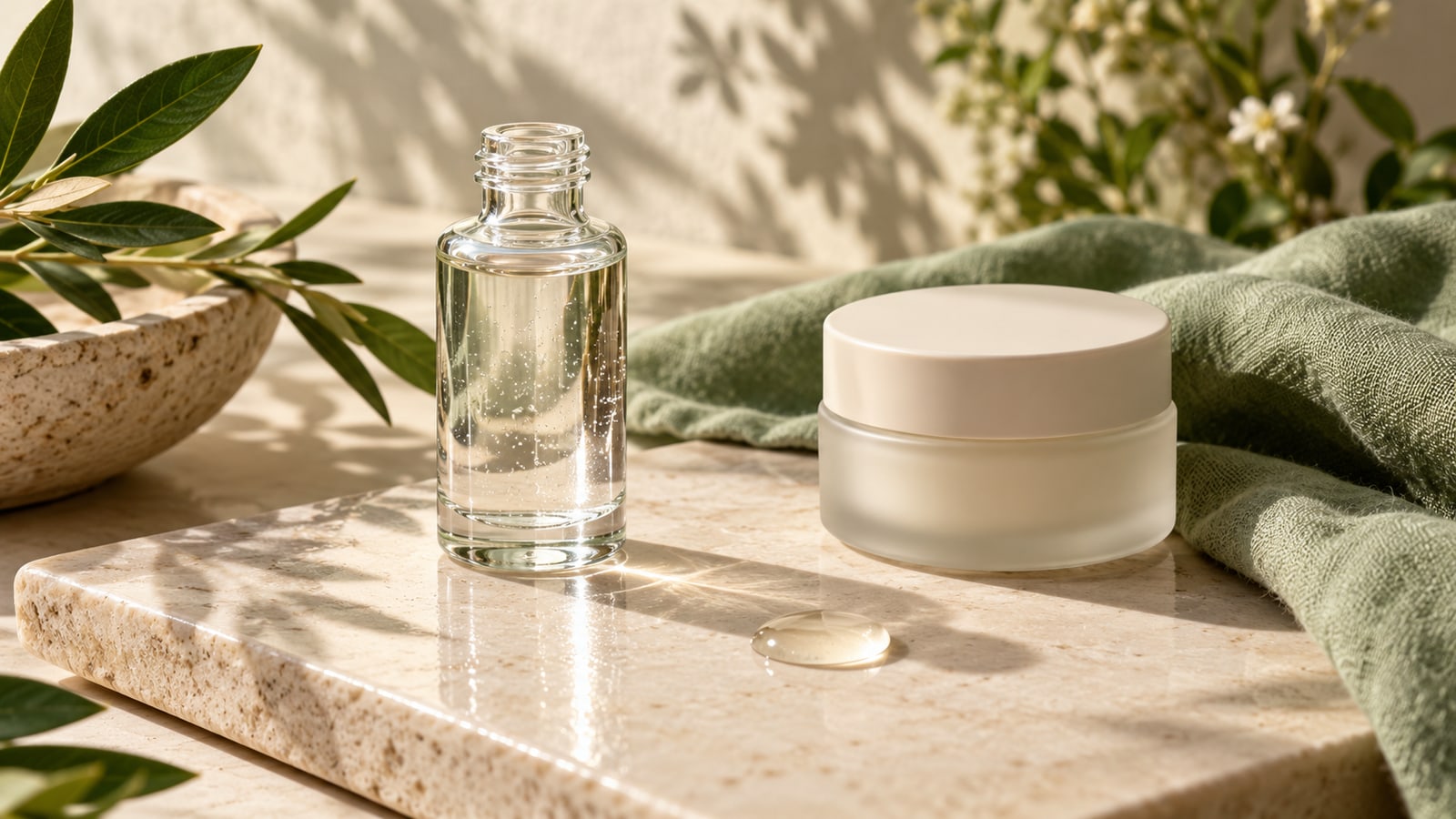
Glycerin is familiar enough to disappear into the background of an ingredient list. It appears in many moisturisers and other skincare products, often without the prominent marketing given to newer ingredients. Its ordinary reputation does not make its role unimportant.
Understanding what glycerin does can help you compare products without assuming that one ingredient explains the whole formula. It also helps distinguish evidence for hydration from broader claims about repairing every skin problem or replacing treatment for a diagnosed condition.
Key takeaways
- Glycerin, also called glycerol, is used as a humectant.
- Hydration and reduced water loss are related but different measurements.
- The complete formulation affects how a product performs.
- A study of one cream does not validate every glycerin product.
- You do not need a separate glycerin serum if your routine already works.
On this page
- What is a humectant?
- Distinguish hydration from barrier measurements
- What studies of complete creams can show
- Keep eczema evidence in context
- Read the whole ingredient list and product purpose
- Do you need an extra hydrating layer?
- Avoid turning ingredient knowledge into home formulation
- Recognise when dryness needs another approach
- Common questions
- Sources and further reading
What is a humectant?
A humectant helps attract and retain water. Glycerin is widely used for this purpose in topical formulations. A research review by Fluhr and colleagues describes its role in the outer skin layer and discusses effects on hydration and barrier-related functions.
This is a useful ingredient role, but it is not the same as a complete moisturiser design. A product also needs a suitable texture, stability and preservation. Other ingredients can contribute to comfort and help limit moisture loss.
Think of glycerin as one part of a formulation rather than a single answer to dry skin. The presence of the ingredient is informative, but it does not tell you whether the finished product will be pleasant or suitable for your particular routine.
Distinguish hydration from barrier measurements
Studies can measure water content in the outer skin layer and the amount of water leaving through the skin. These measurements answer different questions. A product can improve one measure without demonstrating every possible benefit claimed in advertising.
For example, a small study in healthy volunteers compared a cream containing glycerin with its vehicle. Hydration improved, but the study did not demonstrate a corresponding change in every barrier or irritation measure. The practical lesson is to read the outcome being measured rather than treating all positive results as interchangeable.
A statement such as “increased hydration” is narrower than “heals damaged skin”. When comparing products, ask whether the claim accurately reflects what was tested and whether the tested formulation is the one being sold.
What studies of complete creams can show
A 2019 randomised crossover study in 51 healthy volunteers with dry skin compared a complete emollient with versions containing selected components. Over 12 hours, glycerol contributed to hydration while petrolatum contributed to reducing water loss. The investigators explicitly stated that the study was not designed to measure therapeutic benefit.
This illustrates why a well-formulated combination can be more informative than a contest between individual ingredients. It does not establish that every glycerin-and-petrolatum product works identically or that a short-term instrument reading predicts long-term control of a skin condition.
Our article on facial oils and moisturisers explores another example of products having different roles. The useful comparison starts with the job you need a product to do.
| Claim or detail | What it can tell you | What it does not establish |
|---|---|---|
| Contains glycerin | A humectant is included | The performance of the whole formula |
| Improved hydration in a study | A measured outcome under test conditions | A cure for every cause of dryness |
| High ingredient percentage | The amount disclosed by the manufacturer | Automatic superiority or better tolerance |
| Suitable texture and directions | How the product fits a routine | That it suits every skin condition |
Keep eczema evidence in context
A trial in 24 people with atopic dermatitis compared a glycerol-containing emollient with its vehicle over four weeks. Hydration and barrier measures improved, but differences in several clinical measures, including overall severity, were not significant between groups. Both groups improved over time.
This supports the importance of being precise about a study’s findings. It does not justify replacing prescribed eczema treatment with any product that lists glycerin. The condition, formulation and outcome all matter.
If you have eczema, discuss a moisturising plan alongside the rest of your care. Our eczema guide explains why daily care and medical treatment may need to work together.
Read the whole ingredient list and product purpose
A glycerin cleanser, a serum and a cream are used differently. Check whether the product is rinsed off, where it is intended to be applied and whether it contains other active ingredients that affect suitability.
Look beyond a large front-label percentage. If you already know that a fragrance or another ingredient causes problems, the presence of glycerin does not cancel that concern. Equally, a short list is not proof that a product will suit everyone.
Our guide to fragrance and label claims can help you organise that comparison. Bring the complete label when asking a pharmacist about an unfamiliar product.
Do you need an extra hydrating layer?
If your current moisturiser keeps the skin comfortable, an additional serum may not solve a problem you actually have. First identify what you want to change: persistent tightness, a texture you dislike or difficulty fitting the product around prescribed care.
A separate layer can add cost and another opportunity for a reaction. It can also make it harder to understand the routine when several products are introduced together. Choose additions for a clear purpose rather than because an ingredient is fashionable.
If you do try a new product, follow its directions and make the change understandable. Note how it feels and whether it meets your aim. There is no need to keep a product simply because its ingredient list looks impressive.
Avoid turning ingredient knowledge into home formulation
Knowing that glycerin is useful in moisturisers is not the same as knowing how to formulate one. A finished skincare product involves more than mixing a humectant with water. Concentration, preservation and compatibility are part of the manufacturer’s work.
Do not assume a research percentage is a recipe to reproduce at home. The studies discussed here tested specific preparations under defined conditions. They did not test every possible kitchen mixture or undiluted application.
If you want a simple routine, choosing an appropriate finished product can be easier than trying to recreate one ingredient’s laboratory role. Ask for advice when you are unsure about suitability for sensitive or damaged skin.
Recognise when dryness needs another approach
Persistent discomfort, cracking, a rash or symptoms that interfere with daily life deserve attention. Buying increasingly concentrated hydrating products may delay understanding the cause.
Tell a clinician what you have tried and what happened. If a product stings or worsens the problem, describe that rather than deciding that all humectants must be unsuitable. The reaction may relate to the complete formula or the condition of the skin.
Glycerin is a useful familiar ingredient. Its value is best understood within a product and a realistic care plan, with evidence kept at the scale that the research actually supports.
Identify the discomfort or practical issue you want to address.
Check purpose, directions and other ingredients.
Judge comfort and usefulness without expecting a cure-all.
Common questions
Are glycerin and glycerol different ingredients?
The terms refer to the same substance in this skincare context.
What does humectant mean?
It describes an ingredient that helps attract and retain water.
Does glycerin alone explain a cream’s performance?
No. The complete formulation and how it is used matter.
Is better hydration the same as curing eczema?
No. Hydration measurements and clinical control are different outcomes.
Is the highest percentage always best?
No. Concentration alone does not establish usefulness or tolerance.
Do I need a separate glycerin serum?
Not necessarily, especially if your current moisturiser already meets your needs.
Can I copy a study formula at home?
A reported ingredient percentage is not a complete formulation or home-use recipe.
When should I seek advice about dryness?
When it persists, worsens or comes with concerning skin changes or substantial discomfort.
Sources and further reading
Sources checked 22 October 2026. Research abstracts informed the discussion; findings are not treated as proof for every commercial product. Clinical review is not claimed.
Keep exploring
A Simple Skincare Routine: The Essentials Before You Add More Products
A practical starting point for cleansing, moisturising and sun protection, with room for your skin’s needs and your budget.
How to Choose a Facial Cleanser for Your Skin’s Needs
Choose a facial cleanser by its purpose, instructions and comfort, with practical checks for labels, budget and your existing skincare.
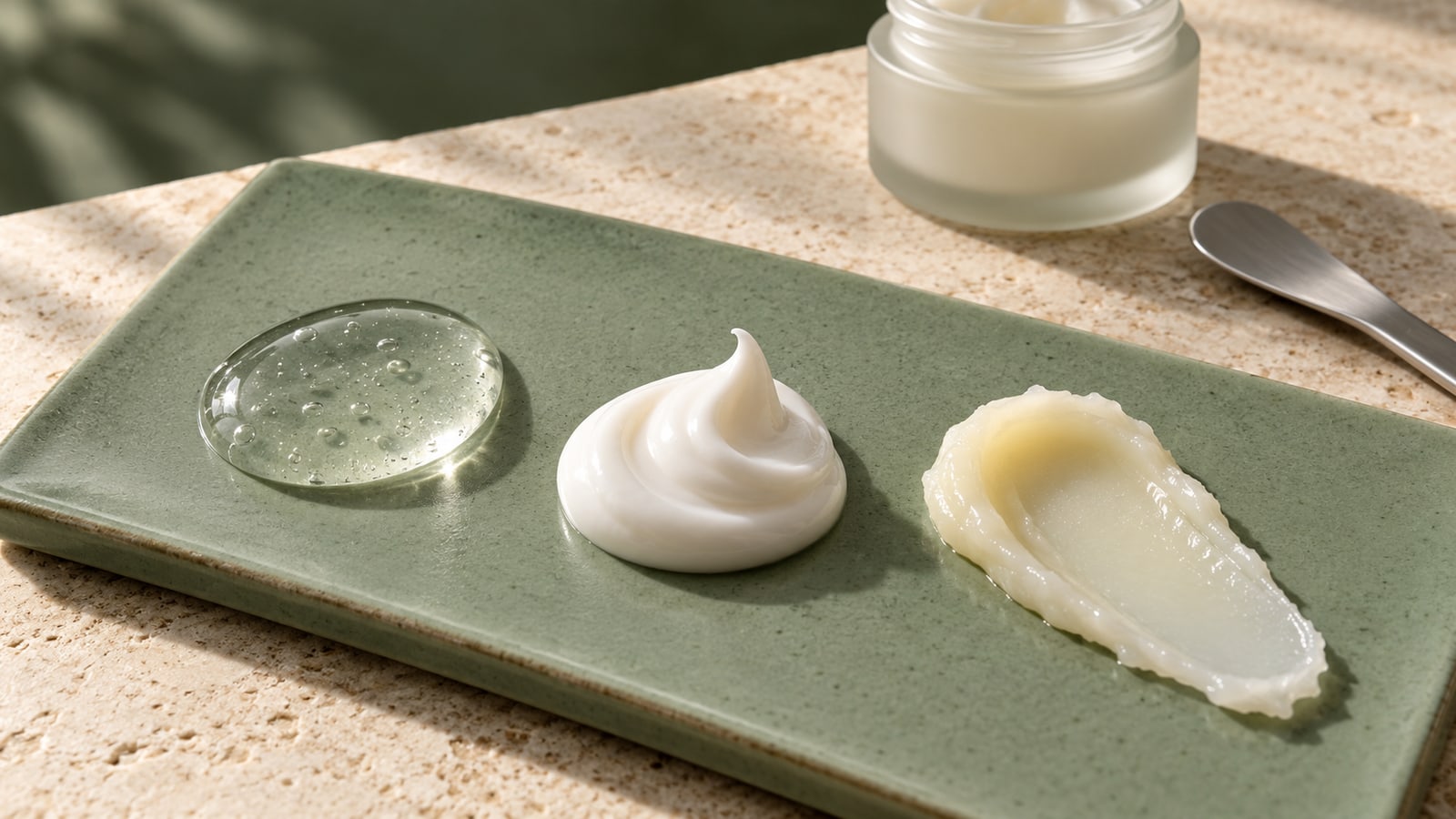
Humectants, Emollients and Occlusives: What a Moisturiser Actually Does
Understand the different jobs moisturiser ingredients perform and how to assess a finished product without buying unnecessary extra steps.
Niacinamide in Skincare: Uses, Evidence and Possible Irritation
Read niacinamide claims in context, understand what small trials studied and assess a finished formula without assuming stronger is better.