Humectants, Emollients and Occlusives: What a Moisturiser Actually Does
Understand the different jobs moisturiser ingredients perform and how to assess a finished product without buying unnecessary extra steps.
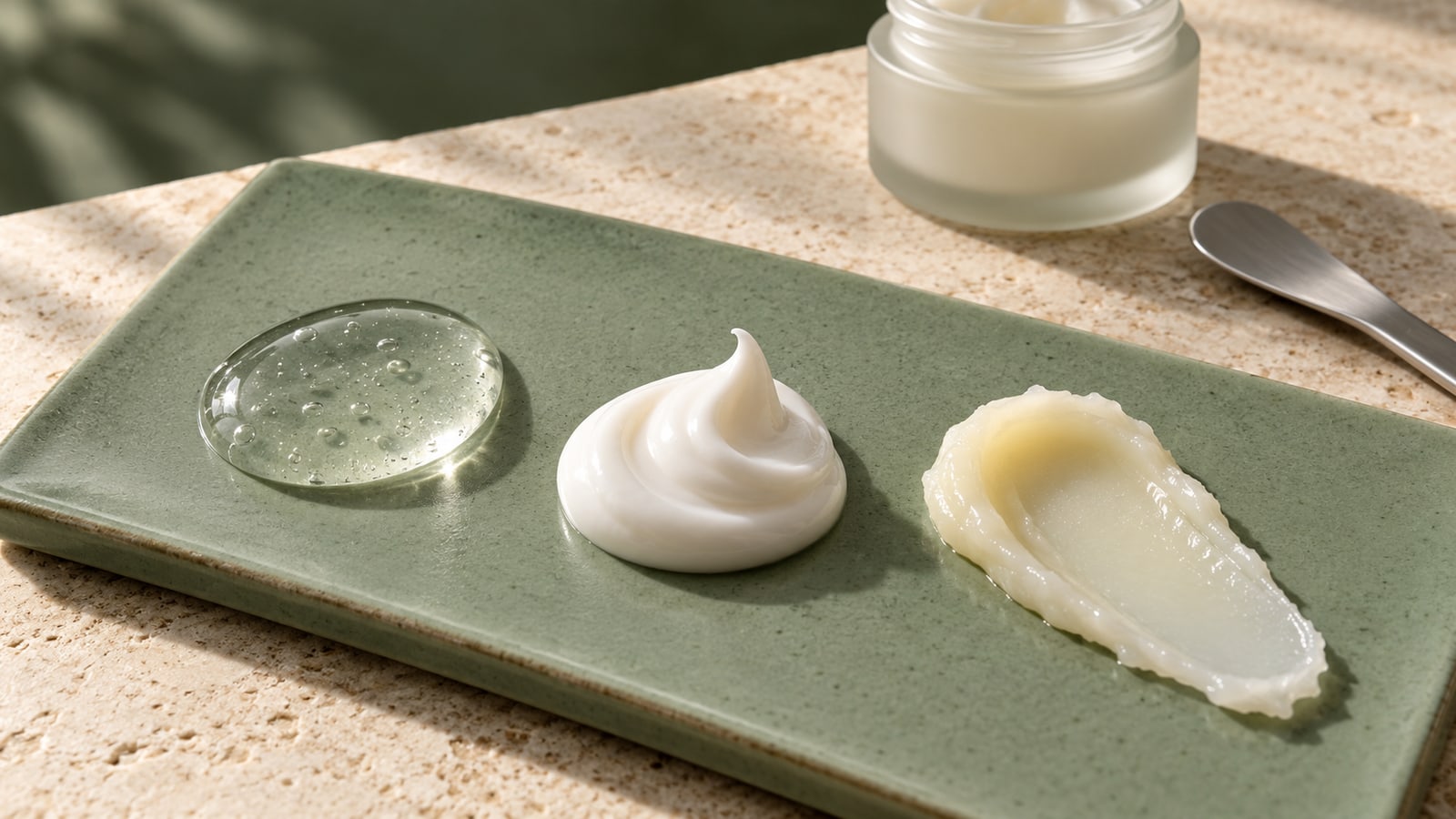
A moisturiser can promise hydration, softness and barrier support on the same label. These are related aims, but the ingredients may achieve them in different ways. Understanding humectants, emollients and occlusives makes the ingredient list less mysterious without turning everyday skincare into a chemistry project.
The useful question is whether the finished product suits your skin, the area you are treating and the way you will use it. You usually do not need three separate products simply because there are three ingredient categories.
Key takeaways
- Humectants help retain water; emollient ingredients smooth and soften; occlusives reduce water loss.
- One ingredient can have more than one role, and a moisturiser often combines all three approaches.
- Texture, comfort and practical use matter alongside the ingredient list.
- Persistent burning, rash or unexplained dryness needs advice rather than repeated product changes.
- Emollient residue on fabrics increases fire risk, including with paraffin-free products.
On this page
- Three jobs that often share one formula
- Why a hero ingredient cannot describe the whole product
- Choosing between a lotion, cream and ointment
- Use the routine around the moisturiser to your advantage
- When a moisturiser is not the whole answer
- Two practical safety details worth remembering
- Common questions
- Sources and further reading
Three jobs that often share one formula
DermNet explains the main moisturising functions: humectants attract and retain water, emollients smooth the outer skin surface, and occlusive ingredients help limit evaporation. Glycerine is a familiar humectant; petrolatum and dimethicone are examples of ingredients used for occlusion. A cream may contain several of these at once.
There is also a language trap. In everyday healthcare, “emollient” can mean the whole moisturising treatment, such as a prescribed cream or ointment. In formulation discussions, it can mean one ingredient’s smoothing role. If a pharmacist recommends an emollient, they are not necessarily telling you to find a product that contains only one class of ingredient.
| Function | Main contribution | What it does not tell you |
|---|---|---|
| Humectant | Helps the outer skin retain water | Whether the entire product will feel comfortable |
| Emollient | Helps skin feel smoother and softer | Whether the product treats the cause of a rash |
| Occlusive | Helps slow water loss from the surface | Whether a heavier texture suits your routine |
Why a hero ingredient cannot describe the whole product
Two bottles advertising the same ingredient can be quite different to use. One may be a light lotion; another may be a thick cream. The headline does not explain the complete mixture, its texture or how it behaves alongside your cleanser, prescribed treatment and sunscreen.
When comparing products, write down what you actually need. “Comfortable on my cheeks without feeling sticky under sunscreen” is a more useful brief than “the strongest hydration”. Look at the directions, intended body area, packaging and price per usable amount. If you have a confirmed allergy, checking the full ingredient list is essential; the front label is not enough.
Do not assume that a higher percentage of a familiar ingredient makes the finished product better for you. Unless the manufacturer provides relevant evidence about the finished formula, a number alone cannot answer whether it will address your particular concern. Avoid comparing percentages across entirely different ingredient types.
Choosing between a lotion, cream and ointment
The NHS guide to emollients describes lotions as easy to spread on hairy areas, creams as less greasy options often convenient during the day, and ointments as thicker preparations for very dry skin. It cautions that ointments should not be used on weeping eczema. Ask a pharmacist or clinician if skin is broken, weeping or inflamed.
There is no need to award one texture a permanent place at the top of a skincare hierarchy. A hand product used after washing has different practical demands from a product applied beneath clothes or through hair. Tell a pharmacist if greasiness, packaging or difficulty reaching an area is stopping you from using a recommended treatment.
A small comparison can help: note how easily it spreads, whether discomfort settles, whether it transfers onto clothing and whether you can use it consistently. These observations are more useful at a follow-up than saying only that a product was “too heavy”. Our simple routine guide can help keep that comparison manageable.
Use the routine around the moisturiser to your advantage
The American Academy of Dermatology’s dry-skin advice recommends gentle washing, short warm rather than hot showers, and applying moisturiser while skin is still damp. It favours fragrance-free products and notes that “unscented” can still involve ingredients used to mask a smell. Persistent dry skin despite care may need assessment for an underlying condition.
That is general dry-skin guidance, not a universal instruction for every diagnosis. For example, AAD’s rosacea advice suggests waiting until the face is dry before moisturiser if this helps reduce stinging. Follow the instructions for your condition and treatment rather than treating an online layering rule as more authoritative.
If cleansing leaves your face uncomfortable, consider the whole washing routine. Our facial cleanser guide explains how to assess that step. Adding another serum may not answer the original problem.
Identify the area, main discomfort and any diagnosed condition.
Read the directions and consider texture, allergies, packaging and your other treatments.
Keep useful observations and seek advice if irritation or unexplained dryness persists.
When a moisturiser is not the whole answer
Moisturising care can be part of managing a skin condition without replacing its specific treatment. A persistently itchy patch, recurring facial burning or a new rash deserves a clearer explanation than “dehydration”. Our guides to eczema care and rosacea and sensitivity explain what to discuss.
Some formulations can sting or cause reactions. Urea and acidic ingredients, for example, can irritate fissured skin; DermNet also notes that preservatives can cause contact allergy in susceptible people. This does not make every product containing them unsuitable. Bring the exact product and your history to a pharmacist or clinician instead of constructing a blanket ban from one experience.
Two practical safety details worth remembering
For tubs, the NHS recommends using a clean spoon or spatula to reduce contamination. It also highlights slippery surfaces after emollient use. Keep the bathroom floor safe and clean up product residue rather than leaving a slick patch for the next person.
The NHS Specialist Pharmacy Service explains the fabric fire risk: residue transferred to clothes, bedding or dressings can make them ignite more readily. This includes paraffin-free products. Keep contaminated fabrics away from cigarettes and naked flames; washing reduces residue but may not remove it fully. Do not stop prescribed care solely because of this risk: discuss how to use it safely, especially if oxygen equipment or smoking is involved.
Common questions
Do I need a humectant serum before every moisturiser?
No. Check what you already use before adding another step. A finished moisturiser may already combine water-retaining, smoothing and occlusive functions; separate purchases are not a requirement created by the terminology.
Is an occlusive just a very thick cream?
Occlusive describes a function, not a particular package or texture. Ingredients that reduce water loss can appear in different formulations. Judge the finished product by its directions and how it works in your routine.
Does “emollient” mean an ingredient or a treatment?
It can mean either. In a clinical conversation it often means the whole moisturising preparation. Ask for the exact product and use instructions if the term leaves you unsure what to buy or apply.
Should moisturiser always go on damp skin?
Damp application is common dry-skin advice, but comfort and condition-specific instructions matter. Rosacea guidance can differ. Ask about your own situation if damp application burns or you use prescribed products.
Does a more expensive cream work better?
Price is not a substitute for evidence about suitability. Compare the complete formula, directions, amount supplied and whether you can comfortably use it. Set a budget you could maintain before choosing an elaborate routine.
Is burning proof that the product is working?
No. Do not use discomfort as a performance score. Persistent or troublesome irritation should prompt advice, with the product name and timing available. Avoid layering more products over an unexplained reaction.
Are paraffin-free emollients free of fire risk?
No. Other ingredients can also leave combustible residue on fabric. The fire precautions apply beyond paraffin-containing ointments; the important situation is contaminated material meeting an ignition source.
What should I bring when asking for help choosing one?
Bring your current products, known allergies, prescribed treatment names and a description of the affected area. Explain any practical problem, such as a pump you cannot operate or a texture that makes dressing difficult.
Sources and further reading
Checked 21 October 2026. Ingredient roles are simplified for readers; formulations and individual medical needs differ. No product endorsements or clinical review are claimed.
Keep exploring
A Simple Skincare Routine: The Essentials Before You Add More Products
A practical starting point for cleansing, moisturising and sun protection, with room for your skin’s needs and your budget.
How to Choose a Facial Cleanser for Your Skin’s Needs
Choose a facial cleanser by its purpose, instructions and comfort, with practical checks for labels, budget and your existing skincare.
Niacinamide in Skincare: Uses, Evidence and Possible Irritation
Read niacinamide claims in context, understand what small trials studied and assess a finished formula without assuming stronger is better.
Hyaluronic Acid: What It Can and Cannot Do for Dry-Feeling Skin
Evaluate hyaluronic acid hydration claims, understand the limits of a topical trial and decide whether another product serves a useful purpose.