Lip Balm Ingredients: Choosing Everyday Care Without Irritating Your Lips
Choose comfortable everyday lip care by checking ingredients, irritation, sun protection and handling, and recognise when persistent soreness needs advice.
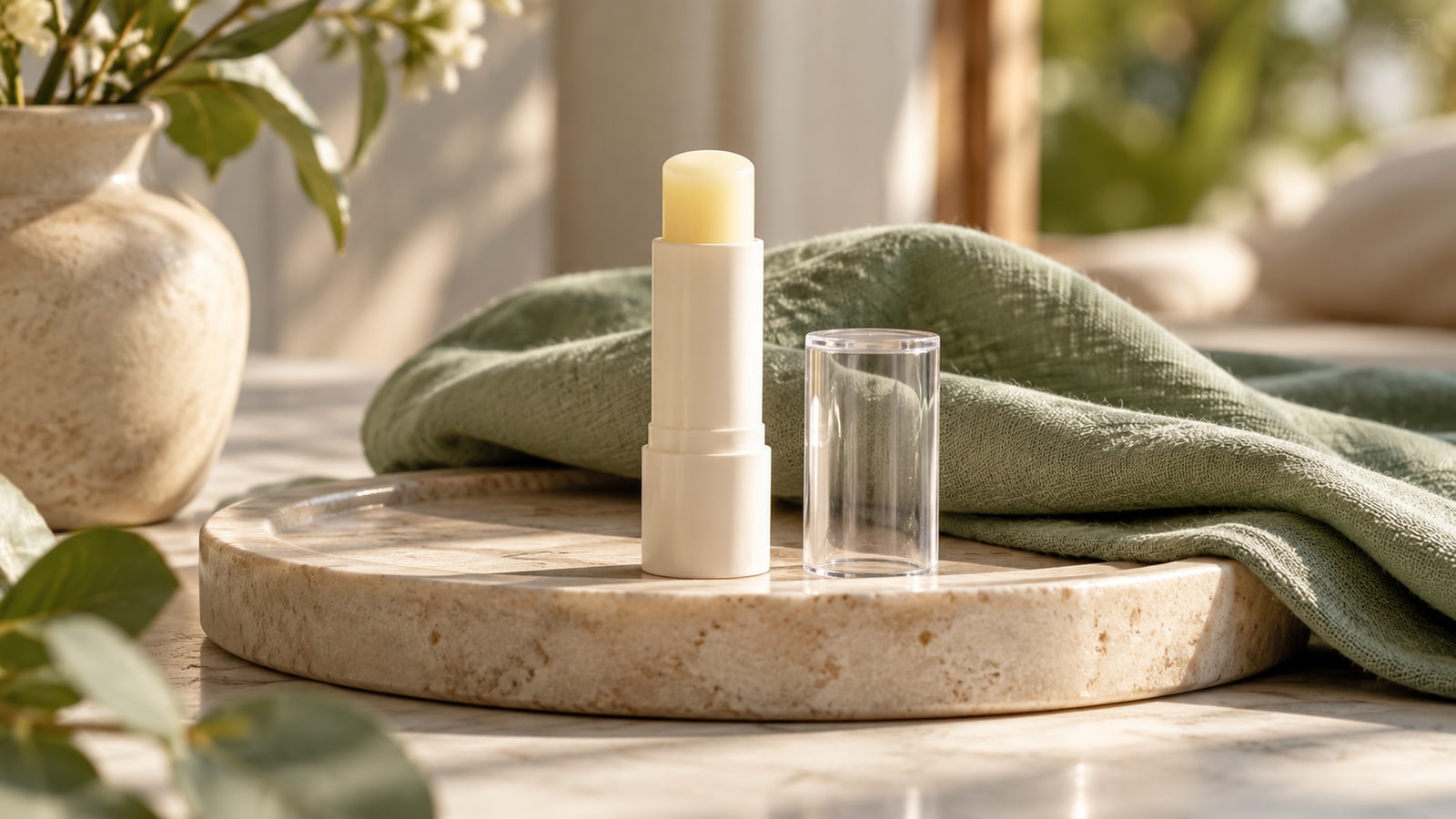
A useful everyday lip balm should feel comfortable and fit the job you need it to do. That might be protecting dry lips, providing a manageable texture beneath lipstick or adding suitable sun protection outdoors. A dramatic tingle or an elaborate ingredient story is not a requirement.
When lips are already sore, it helps to simplify the choice and pay attention to how they respond. Persistent inflammation may need assessment, particularly if applying more of the same balm repeatedly is not improving the problem.
Key takeaways
- Choose a comfortable product rather than treating burning or tingling as a benefit.
- Plain protective ingredients such as petroleum jelly can be useful.
- Fragrance and flavouring may matter when lips are irritated.
- Natural ingredients are not automatically free from allergy risk.
- Persistent, worsening or unusually painful symptoms need appropriate advice.
On this page
- Start with the purpose of the product
- Recognise a simple protective option
- Do not interpret stinging as proof of effectiveness
- Fragrance, flavour and contact allergy
- Keep everyday handling straightforward
- Choose, notice, simplify, seek advice
- Include outdoor protection
- Know when product shopping is no longer enough
- Common questions
- Sources and further reading
Start with the purpose of the product
A tinted balm, a fragranced gloss, a lip plumper and a plain protective ointment may sit next to one another in a shop, but they serve different purposes. Decide what you need before comparing names or claims.
If comfort is the main goal, ask whether the product adds sensory features you do not actually want. A favourite flavour may be enjoyable when your lips are comfortable but unhelpful when you are trying to identify the cause of irritation.
Our guide to reading an ingredient list explains how to use the information without assuming that one fashionable ingredient guarantees the whole formula will suit you.
Recognise a simple protective option
NHS advice for dry lips includes products containing petroleum jelly or beeswax, while noting that people can be sensitive to some ingredients. A product can therefore be a reasonable starting option without being suitable for every individual.
Look for packaging and a texture you can use comfortably. A tube may be convenient at work; a plain ointment may suit a quieter evening routine. Price, scent and an attractive case do not establish whether your lips will tolerate the formula.
If you have a diagnosed allergy, use the ingredient-avoidance advice given by your clinician. Do not replace that specific guidance with a general recommendation for a “simple” or “natural” product.
Do not interpret stinging as proof of effectiveness
The American Academy of Dermatology advises stopping lip products that burn, sting or feel uncomfortable. It identifies ingredients such as menthol, camphor, fragrance and some flavourings as possible problems for already chapped lips.
You do not need to endure a sensation to prove commitment to a routine. Note the product and what happened, then avoid repeatedly reapplying it to see whether the discomfort eventually becomes acceptable.
If several products are being used together, consider the whole sequence: balm, lipstick, gloss and any product used to remove them. This gives a clinician a clearer account than mentioning only the newest purchase.
| Feature | Useful question | Reason to pause |
|---|---|---|
| Fragrance or flavour | Do I need this sensory feature? | Discomfort after application |
| Plain protective formula | Does it feel comfortable and suit known allergies? | Assuming simplicity guarantees tolerance |
| SPF claim | What protection and reapplication directions are given? | Using a tiny cosmetic amount as the whole plan |
| Natural or botanical claim | What ingredients are actually present? | Assuming allergy is impossible |
Fragrance, flavour and contact allergy
DermNet describes contact reactions to lip products, including allergic contact cheilitis. Cheilitis means inflammation of the lips. Fragrances, flavourings and other components can be relevant, and more than one factor may contribute.
Persistent scaling, soreness or swelling cannot be diagnosed from a label alone. A clinician may consider formal patch testing, including relevant ingredients and your own products, when contact allergy is suspected.
Our guide to fragrance in skincare explains why attractive scent descriptions are not a tolerance guarantee. Botanical or bee-derived ingredients are still ingredients that need to be considered in an individual allergy history.
Keep everyday handling straightforward
NHS guidance advises clean hands before applying balm and avoiding sharing lip products. It also discourages licking, biting and picking dry lips. These small habits are worth considering alongside the product choice.
Keep the cap and applicator clean, and follow the storage and expiry information. If a product has been left open in a bag or you no longer know what it is, replace uncertainty with a clearly labelled option.
Think about where you need access to it. A usable product left in another room is less practical than one you can find when needed. There is no need for a large collection if a small, well-chosen routine meets your needs.
Choose, notice, simplify, seek advice
- Choose: Match the product to comfort and protection needs.
- Notice: Pay attention to soreness or stinging.
- Simplify: Avoid repeatedly layering irritating products.
- Seek advice: Get persistent or worsening symptoms assessed.
Include outdoor protection
AAD recommends a lip balm with SPF 30 or higher for outdoor use and reapplication during exposure. Check the product directions, including what to do after activities that remove it.
Choose a sun-protective product you can apply comfortably rather than assuming that a glossy finish provides protection. If the product irritates your lips, seek an alternative instead of continuing solely because its label looks reassuring.
Pack it alongside your other sun-protection items when planning an outing. A separate lip product can be easy to forget when the rest of the routine focuses on the face, neck and hands.
Know when product shopping is no longer enough
NHS advice is to seek help when lips become hot, painful and swollen. A pharmacist can also advise about dry lips. AAD recommends assessment when chapping does not improve with appropriate care over a few weeks.
Bring a short timeline and the products used if you seek advice. Note whether symptoms began before or after a change, but avoid deciding in advance that one ingredient must be responsible.
Our guide to home spot tests and medical patch testing explains the difference. Repeated self-testing on already inflamed lips is not a substitute for a clinical assessment.
Common questions
Should lip balm tingle?
Tingling or burning is not a necessary sign of benefit; stop a product that irritates.
Is petroleum jelly a reasonable option?
It is included in dry-lip guidance, though individual allergies and response still matter.
Are natural balms allergy-proof?
No. Natural ingredients can still be relevant to contact reactions.
Do I need a flavoured balm?
No. Flavour is optional and may complicate care when lips are irritated.
Can I share a balm?
NHS advice is to avoid sharing lip products.
Does licking help dryness?
It is a habit dry-lip guidance advises avoiding, along with biting and picking.
What SPF should I consider outdoors?
AAD recommends SPF 30 or higher, used and reapplied according to directions.
What if symptoms keep returning?
Seek assessment and bring your product history rather than repeatedly buying more balms.
Sources and further reading
Sources checked 22 October 2026. General product guidance does not replace investigation of persistent cheilitis.
Keep exploring
Water-Resistant Sunscreen: What to Do After Swimming and Sweating
Understand water-resistant sunscreen labels and plan reapplication after swimming, sweating and towel drying, with UK advice separated from US labelling.
Sunscreen Sprays, Sticks and Creams: Application Trade-Offs
Compare sunscreen sprays, sticks and creams by coverage, practical handling and application precautions without assuming one format suits every situation.
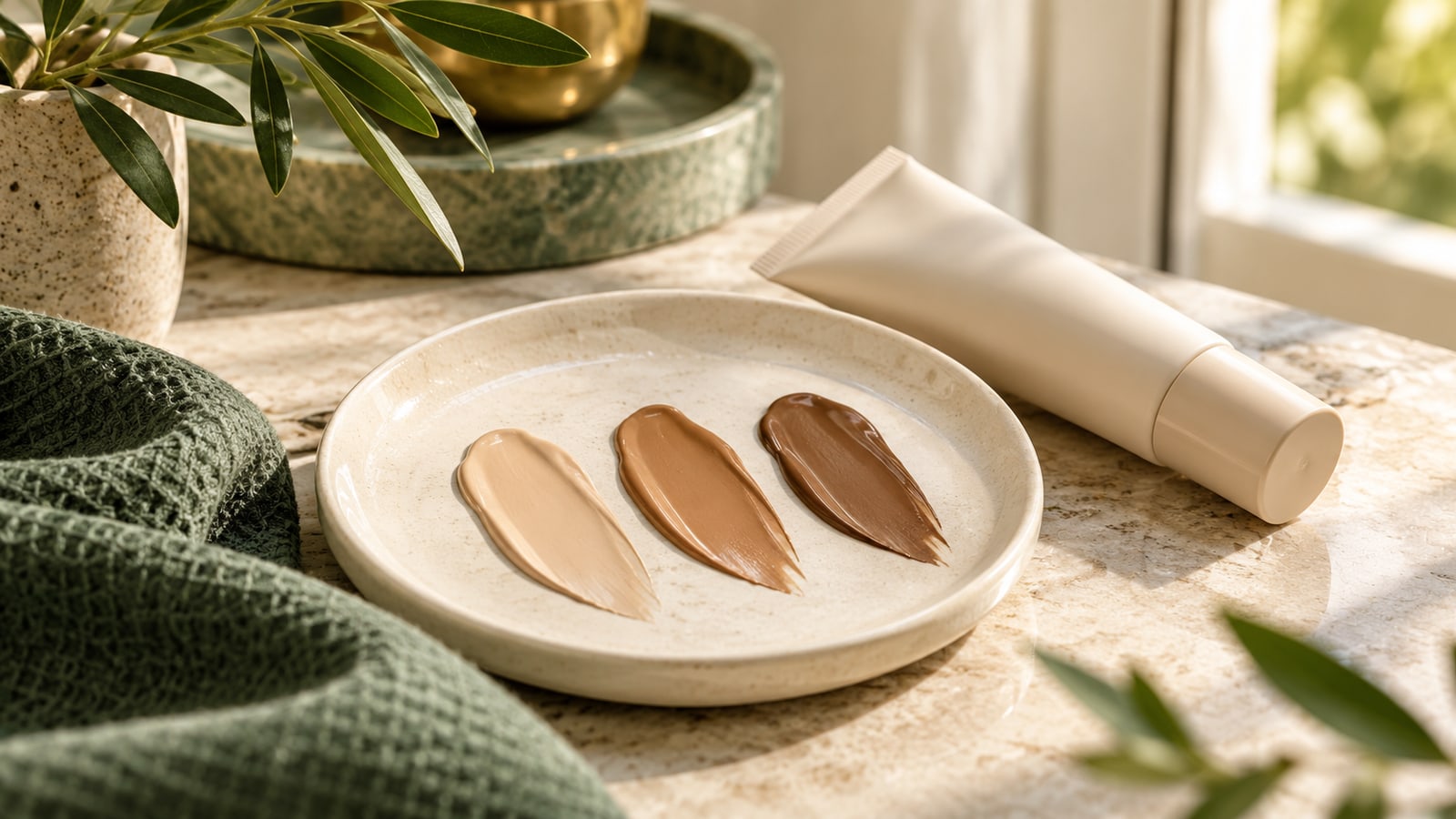
Tinted Sunscreen: Shade Matching, Iron Oxides and Visible-Light Claims
Compare tinted sunscreen by UV protection, iron oxides, shade fit and application amount, with clear limits on what melasma research can establish.
Sunscreen Under Make-Up: Applying Both Without Relying on SPF Cosmetics
Apply sunscreen beneath make-up with adequate coverage, manageable layering and a practical reapplication plan rather than relying on light SPF cosmetics.