Skin Changes During Menopause: Dryness, Sensitivity and Care Options
Understand dry, itchy or sensitive skin around menopause, review your routine and prepare questions about skin assessment and individual treatment options.
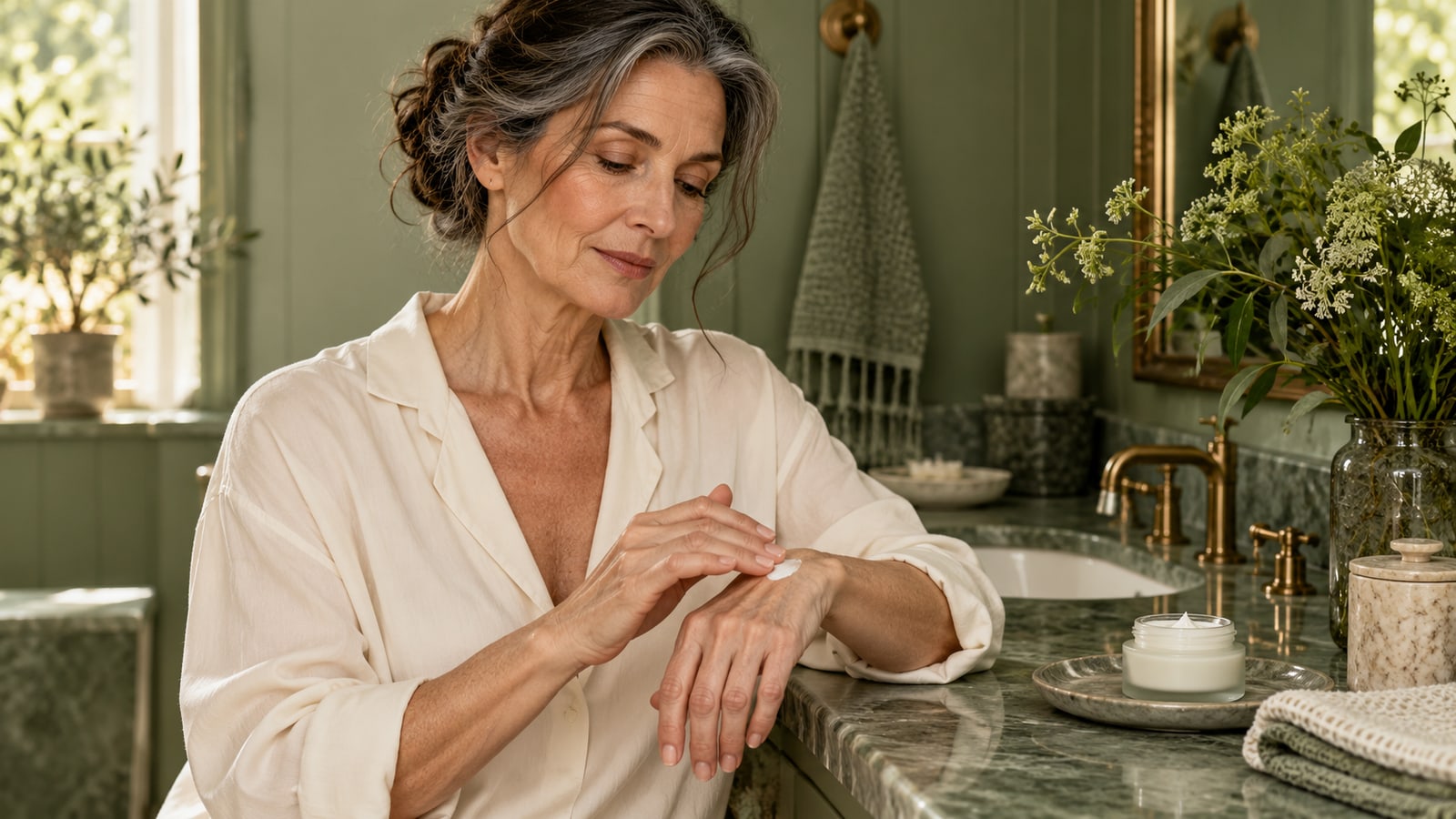
Skin that once felt comfortable with a familiar routine can become drier or more easily irritated around perimenopause and menopause. These changes may arrive alongside other symptoms or become noticeable on their own. They can be frustrating without meaning that your skin has suddenly become impossible to care for.
A useful response combines gentle care with attention to symptoms that need assessment. Menopause can be relevant, but it should not become the explanation for every new rash, persistent itch or changing mark. This guide helps you organise the questions and avoid unnecessary product changes.
Key takeaways
- Dry or itchy skin can occur during perimenopause and menopause.
- Changes vary between people and may overlap with other skin conditions.
- A simpler routine can make comfort and tolerance easier to assess.
- HRT decisions require an individual discussion of benefits and risks.
- Persistent or concerning changes should not be dismissed as hormonal.
On this page
- Understand the range of possible changes
- Start by reviewing the existing routine
- Make cleansing and moisturising comfortable
- Be thoughtful about exfoliation and active products
- Keep sun protection part of the discussion
- Discuss HRT as medical care, not a beauty purchase
- Know when a separate skin assessment is needed
- Prepare for a useful follow-up
- Common questions
- Sources and further reading
Understand the range of possible changes
NHS guidance includes dry and itchy skin among symptoms of perimenopause and menopause. It also emphasises that experiences differ: some people have substantial symptoms, while others notice relatively little.
The American Academy of Dermatology describes reduced moisture retention, changes in skin thickness and increased irritation around menopause. Acne can also occur. This means that a face can feel dry while still developing spots; the two concerns are not mutually exclusive.
Use this information to describe your experience rather than to diagnose it. Write down what changed, when it began and which areas are affected. “My cheeks sting after washing, while my chin has new spots” is more useful than labelling the whole face as simply ageing.
Start by reviewing the existing routine
Gather the products you actually use, including cleansers, moisturisers, occasional masks and prescribed treatments. Note anything introduced shortly before the discomfort began. A routine can become complicated gradually, without one obvious moment when it changed.
Consider which products have a clear purpose and which are optional. Avoid adding several new ingredients at once in response to a new symptom. That makes it harder to identify the source of irritation or know what has helped.
Our guide to a simple skincare routine offers a framework for organising the essentials. Prescribed medicines need their own discussion with the prescriber rather than being stopped as part of a cosmetic clear-out.
Make cleansing and moisturising comfortable
The American Academy of Dermatology recommends mild cleansing and moisturising for menopausal dryness. It also suggests a fragrance-free moisturiser when irritation is a concern. The aim is comfortable daily care rather than a strong sensation or visible peeling.
Choose a texture you can use consistently and follow the product directions. A moisturiser does not need a menopause-specific name to be worth considering. The full formulation, your tolerance and practical preferences matter more than the age category on the packaging.
If applying a product repeatedly causes discomfort, make a note and ask a pharmacist or clinician for advice. Do not assume that stinging is evidence that a product is stimulating useful renewal.
| What you notice | Useful response | Assumption to avoid |
|---|---|---|
| Dryness after cleansing | Review cleanser and moisturiser tolerance | More exfoliation is automatically needed |
| Persistent rash or worsening skin disease | Arrange an assessment | All midlife symptoms are hormonal |
| New spots alongside dryness | Discuss a tolerable acne plan | The strongest drying product is best |
| Wider menopause symptoms | Discuss the whole picture with a clinician | A cosmetic cream can address every symptom |
Be thoughtful about exfoliation and active products
If your skin feels rough, it can be tempting to scrub more frequently or combine several products advertised for renewal. Pause to consider whether the roughness is accompanied by soreness, itching or a rash. Those details may change the appropriate advice.
Our guide to excessive exfoliation explains signs that a routine deserves review. Do not use an upcoming event as a reason to introduce several strong products in a hurry.
If a clinician recommends an active treatment, ask how to fit it around the rest of your routine and what to do if irritation occurs. A clear plan is easier to follow than alternating several online suggestions.
Keep sun protection part of the discussion
Skin care during menopause still includes protection from ultraviolet exposure. Think about shade, clothing and a suitable sunscreen rather than treating a moisturiser as the whole routine. Our guide to sunscreen labels explains the different claims on the pack.
If a sunscreen feels uncomfortable, ask about another suitable formulation instead of abandoning protection. Mention any diagnosed skin condition or recent procedure that affects what you can use.
A new or changing mark should be assessed on its own merits. Calling something an age spot without checking it can delay appropriate advice. Photographs may help describe change, but they cannot establish what a lesion is.
Discuss HRT as medical care, not a beauty purchase
Hormone replacement therapy is used to manage menopause symptoms. NHS information explains that there are different preparations and ways of taking it. Choosing among them involves more than whether a product might improve skin appearance.
NICE recommends discussing benefits and risks in the context of age, circumstances and potential risk factors. Medical and family history can affect that conversation. Do not start, change or seek a hormone prescription solely on the strength of a skincare claim.
If dryness is one part of a broader pattern involving sleep, hot flushes or other symptoms, bring the whole picture to the appointment. Explain which symptoms matter most to you and ask what options are suitable. A skin concern is valid, but it belongs within an individual assessment.
Know when a separate skin assessment is needed
Seek help for a rash that persists, an existing condition that worsens or symptoms that interfere with normal activities. It is reasonable to ask whether eczema, rosacea, contact irritation or another cause needs consideration.
Generalised or persistent itching also deserves attention. Our guide to itching without an obvious rash explains why the absence of visible changes does not mean that support is unnecessary.
Tell the clinician about new medicines and products, and explain whether symptoms began before or after them. Avoid deciding that menopause must be responsible simply because the timing seems plausible.
Prepare for a useful follow-up
Before leaving an appointment, clarify what to use, when to review progress and what should prompt earlier contact. Ask how a prescribed treatment differs from optional skincare and whether any products need to be kept separate.
A brief record of comfort, sleep disruption or recurring symptoms can help you report progress. You do not need to track every line or take daily close-up photographs to demonstrate that care matters.
The aim is a routine and treatment plan that fits your current needs. Skin changes do not create an obligation to buy an extensive anti-ageing programme or pursue cosmetic procedures.
Note symptoms, timing and the areas affected.
Review comfort and avoid several new products at once.
Seek individual advice for persistent or wider symptoms.
Common questions
Can skin changes begin before periods stop?
Yes. Symptoms can occur during perimenopause as well as menopause.
Is every new rash caused by menopause?
No. Persistent or concerning changes need assessment rather than an automatic explanation.
Can skin be dry and acne-prone at the same time?
Yes. Ask for a plan that accounts for both concerns.
Do I need a moisturiser marketed for menopause?
No. Suitability and tolerance matter more than an age-related product label.
Should I exfoliate more if skin feels rough?
Not automatically. Consider irritation and seek advice when symptoms persist.
Is HRT simply an anti-ageing treatment?
No. It is medical treatment requiring an individual benefits-and-risks discussion.
Should I stop prescribed skincare if it stings?
Contact the prescriber for advice about the reaction and the next step.
What should I bring to an appointment?
A brief symptom history and details of medicines, products and other menopause concerns.
Sources and further reading
Sources checked 22 October 2026. This article does not prescribe hormone treatment or claim clinical review.
Keep exploring

Hidradenitis Suppurativa: Recognising Symptoms and Finding Support
Recognise recurring painful lumps, understand HS without stigma and prepare questions about treatment, wound care and support.

Vitiligo: Pigment Changes, Treatment Choices and Support
Understand vitiligo, assessment, sun protection and treatment choices, with practical questions and support without pressure to change your appearance.
Hand Dermatitis: Managing Skin Irritation from Frequent Washing
Understand hand irritation from frequent washing, practical skin care and when persistent symptoms need assessment.

Sunburn: Sensible First Steps and Signs You Need Medical Advice
Learn sensible first steps for sunburn, when to seek urgent advice and how to recognise heat illness that needs emergency help.