Clarifying Shampoos: Product Build-Up, Uses and Irritation Risks
Decide whether clarifying shampoo fits your routine, distinguish residue from scalp symptoms and avoid unnecessary cleansing or irritation.
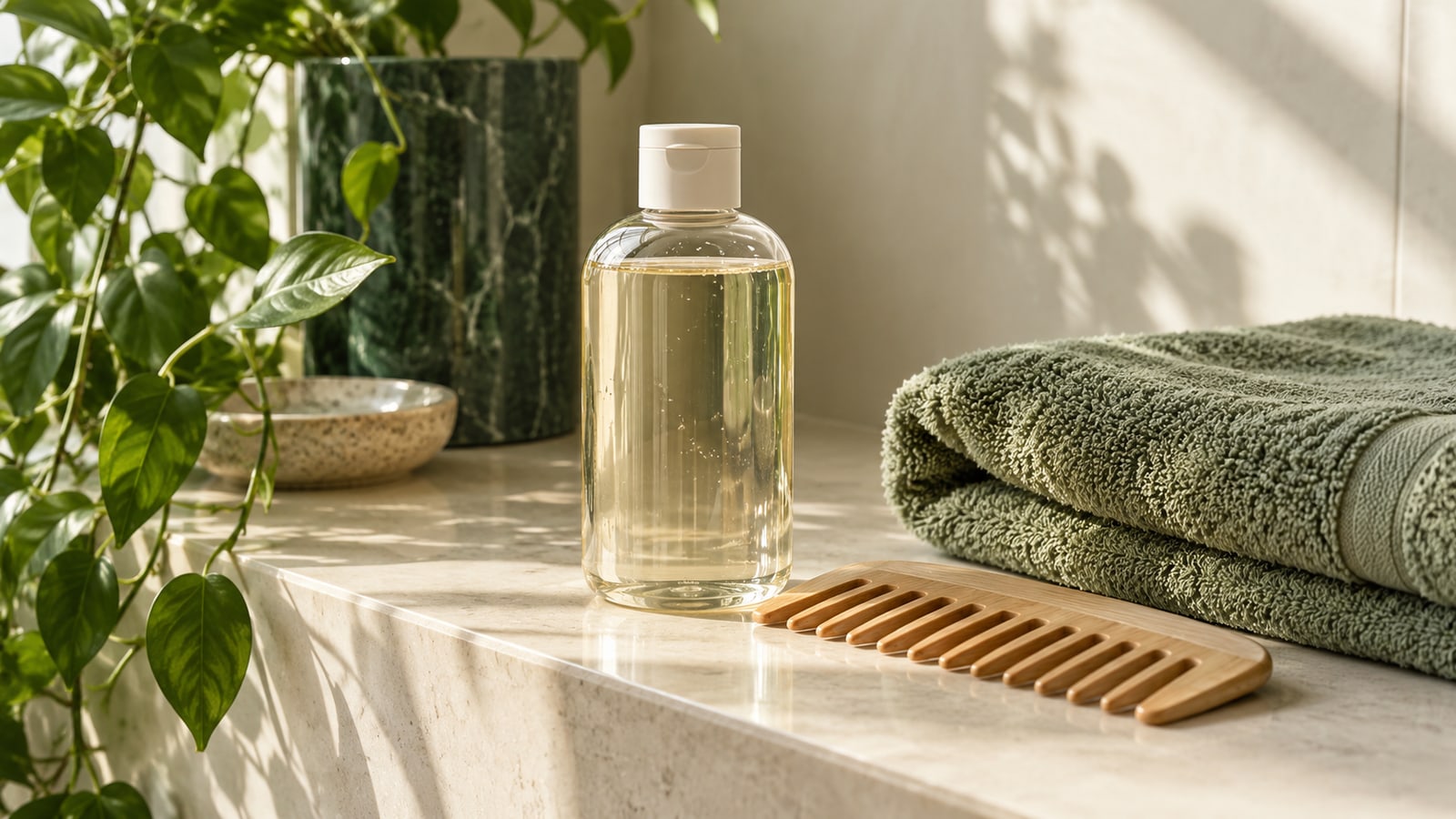
Clarifying shampoos are marketed for removing product build-up and leaving hair feeling cleaner. They may have a place in some routines, but a stronger cleansing step is not automatically the answer to every flaky, itchy or uncomfortable scalp.
The useful decision is whether there is a cleansing problem to solve, which product fits your hair and how to avoid making irritation worse. This guide explains the role of clarifying products without prescribing a universal weekly schedule or treating a squeaky feeling as proof of healthy hair.
Key takeaways
- Clarifying is a product description, not a diagnosis or a fixed treatment standard.
- Formulation and your styling routine matter more than the label alone.
- Product residue, dandruff and inflamed skin are different concerns.
- Hair texture, colour treatments and dryness should shape product choice.
- Persistent symptoms need assessment rather than progressively stronger cleansing.
On this page
- What is a clarifying shampoo intended to do?
- Look at the whole routine first
- Do not confuse build-up with dandruff
- Consider texture and the condition of the lengths
- Follow the exact product instructions
- Keep irritation separate from effectiveness
- Avoid homemade scalp experiments
- Review whether the extra step is useful
- Choose simplicity when it works
- Common questions
- Sources and further reading
What is a clarifying shampoo intended to do?
A dermatology review of hair cleansing describes deep-cleaning or clarifying shampoos as products intended for more intensive removal of oil and styling residue. Shampoo surfactants help oily material wash away with water, while the complete formulation affects cleansing strength and how hair feels afterwards.
The term clarifying does not tell you every ingredient or guarantee that two products behave identically. Read the directions and intended use. A product suitable for occasional residue removal may not be the most comfortable everyday choice for your particular hair.
Ask what you are trying to remove. A waxy feel after several styling products is a different observation from painful skin or recurrent flakes. The distinction helps avoid treating a medical symptom as though it simply reflects insufficient washing.
Look at the whole routine first
Consider your ordinary shampoo, conditioner, styling products and how often you wash. Note whether the problem appeared after a change. You do not need to label every ingredient as good or bad to recognise that a particular combination may be leaving unwanted residue.
Before adding another bottle, check whether the existing products are being used and rinsed according to their directions. A smaller or simpler styling routine may be worth considering if you are repeatedly trying to remove layers that you do not actually need.
Our guide to hair-washing frequency explains how scalp oiliness, texture and practical circumstances affect cleansing needs. Someone else’s wash-day schedule is not a reliable prescription for your own scalp.
Do not confuse build-up with dandruff
Flakes can have different explanations. A clarifying product may remove some surface material, but that does not establish why the flakes appeared or whether an underlying condition has been treated.
If the scalp is persistently itchy, inflamed or sore, describe the symptoms to a pharmacist or clinician. Our guide to anti-dandruff shampoo ingredients explains why a medicated product has its own purpose and directions.
Do not assume that a shampoo labelled detox replaces an antifungal medicine or another prescribed treatment. Equally, do not add a medicated product simply because a cosmetic shampoo has not made the scalp feel the way you expected.
| What you notice | Useful question | What not to assume |
|---|---|---|
| Residue after styling | Which products and cleansing method are involved? | Everyone needs the same clarifying schedule |
| Dry or tangled lengths | Would stronger cleansing add to the problem? | A squeaky feel means healthier hair |
| Persistent flakes and itch | Does the scalp need assessment or targeted treatment? | All flakes are product build-up |
| Burning after a new shampoo | Could the product be irritating the skin? | Discomfort shows a successful detox |
Consider texture and the condition of the lengths
The American Academy of Dermatology recommends adapting washing to how oily or dirty the scalp becomes and paying attention to hair texture. It advises focusing shampoo on the scalp, while conditioner can be directed according to the needs of the hair.
Dry, curly, coily, bleached or otherwise fragile lengths may need particular care when choosing a stronger cleanser. Describe the condition of both scalp and lengths when asking for advice rather than treating the whole head as one uniform surface.
If you colour your hair or have a salon treatment, check the product’s compatibility instructions and ask the professional who knows what was used. A broad promise of deep cleaning does not answer whether the product suits that specific treatment.
Follow the exact product instructions
Do not assume that longer contact time, repeated lathering or more frequent use produces a better outcome. Use the directions for the product you have, and avoid combining several strong cleansers in an attempt to obtain a particularly stripped feeling.
Rinse as directed and handle wet hair gently. If the result is uncomfortable, excessively dry or difficult to manage, reconsider the product rather than deciding that your hair must adapt to it.
A useful routine should be repeatable without dread or discomfort. There is no need to continue a product merely because a label says it is professional, salon-grade or designed for a complete reset.
Keep irritation separate from effectiveness
NHS contact dermatitis guidance explains that substances touching the skin can cause irritation or allergic reactions. Itching, soreness, cracking or a rash after product use should not be interpreted as proof that the product is removing toxins.
Stop an optional cosmetic that is causing a reaction and seek advice when symptoms persist or are substantial. Keep the packaging and describe when the symptoms began. Do not repeatedly test a suspect product over an already inflamed scalp.
Our guide to irritant and allergic contact dermatitis explains why a home guess cannot reliably distinguish them. A clinician may need to review the pattern and your exposures.
Avoid homemade scalp experiments
There is no need to make a stronger cleanser by adding household acids, alkalis or concentrated essential oils. A formulated shampoo has directions for its intended use; an improvised mixture may behave differently and make it harder to identify the cause of a reaction.
Similarly, vigorous brushing or scratching is not a substitute for appropriate cleansing. If something seems firmly attached to the scalp or the skin becomes sore, ask for advice rather than increasing force.
Do not use another person’s prescribed scalp product to solve a cosmetic build-up concern. The diagnosis and instructions may be different, and sharing a treatment does not establish that it is suitable for you.
Review whether the extra step is useful
If you try a suitable clarifying product, consider whether it solved the specific problem that prompted the purchase. Did residue become easier to manage without creating dryness or discomfort? Or did the routine simply acquire another step?
A short note about the product and your response can help when asking for advice. Avoid turning ordinary changes in shine or volume into a daily scoring exercise. The aim is manageable hair and a comfortable scalp.
Seek assessment for persistent inflammation, painful bumps, discharge, significant hair loss or symptoms that keep returning despite sensible care. A stronger shampoo is not an all-purpose response to a scalp problem.
Choose simplicity when it works
Some routines may benefit from occasional additional cleansing, while others do not need a separate clarifying product. The decision depends on the actual products, scalp and hair involved. A universal instruction to clarify every week ignores that variation.
It is reasonable to keep using an ordinary shampoo that works well for you. The absence of a detox step does not mean your routine is incomplete. Add complexity only when it has a clear, tolerable purpose.
Separate residue from symptoms of inflamed skin.
Consider the full formula, texture and current routine.
Keep useful changes and seek help for persistent symptoms.
Common questions
Does everyone need clarifying shampoo?
No. An ordinary cleansing routine may already meet your needs.
Is every flaky scalp caused by build-up?
No. Persistent flakes or itch can need a different assessment and treatment.
Should I clarify on a fixed weekly schedule?
No universal schedule suits every formula, hair texture and styling routine.
Does a squeaky feeling prove better cleansing?
It does not establish that the product is the best choice for your scalp or hair.
Can I leave it on longer for a deeper clean?
Follow the actual directions rather than extending contact time yourself.
Can it replace anti-dandruff treatment?
Do not assume that. A medicated shampoo has a specific purpose and instructions.
What if a new product makes my scalp burn?
Stop the optional product and seek advice for significant or persistent symptoms.
Should I keep the packaging?
Yes, particularly if you need advice about ingredients, directions or a possible reaction.
Sources and further reading
Sources checked 22 October 2026. Older formulation literature is used for basic cleansing principles, not a universal modern product schedule. Clinical review is not claimed.
Keep exploring

How Often Should You Wash Your Hair? Scalp Needs and Hair Texture
Choose a hair-washing routine around scalp comfort, texture and product build-up, with guidance on persistent symptoms and medicated shampoos.

Caring for Curly and Coily Hair While Protecting the Scalp
Build a manageable curly or coily hair routine with gentle detangling, scalp cleansing, lower-tension styling and advice on when to seek assessment.

Anti-Dandruff Shampoo Ingredients: What to Ask a Pharmacist
Ask a pharmacist about dandruff shampoo ingredients, contact time and hair texture, and recognise when persistent scalp symptoms need assessment.
Heat Styling and Hair Damage: A Practical Care Guide
Review heat settings, repeated styling and combined processing, with practical ways to reduce hair damage and recognise concerns needing assessment.