Professional Microneedling: Evidence, Risks and What a Consultation Should Cover
Assess professional microneedling claims, understand the limits of evidence and prepare questions about devices, risks, combinations and aftercare.
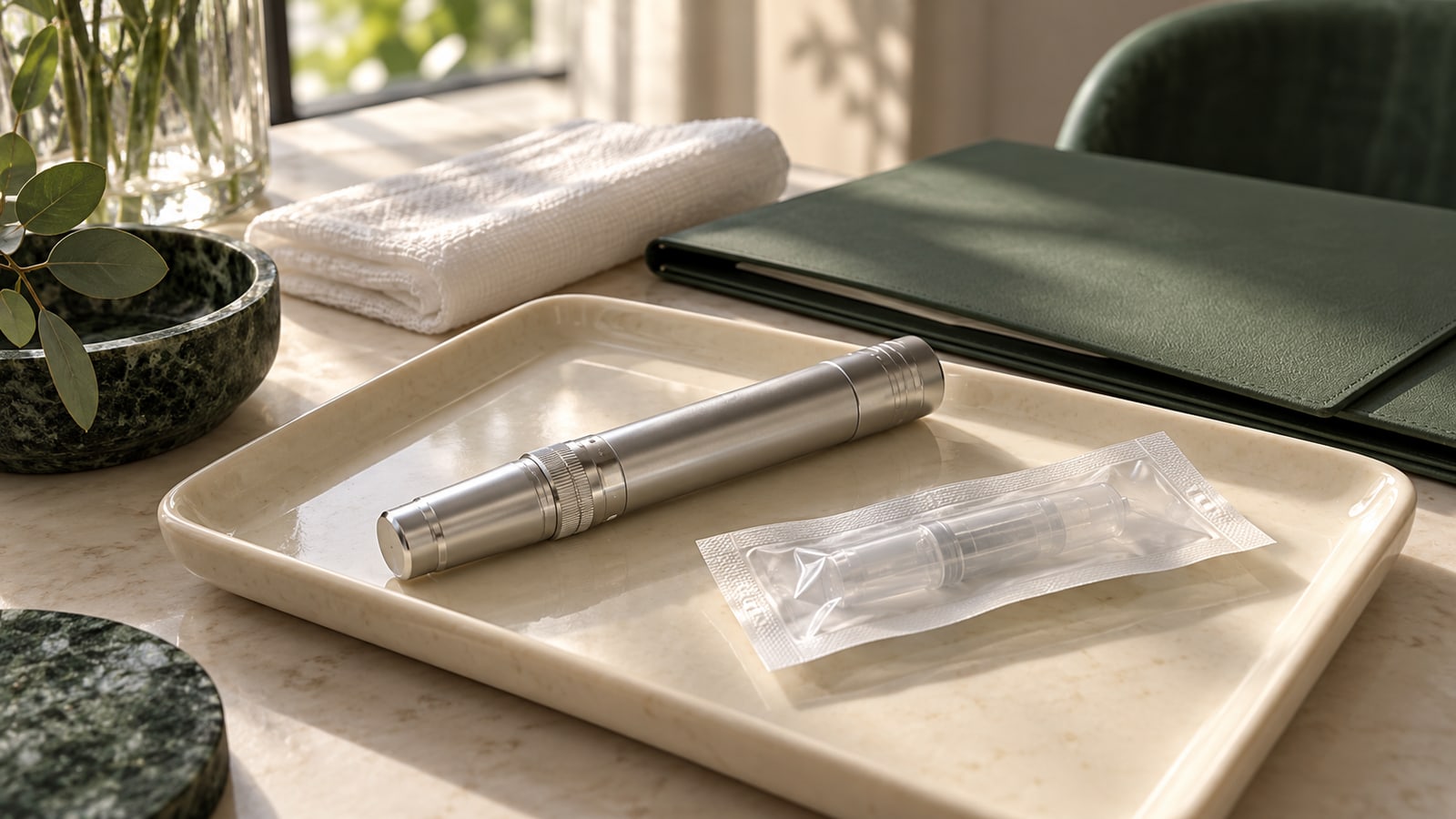
Professional microneedling is often promoted with a broad promise of better skin. A useful consultation should be more precise: what is being treated, what improvement is plausible, which device and approach are proposed, and what risks apply to you?
This guide concerns conventional professional microneedling. Radiofrequency microneedling adds energy and needs its own risk discussion. It is not a guide to using a roller or selecting needle settings at home.
Key takeaways
- Evidence for one type of scar or device cannot establish results for every skin concern.
- Improvement is different from complete scar removal, and results develop over time.
- Infection, pigment changes and other complications belong in the consultation, even when a treatment is marketed as minimally invasive.
- Ask separately about any added product or combined procedure.
- Written aftercare, practitioner experience and a clear review plan are part of the decision.
On this page
What conventional microneedling involves
DermNet describes skin needling, also called collagen induction therapy, as a procedure that creates controlled small injuries using a needling device. Healing responses are used with the aim of improving features such as scar appearance or texture. Devices vary, and a treatment name alone does not describe the complete procedure.
Ask the clinic to name the device, the proposed area and the specific concern it aims to treat. A package called “skin renewal” may tell you very little. Put the concrete goal into your own words: for example, improving the appearance of particular acne scars rather than achieving an undefined perfect complexion.
If you still have active spots, discuss those separately from established scars. Our adult acne guide explains why assessment of the current condition matters before choosing cosmetic treatment.
How to interpret the evidence without turning it into a promise
A 2014 randomised trial of acne-scar needling enrolled 20 adults, of whom 15 completed the study. One side of the face was treated, allowing comparison within each participant. Scar scores improved on the treated side at six months. It was a small, single-centre study, so it does not establish a guaranteed result, a universal treatment schedule or the frequency of rare complications.
The important reading skill is to match the research to the proposal. Was the study about your concern? Did it use a comparable device and outcome measure? Was the result assessed after swelling had settled? If a clinic quotes an improvement percentage, ask for the original study and how closely its participants and treatment match your situation.
A before-and-after photograph can illustrate one person’s experience but cannot give your probability of success. Ask about consistent lighting, whether other treatments were used and when the images were taken. A convincing discussion should make space for partial improvement and for choosing no treatment.
| Claim you may hear | Clarify this | Why it matters |
|---|---|---|
| Improves scars | Which scar type and how will improvement be assessed? | Different concerns should not share an undefined endpoint |
| Minimal downtime | What changes could affect work, events or skincare? | Your practical recovery needs may differ from the clinic’s shorthand |
| A course is recommended | When will benefit be reviewed before further sessions? | A review point avoids treating a package as a guarantee |
| An added serum boosts results | What is the product, evidence and additional risk? | A combined treatment requires its own explanation |
Risks and suitability belong before booking
The US Food and Drug Administration’s device information lists effects such as discomfort, redness, bleeding and peeling, with less common risks including infection, pigment change and cold-sore reactivation. It also identifies medical histories and medicines that may make treatment unsuitable. These are US device-safety resources, not a statement of UK authorisation.
Bring an accurate list of prescribed medicines, non-prescription products and previous reactions. Mention cold sores, unusual scarring, recent skin problems and any current medical treatment. Ask how the practitioner will decide suitability, what would postpone treatment and whether advice from your treating clinician is needed. Do not stop prescribed medicines to fit a cosmetic appointment.
The American Academy of Dermatology warns that home microneedling can cause infection, scarring or spread infections across skin. Professional assessment is not replicated by buying a similar-looking tool. It also explains that results develop gradually; immediate post-treatment appearance is not the final outcome.
Ask about the device, infection control and combinations
Ask whether a fresh needle cartridge is used for each person and each session. The FDA specifically warns against reusing cartridges, including after cleaning. Ask what is applied before, during and after treatment, and whether any step introduces a medicine, blood product or other substance. The FDA has not authorised microneedling devices to deliver those products into skin; claims about a combination should not borrow approval from a device alone.
For a UK consultation, ask the practitioner to explain the device’s applicable regulatory status and intended use in plain language. A logo or certificate photographed on a website is not a substitute for knowing what will actually be used on you. You can record the model and product names without needing to assess technical settings yourself.
If radiofrequency is proposed, pause the comparison with conventional needling. The FDA’s 2025 radiofrequency safety communication reports serious complications including burns, scarring, fat loss and nerve damage. This does not quantify your individual risk, but it makes a separate, device-specific discussion essential.
Make the consultation practical
Use our clinic consultation checklist to organise practitioner checks. Ask who performs the treatment, who assesses complications and how to reach that person. Experience relevant to your concern and skin characteristics matters more than a general claim of offering many treatments.
Agree on the concern, realistic improvement and how progress will be judged.
Identify the device, any combination treatment and your individual suitability assessment.
Record care instructions, contact arrangements, review timing and the full proposed cost.
Request a written quote that distinguishes the initial consultation, each session, products and reviews. Ask what happens if the plan changes after the first treatment. A payment commitment should not prevent you from reconsidering whether the procedure is worthwhile.
Our aftercare planning guide helps organise instructions for washing, skincare, sun exposure and returning to activities. These must be tailored to the actual procedure; this article does not supply a universal recovery timetable.
Common questions
Will microneedling remove acne scars completely?
Improvement in appearance is a more defensible goal than complete removal. Ask which scars the practitioner expects to change, which may respond less well and what would count as a worthwhile outcome for you.
Does one small trial prove a package will work?
No. A study can support a particular finding without validating every advertised course. Look at the participants, device, comparison and follow-up, and ask the clinic to explain the limits of applying it to you.
Is radiofrequency microneedling the same procedure?
No. Adding radiofrequency changes the treatment and its risk discussion. Make sure the consent conversation names it explicitly rather than relying on information about conventional needling.
Can I use a home roller between appointments?
Do not assume it is a harmless extension of professional care. Discuss any home device with your clinician; puncturing or repeatedly irritating skin can introduce risks and complicate the treatment plan.
Is microneedling suitable for every skin tone?
A treatment’s use across skin tones does not mean zero risk for each person. Ask about pigment-change risk, your past responses to injury and the practitioner’s experience with comparable skin characteristics.
Should I stop medication before a session?
Do not make that change yourself. Give the practitioner your full medicine list and arrange advice from the prescriber where needed. Postponing an elective treatment may be more appropriate than altering necessary care.
How soon should results be judged?
Agree on a review point before starting. Changes develop over time, and comparing an immediate photograph with a baseline can be misleading. Ask how the clinic will distinguish early recovery from a lasting result.
What if I decide not to proceed after consultation?
You can ask for time to think or choose no procedure. Request the written information and any cancellation terms. A consultation is an opportunity to assess a proposal, not an obligation to accept it.
Sources and further reading
Checked 21 October 2026. US regulatory statements are identified as such. This draft provides decision support, not procedural instructions or a claim of clinical review.
Keep exploring

Non-Surgical Radiofrequency Skin Tightening: Benefits, Limits and Risks
Understand external RF and RF microneedling, realistic skin-tightening benefits, device-specific risks and questions for a qualified practitioner.

Fat Freezing: What Cryolipolysis Can Achieve and the Risks to Discuss
Explore realistic fat-freezing outcomes, suitability questions, delayed PAH risk and what to clarify about costs, complications and follow-up.

Ultrasound Skin Tightening: Understanding the Procedure and Evidence
Explore ultrasound skin tightening, study limitations, discomfort and consultation questions about devices, realistic results, risks and follow-up.

Non-Surgical Body Contouring: Why Fat Reduction Is Not Weight-Loss Treatment
Understand why local body contouring differs from weight-loss treatment, how to assess evidence and what to ask about suitability, risks and cost.