Urea in Moisturisers: Why Product Strength and Skin Condition Matter
Learn why urea concentration, formulation and skin condition matter when choosing a moisturiser, with practical label checks and irritation precautions.
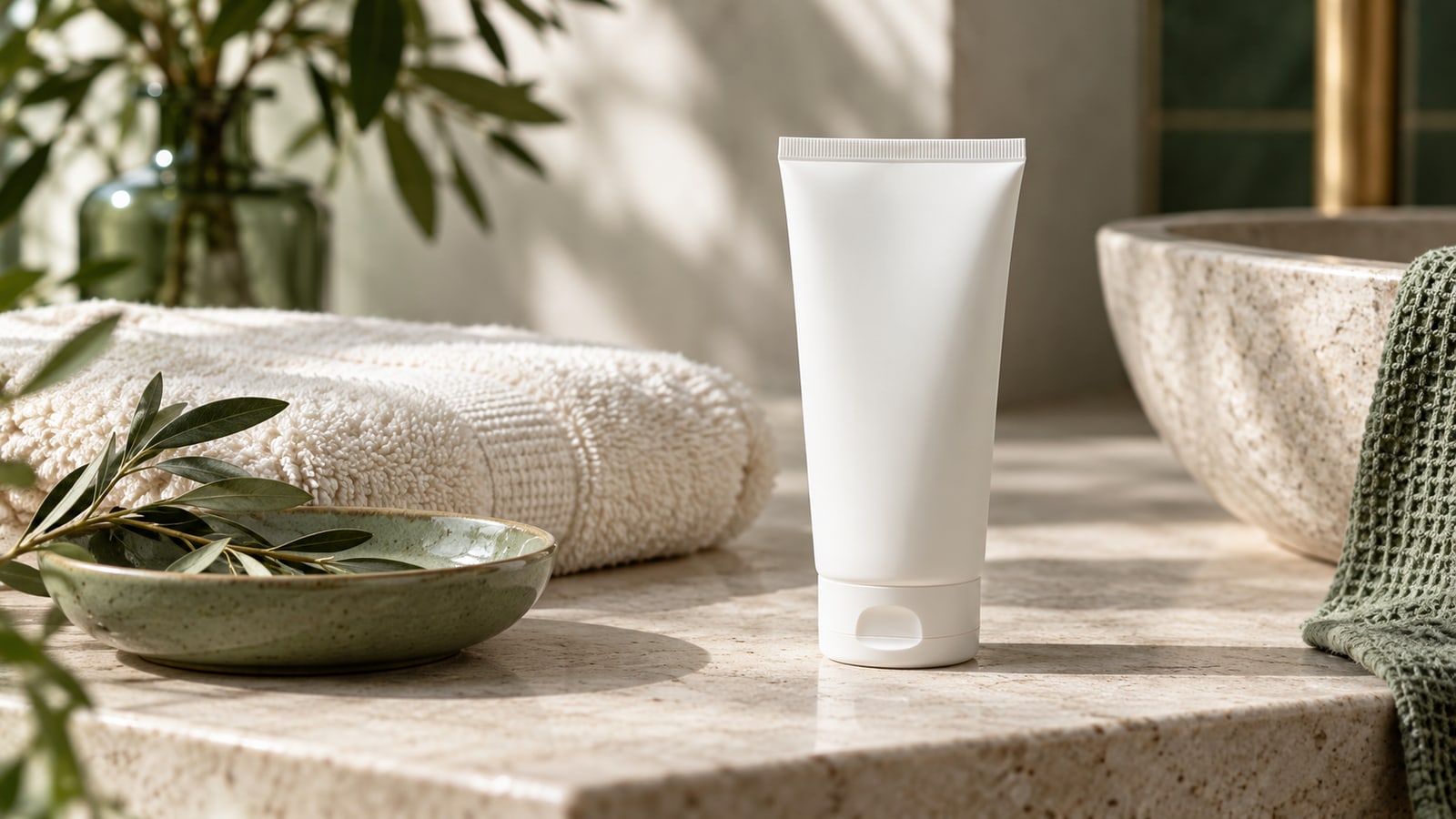
Urea appears in products ranging from everyday moisturisers to creams intended for thick, rough skin. Seeing the same ingredient on both labels can make them seem interchangeable. They are not necessarily designed for the same purpose, body area or skin condition.
The useful question is not simply whether urea is a good ingredient. It is whether a particular formulation is suitable for the skin you want to treat. Understanding concentration, the rest of the formula and the instructions helps you avoid choosing a product only because its percentage is higher.
Key takeaways
- Urea helps bind water in the outer skin layer.
- Higher concentrations can have a greater scale-softening role.
- A foot product is not automatically suitable for the face.
- Stinging is a reason to assess tolerance, not evidence of success.
- Follow the specific label and seek advice for damaged or diseased skin.
On this page
- What urea does in a moisturiser
- Why concentration changes the discussion
- Read the whole label before comparing products
- Be cautious with sore, broken or infected skin
- Keep prescribed treatment and optional skincare distinct
- Introduce a suitable product thoughtfully
- Remember the formulation’s handling precautions
- Decide whether it earns a place in your routine
- Common questions
- Sources and further reading
What urea does in a moisturiser
Urea is part of the skin’s natural moisturising factor. Cosmetic and medicinal preparations use manufactured urea. DermNet describes its water-attracting properties and its ability to soften the outer horny layer of skin, helping loosen scale.
These roles explain why it appears in different types of products. A formulation intended to improve the feel of dry skin may have a different emphasis from one used on a small area of thickened skin. The ingredient name alone does not tell you which task the product is designed to perform.
Think of the label as a description of the whole product. A cream also contains the ingredients that make its texture, preserve it and affect how it spreads. Two creams with the same urea percentage can feel different and may not suit the same person.
Why concentration changes the discussion
A 2018 research review describes lower concentrations, up to 10%, primarily as moisturising, with higher concentrations having a keratolytic role. Keratolytic means helping soften and remove excess outer-layer scale. This is a broad explanation of function, not a personalised prescription.
The boundary is not a competition in which a larger number automatically wins. A product formulated for thick skin on the feet may be unsuitable for a delicate or inflamed area. The intended site and directions matter alongside the percentage.
If a label does not clearly answer your question, ask a pharmacist. Bring the actual tube or a photograph of its full label. Describing it only as “the strong urea cream” can leave important details out of the conversation.
Read the whole label before comparing products
Check the intended use, body area, age guidance, application directions and warnings. Look for other active ingredients as well as fragrance or ingredients you already know you cannot tolerate. Urea does not make the rest of a formula irrelevant.
For example, the manufacturer’s information for Hydromol Intensive describes a 10% urea product and provides its own directions, irritation precautions and advice about other topical medicines. Those instructions belong to that preparation; they should not be copied to every urea product.
Our guide to fragrance and skincare labels explains another part of this comparison. A prominent ingredient claim on the front of a pack is only one part of the information available.
| Question | What to check | Why it matters |
|---|---|---|
| Where will it be used? | Face, body, feet or another specified site | Products are not universally interchangeable |
| What is the aim? | Moisturising or managing thickened scale | Different aims can call for different formulations |
| What is the skin like? | Intact, sore, cracked, inflamed or infected | Damaged skin may need professional advice |
| What else is being applied? | Prescribed creams and optional active products | The combined routine needs consideration |
Be cautious with sore, broken or infected skin
DermNet advises against applying urea preparations to broken, infected or oozing skin, or areas with severe widespread inflammation. It also notes that stinging, itching and rash can occur. Ask for advice if the area is cracked, bleeding or otherwise damaged rather than assuming a stronger cream is the solution.
The Hydromol manufacturer specifically notes that sensitive, moist or fissured skin may become irritated. If the condition worsens or unwanted effects occur, its advice is to stop using that product and consult a doctor or pharmacist.
Do not repeatedly apply more to prove that your skin can adapt. Keep a note of the product and response. A clinician can distinguish an unsuitable product from a skin problem that needs a different treatment approach.
Keep prescribed treatment and optional skincare distinct
If you use a prescribed cream, ask how a urea preparation fits around it. The research review discusses urea’s ability to affect penetration of other substances, and product instructions may advise checking combinations. There is no universal spacing rule that suits every medicine and formulation.
Show the pharmacist or prescriber your complete routine, including products used only occasionally. This is easier than asking whether urea “goes with acids” while leaving out the specific medicines, strengths and areas involved.
Our guide to skincare product order explains why more layers are not automatically useful. A simple, understandable plan is easier to follow and review if irritation develops.
Introduce a suitable product thoughtfully
Once suitability is clear, follow that product’s directions. Avoid starting several unfamiliar products on the same day. Otherwise, if the skin becomes uncomfortable, it will be difficult to identify which change mattered.
A limited home trial of a cosmetic can help you observe tolerance, but it cannot rule out allergy or establish safety for diseased skin. Our guide to home spot testing and medical patch testing explains that distinction.
Keep expectations practical. Notice comfort, ease of use and whether the intended dryness is improving. A product does not need to sting, peel visibly or produce an immediate dramatic change to justify its place in a routine.
Remember the formulation’s handling precautions
Follow storage and eye-contact instructions. Do not decant a product into an unlabelled pot if that means losing the directions or confusing it with another cream. Keep the original packaging available when asking for advice.
Some emollient products carry an important fire warning. Hydromol Intensive’s manufacturer warns that fabric contaminated with the product burns more readily; avoid smoking and naked flames. Washing fabric may reduce build-up without removing the risk completely. This is a product-handling issue, not a claim that urea itself is a flame.
For children, pregnancy or a diagnosed skin condition, check the specific product with a professional rather than borrowing a family member’s regimen. A formulation can be useful in one situation and inappropriate in another.
Decide whether it earns a place in your routine
You do not need to replace a comfortable moisturiser simply because another product advertises urea. Start with the problem you are trying to solve and the guidance relevant to it. Cost, texture and how easily you can use the product also matter.
If a moisturiser is not helping persistent scaling or discomfort, seek an assessment instead of climbing through stronger percentages. The next useful step may be identifying the skin condition rather than selecting a more concentrated cosmetic.
Match the product to the body area and intended use.
Get advice for damage, inflammation or other treatment.
Use the label directions and respond to discomfort.
Common questions
Is a higher urea percentage always better?
No. Concentration should suit the purpose, site and condition of the skin.
Can I put a foot cream on my face?
Do not assume it is suitable. Check its intended use and ask for advice.
Does stinging mean the cream is working?
No. It may indicate irritation and should not be treated as a target.
Are all 10% urea creams identical?
No. The complete formula and directions can differ.
Can urea replace treatment for eczema?
Do not replace a prescribed plan without discussing it with your clinician.
Can I apply it to bleeding cracks?
Seek advice for broken skin rather than applying a urea product independently.
Do I need to add urea if my moisturiser works?
No. There is no requirement to collect particular ingredients.
Who can help compare two products?
A pharmacist can review their labels alongside your symptoms and other medicines.
Sources and further reading
Sources checked 22 October 2026. The research review’s abstract and product-specific manufacturer information informed this guide; no brand recommendation or clinical review is claimed.
Keep exploring
A Simple Skincare Routine: The Essentials Before You Add More Products
A practical starting point for cleansing, moisturising and sun protection, with room for your skin’s needs and your budget.
How to Choose a Facial Cleanser for Your Skin’s Needs
Choose a facial cleanser by its purpose, instructions and comfort, with practical checks for labels, budget and your existing skincare.
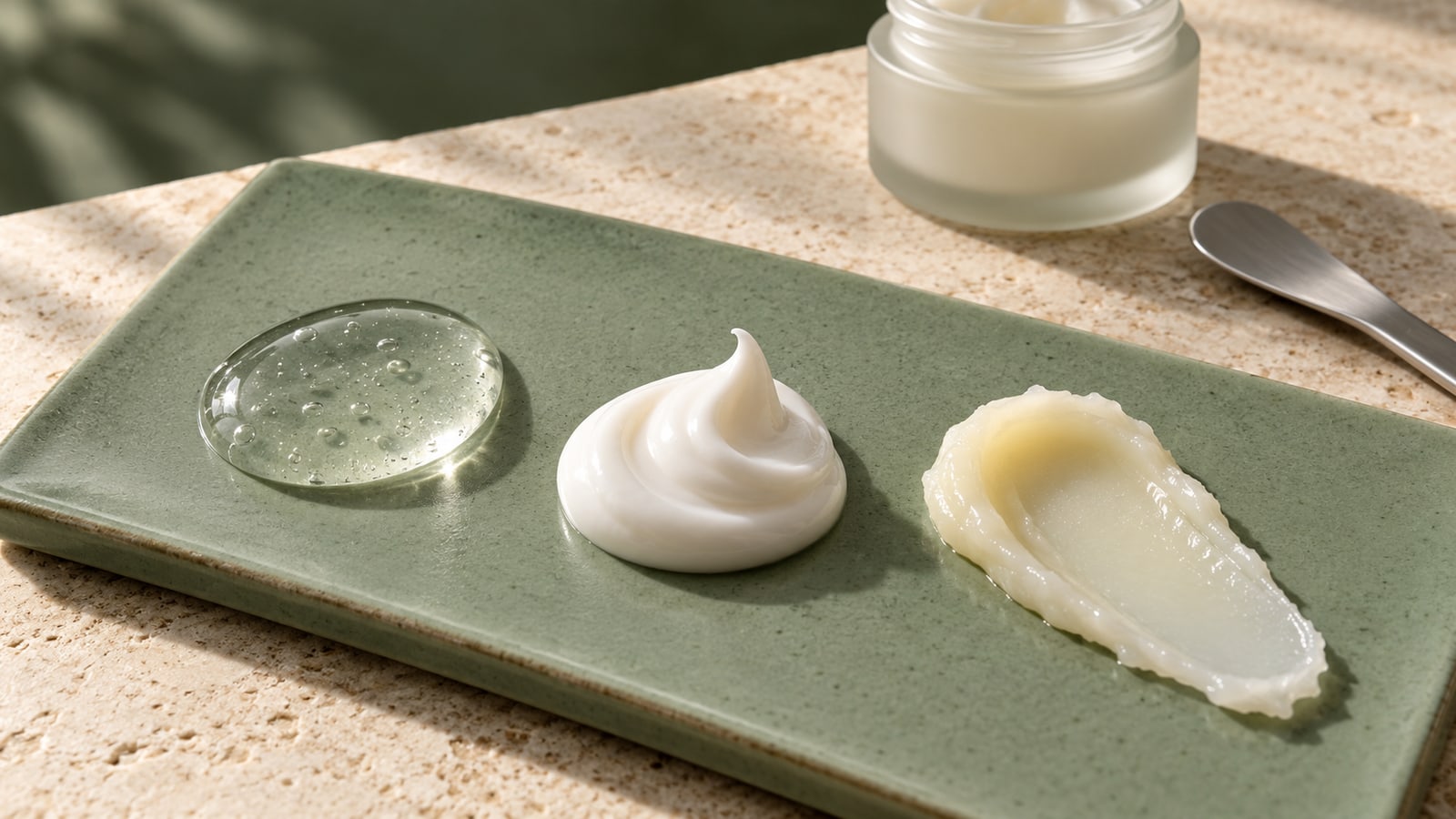
Humectants, Emollients and Occlusives: What a Moisturiser Actually Does
Understand the different jobs moisturiser ingredients perform and how to assess a finished product without buying unnecessary extra steps.
Niacinamide in Skincare: Uses, Evidence and Possible Irritation
Read niacinamide claims in context, understand what small trials studied and assess a finished formula without assuming stronger is better.