Vitamin C Serums: Formulations, Stability and Realistic Expectations
Compare vitamin C formulas, stability claims and clinical studies without assuming that the highest percentage gives the best result.
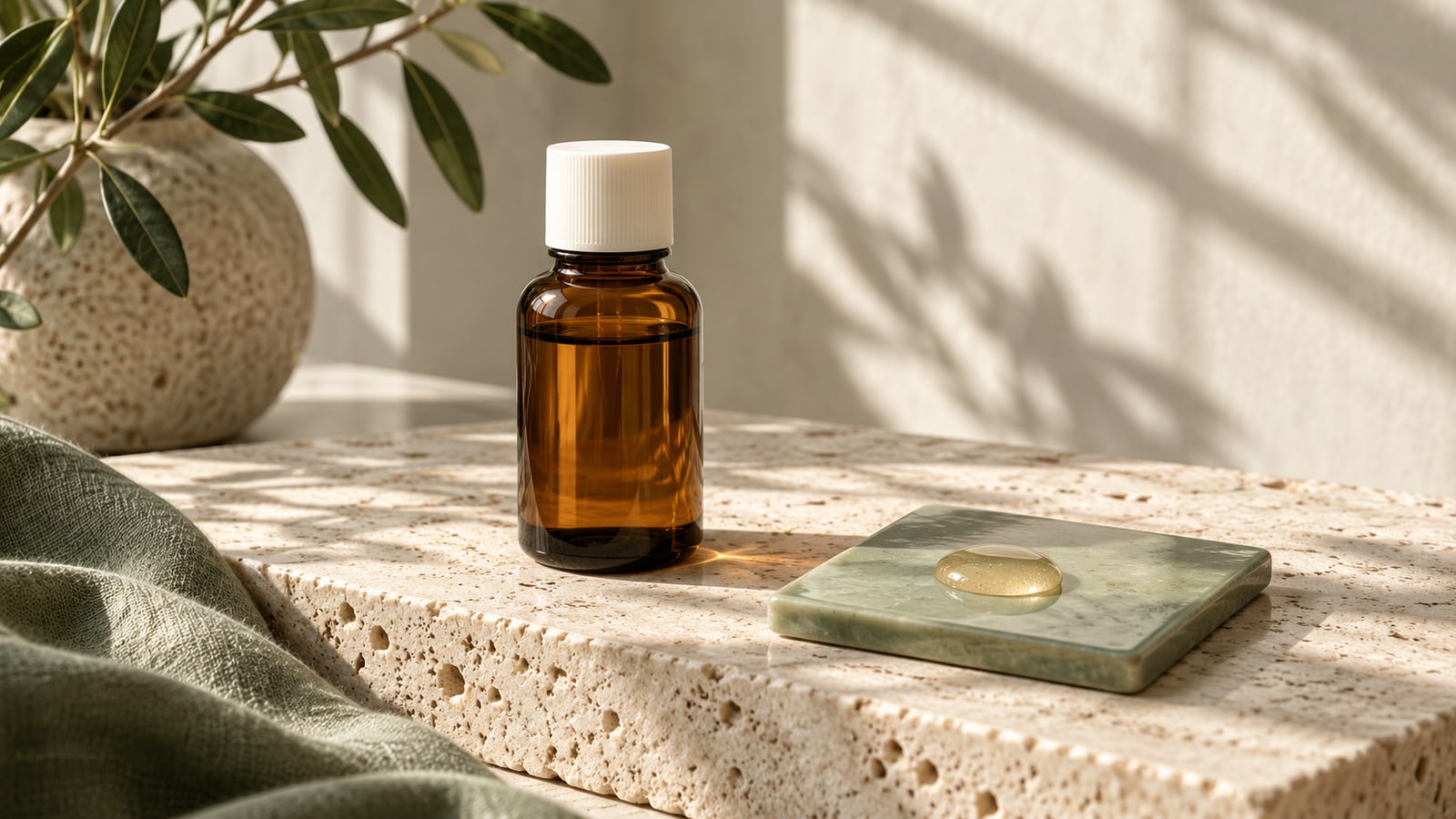
Vitamin C serums are often sold through a prominent percentage and promises of brighter, younger-looking skin. Neither tells you much about the finished formula, whether it remains stable in its packaging, or how closely the evidence matches your concern.
Topical vitamin C has a scientific rationale and clinical research behind some formulations. It is also an optional skincare step. Understanding the difference between an ingredient, a tested product and a marketing claim makes it easier to decide whether a serum deserves a place in your routine.
Key takeaways
- Formulation matters alongside the ingredient name and percentage.
- A study of one cream or gel does not validate every vitamin C serum.
- Stability and tolerability are practical considerations, not just laboratory details.
- Antioxidant claims do not make a serum a substitute for sunscreen.
- Choose a specific goal before adding another product.
On this page
- What topical vitamin C is intended to do
- Ascorbic acid and derivatives are not identical labels
- Two studies illustrate both promise and limits
- Stability begins with the actual product
- Fit the serum around a comfortable baseline
- From advertising to a considered choice
- Common questions
- Sources and further reading
What topical vitamin C is intended to do
Vitamin C, also called ascorbic acid, is an antioxidant. DermNet explains that a suitable stable topical formulation may help protect against photoageing, the changes associated with accumulated sun exposure. Delivery matters: an ingredient must remain usable in the product and reach the relevant skin site to have the intended effect.
That biological explanation is a starting point, not a forecast of how your face will look after a bottle. “Supports collagen” is not equivalent to demonstrating a noticeable reduction in wrinkles for every user. Equally, normal ageing is not a deficiency that every person needs to correct with a serum.
Ascorbic acid and derivatives are not identical labels
Some products list ascorbic acid; others use derivatives such as tetrahexyldecyl ascorbate. These names describe different ingredients, and the surrounding formula also differs. Do not assume that equal percentages on two labels mean equal delivery, tolerability or clinical results.
Look for information about the finished product. If a brand cites a study, ask whether the tested formula matches the one being sold, including its vitamin C form and other active ingredients. A publication about a combination cannot establish which part of that combination produced each observed change.
| Claim or label | What it leaves unanswered | Useful next check |
|---|---|---|
| A high percentage | Which vitamin C form and complete formula? | Read the ingredient name and instructions |
| Clinically tested | Tested for which outcome, against what? | Ask for the study and comparator |
| Stable formula | Under which storage and use conditions? | Check shelf life and handling advice |
| Brighter skin | Measured colour change or user impression? | Look for a defined outcome and timescale |
Two studies illustrate both promise and limits
A 2003 double-blind randomised study by Humbert and colleagues compared a 5% vitamin C cream with its vehicle over six months on photoaged skin of the lower neck and arms. The primary abstract reported clinical and skin-surface improvements. This is evidence about a particular cream and study setting, rather than a ranking of today’s facial serums.
A 2002 study by Fitzpatrick and Rostan used a split-face design in ten patients. One side received a gel containing 10% ascorbic acid plus 7% tetrahexyldecyl ascorbate; the other received the inactive gel base. Assessments ran to twelve weeks. Its small size and combined formula matter when interpreting a claim that a single ingredient is “proven”.
These examples also show why an ingredient percentage is an incomplete comparison. One preparation was a cream tested over months on particular body sites; another combined two forms in a gel. The studies are not a direct head-to-head test. You cannot use them to conclude that one label strength is the best choice for everyone.
When reading research summaries, separate photographs, participant satisfaction and measured clinical outcomes. Each can be informative, but they answer different questions. Look for the number of participants, what they used alongside the product and whether adverse effects were reported, rather than relying on a single headline.
Stability begins with the actual product
DermNet notes that ascorbic acid can be unstable when exposed to oxygen. Packaging and formulation therefore matter. Follow the manufacturer’s storage instructions and expiry or period-after-opening guidance. Close the container as directed and avoid transferring the formula into a different bottle simply for convenience.
There is no reliable universal colour chart for every serum. Some products start coloured because of their other ingredients. If the appearance, smell or consistency changes unexpectedly, ask the manufacturer or pharmacist using the product name and batch details. A visual guess cannot measure the remaining active ingredient or confirm product quality.
For travel, check whether the original packaging and storage advice can be maintained. Buying a large bottle to reduce the price per millilitre is less useful if you cannot use it within the product’s recommended period. Consider the amount you actually need, without inventing a standard lifetime that applies to all formulas.
Fit the serum around a comfortable baseline
Start by identifying what you want to improve. Dry-feeling skin may call for reviewing your moisturiser and its formulation. Persistent dark marks need a clearer understanding of their cause, as explained in our post-inflammatory pigmentation guide. A serum need not be the first response to either concern.
If you decide to try one, follow its directions and avoid introducing several unfamiliar products simultaneously. That makes it easier to identify what agrees with your skin. Persistent burning, a rash or worsening irritation is a reason to stop the new cosmetic and seek advice, not to increase application in pursuit of a faster result.
People using prescribed treatment or managing eczema or rosacea should discuss additions with their clinician. A workable basic skincare routine can remain a complete routine without an antioxidant serum.
From advertising to a considered choice
Describe the concern and decide how you would recognise a useful change.
Match the ingredient, supporting evidence and storage instructions to the actual product.
Consider comfort, practicality and observed benefit before buying more.
Sun protection remains a separate task. Antioxidant activity does not provide an interchangeable SPF claim. Continue appropriate sunscreen, shade and clothing rather than using a serum as permission for extra sun exposure. A product’s elegant texture or price cannot change that distinction.
Common questions
Do I need vitamin C every day?
It is optional. If you use a product, follow its directions and consider tolerability. There is no requirement to add it to an otherwise comfortable routine simply because it is popular.
Is a higher percentage always better?
No. Percentages do not capture the vitamin C form, delivery system, overall formulation or your response. A strength comparison alone cannot establish which finished product is more effective.
Is a derivative the same as pure ascorbic acid?
No. It is a different ingredient. Ask what evidence supports the derivative in the finished formula rather than assuming that findings from another form apply unchanged.
Can a serum replace sunscreen?
No. Antioxidant claims and sunscreen protection are different. Keep your sun-protection routine and do not infer an SPF from the presence of vitamin C.
Does yellow serum always mean it has expired?
No universal colour rule applies. Check the original product description, storage directions and expiry information. An unexpected change warrants a product-specific enquiry rather than guessing.
Should I copy the percentages used in a study?
A trial tests a complete preparation under defined conditions. Copying a headline percentage does not reproduce it, and combining raw ingredients at home does not recreate a validated formula.
How should I judge a brightening claim?
Ask what “brightening” means in that study: a measured pigment change, a clinical rating or participant perception. Check the duration and comparator before translating the claim into an expectation.
What if I see no useful benefit?
Review the original goal and whether continued cost and effort are worthwhile. You can choose a simpler routine. Persistent or unexplained skin concerns deserve assessment rather than an endless succession of serums.
Sources and further reading
Sources checked 21 October 2026. Trial descriptions use primary abstracts; they are examples, not a comprehensive comparative review. Clinical review is not claimed.
Keep exploring
A Simple Skincare Routine: The Essentials Before You Add More Products
A practical starting point for cleansing, moisturising and sun protection, with room for your skin’s needs and your budget.
How to Choose a Facial Cleanser for Your Skin’s Needs
Choose a facial cleanser by its purpose, instructions and comfort, with practical checks for labels, budget and your existing skincare.
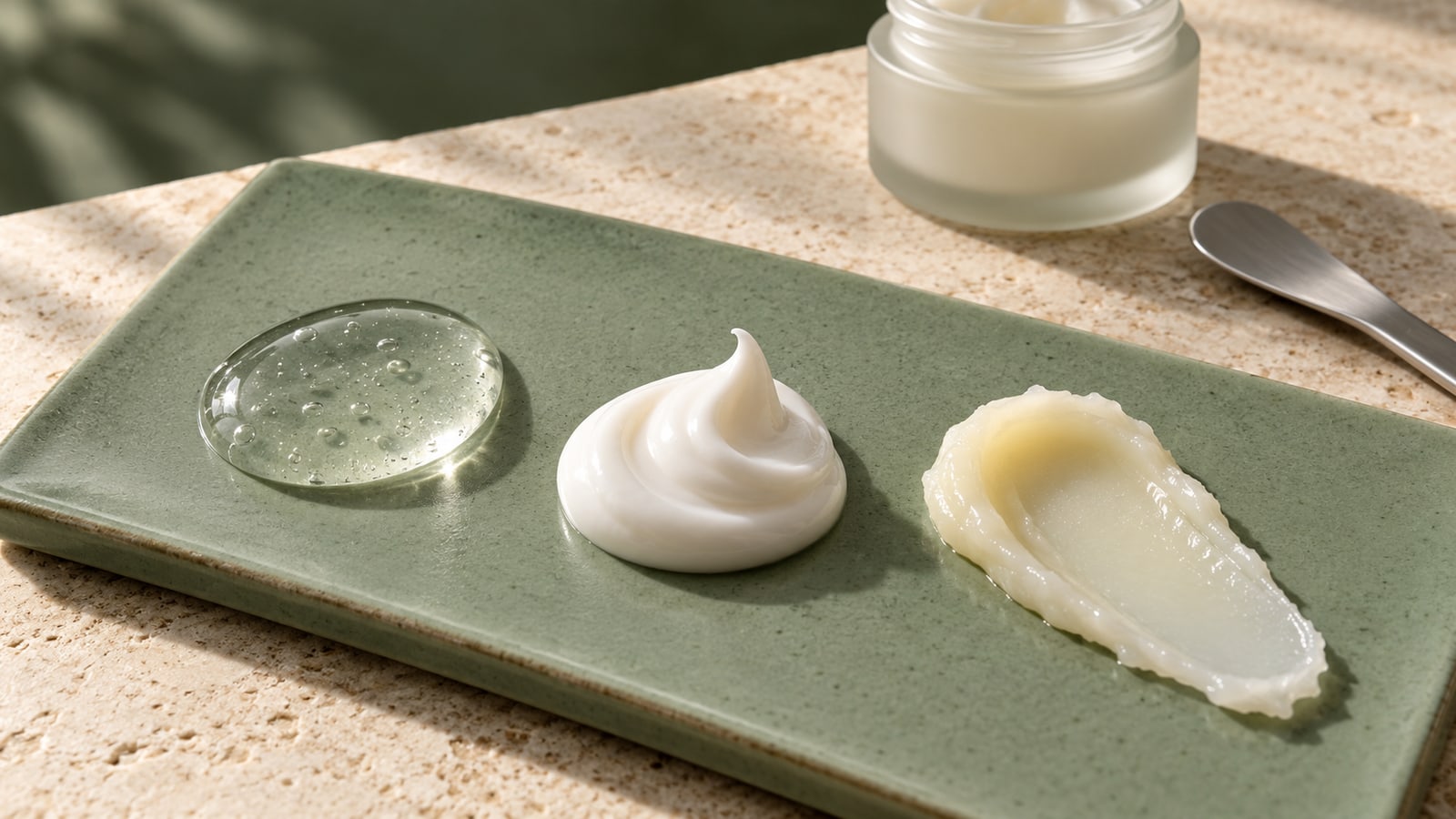
Humectants, Emollients and Occlusives: What a Moisturiser Actually Does
Understand the different jobs moisturiser ingredients perform and how to assess a finished product without buying unnecessary extra steps.
Niacinamide in Skincare: Uses, Evidence and Possible Irritation
Read niacinamide claims in context, understand what small trials studied and assess a finished formula without assuming stronger is better.