
The first bubble rises to the surface. You stand at the sink with your hands in lukewarm dishwater when you notice the water is not draining. It swirls and hesitates but refuses to go down like a guest who will not leave. You might sigh or poke at the drain with a spoon. You turn on the tap again and hope it will fix itself. The water rises higher & becomes cloudier with bits of food and a faint sour smell in the air. The stainless steel basin where coffee mugs & cereal bowls gather each morning has become a stagnant pool.
When Your Sink Becomes a Swamp
The kitchen sink can become a problem without any warning. One day it works perfectly fine and handles everything you throw at it. The next day it refuses to drain and leaves dirty water sitting in the basin like it has something against you. A clogged drain creates a specific type of stress. Your normal routine falls apart. You cannot rinse vegetables or wash the cutting board or deal with the dishes that keep stacking up on the counter. A stale odor starts to develop from old food particles and coffee grounds. Your first thought might be to buy a chemical drain cleaner with all its warning labels and hazard symbols. Or you might look through your phone wondering if the problem is serious enough to call a plumber and spend money you had planned to use for something else. But there is something satisfying about handling this problem on your own without harsh chemicals or professional help. In most situations where the blockage comes from food waste & grease buildup from regular cooking you only need two basic items that are probably already in your kitchen: baking soda & white vinegar.

The Strange Science Happening in Your Pipes
Before you start it makes sense to think about what happens in the hidden space under your sink. Your pipes work like a small cave system with narrow dark & damp passages that have bends and turns where things get trapped. Fats cool down & become solid there. Soap residue sticks to the pipe walls. Small pieces of rice and vegetable peels and coffee grounds act like sediment in a slow river and they settle in layers and create a blockage. This is where baking soda & vinegar become useful. One is a base and the other is an acid. When they combine they create foam and bubbles like you might remember from school experiments. Inside your drain that bubbling reaction does more than look interesting because it creates movement & pressure and mild scrubbing action. It loosens the buildup and pushes it forward and makes the inside of your pipes cleaner and less dirty. The reaction works well because it happens right inside the clog. Baking soda gets into the sticky spots and attaches to the gunk. Vinegar comes next with its bubbling action and together they shake things up & soften the blockage and break it apart. This is not about using force but about using a bubbling chemical reaction to clear things out. You only need about half an hour and some hot water from a kettle and a bit of patience.

The 30-Minute Plan: What You’ll Need
Before you start take a moment to stand in your kitchen. Notice the air around you. It might feel a bit damp from the backed-up sink and smell like yesterday’s dishes. This is now your workspace. You are going to fix this problem yourself using basic items that are safe to handle. Get everything you need and put it on the counter: Around 1 cup (240 ml) of baking soda Around 1 cup (240 ml) of white vinegar A kettle or pot of hot water that is almost boiling A cup or small bowl to scoop out water if the sink is full A dishcloth or drain plug You might also want: rubber gloves and an old toothbrush and a wooden spoon or chopstick & a small strainer Before you begin look closely at the drain opening. Can you see any food bits or hair or stringy material right at the surface? Many times the first part of the blockage is sitting right there where you can see it.
| Step | Action Required | Estimated Time |
|---|---|---|
| 1 | Clear the area by removing standing water, visible waste, and cleaning around the drain opening. | About 5 minutes |
| 2 | Slowly pour approximately one cup of baking soda straight into the drain. | 2 minutes |
| 3 | Add one cup of vinegar into the drain and cover it to allow the fizzing action to work deeper. | 10–15 minutes |
| 4 | Flush the drain thoroughly using a full kettle of hot water. | 3–5 minutes |
| 5 | Check water flow; if drainage remains slow, repeat the process once more. | 5–10 minutes |
The Ritual of Clearing: Step by Step
Start by handling what you can see. If your sink is full of standing water right now, use a bowl or bucket to scoop it out & dump it in the toilet or another drain that works. You do not need to remove every drop. Just get enough out so you can see the drain opening clearly. Look for any metal or plastic strainer covering the drain & remove it. Sometimes the problem is surprisingly simple. You might find vegetable peelings caught together, a clump of hair, or some fibrous material that has turned the strainer into a plug. If you do not like touching this stuff, wear gloves. Pull out whatever you find there, rinse off the strainer and use an old toothbrush to scrub the visible area quickly. You have now removed the first layer of blockage. Now prepare some hot water. Heat your kettle or a pot of water until it almost boils. While it heats up pour a small amount of hot tap water down the drain if the water still drains at all. This helps soften things up. If nothing drains at all, skip this step & wait for the kettle. When the kettle is ready, do not pour all the water at once. Pour a slow and steady stream directly into the drain opening. Sometimes the heat alone can melt fat that has stuck to the pipes and loosen the clog a bit. Listen carefully as you pour. You might hear a hollow gurgle, a slow sucking sound or an air bubble rising. These sounds mean your pipes are responding. Let the hot water sit for a minute. If you notice the water level dropping even slightly you are making progress.

The Fizz: Baking Soda Meets Vinegar
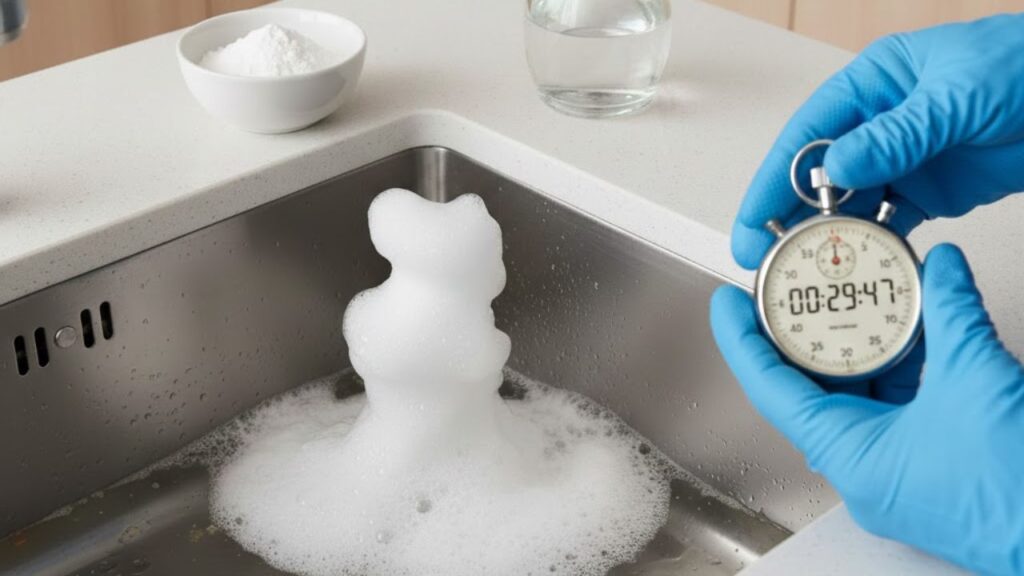
Now it’s time for the simple part. Use a cloth to dry the area around the drain so the baking soda stays loose and doesn’t stick to the surface. Pour about one cup of baking soda slowly into the drain. If some of it tries to bounce back out, push it down gently with a spoon handle or chopstick. You want most of it going into the drain opening and not scattered around the sink. Let the baking soda rest there for a minute or two. Picture it moving into the small spaces in your pipes and sticking to the greasy buildup you cannot see. Then measure out about one cup of white vinegar. When you are ready, pour the vinegar into the drain in a slow & steady stream. The reaction begins almost right away with a soft hissing sound & fizzing foam that rises up. It may make a light crackling noise as it moves down into the curved parts of the pipe. Right after you pour the vinegar, place a drain plug or damp cloth over the opening. This step is not completely necessary but it helps keep the reaction inside the pipes instead of letting the fizz come back up into the sink. With the opening covered loosely the bubbles are pushed downward into the area where you need them to work. Now you wait for about 10 to 15 minutes. This is enough time to wash a few dishes in a basin or wipe down the counter or just stand by the sink and listen to the faint crackling sounds below. Inside those pipes, many small reactions are taking place with carbon dioxide forming and popping while pressure works its way through the stubborn gunk and the baking soda crystals scrub and soften the buildup.
Hot Water, Clean Slate
Once your 10 to 15 minutes are up go back to your kettle or pot. Heat another batch of water until it almost boils. This will be the big flush that carries away whatever the fizz has loosened. Uncover the drain. Take a moment to notice the smell again. Often there is already a difference. The sour heavy scent is replaced by something cleaner and less sharp. Maybe the water around the drain has gone down. Maybe it has not yet. Either way lift the kettle carefully and pour the hot water in a steady confident stream directly into the drain. This is the moment to pay attention. Watch the water. Does it pool briefly then swirl down? Does it hesitate then suddenly surrender in a quick whirlpool? Does it rush through like a stream that has finally broken free of its dam? Sometimes the change is instant & obvious. One minute you have a sluggish drain and the next the water slides away as if nothing had ever been wrong. Other times you get a partial victory. The water is moving but not as fast as you would like. That is alright. These clogs build up over time and sometimes they need a second attempt. If it is still slow repeat the process once more. Use baking soda then vinegar then wait for the quiet fizz then do the hot water flush. Most light to moderate clogs will clear within these two rounds.
Keeping the River Flowing: Gentle Daily Habits
The real skill is not just clearing a drain but stopping it from blocking again soon after. You cannot see inside your pipes but your everyday actions directly affect what happens in there. Once you have fixed your clog and your sink drains properly again you should follow a few simple practices. Do not pour cooking oil or bacon fat down the drain. Let it cool & harden in a container and then throw it in the garbage. Put a mesh strainer over your drain to catch rice & pasta & vegetable pieces and coffee grounds before they go into the pipes. Once a week pour a kettle of hot water down the drain to stop fats from sticking to the pipe walls. Once a month use a smaller amount of the baking soda and vinegar method with about a quarter to half cup of each to prevent buildup. When you do these things you are giving your pipes a small reset that clears away early signs of problems. Your kitchen will smell better too with more pleasant cooking smells instead of old food odors. There is something satisfying about this beyond just basic maintenance. Many products today are harsh and complicated but it feels good to know that a simple reaction between two common kitchen ingredients can keep your home working well. You already have what you need to fix the problem.