
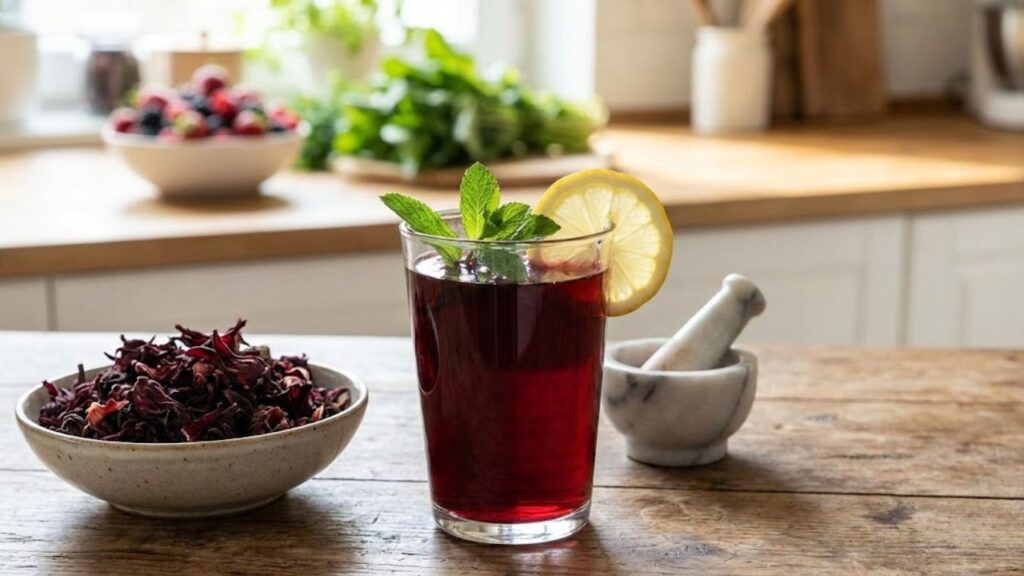
Hibiscus tea acts differently than most drinks. When you drop the dried petals into hot water they bloom and turn the clear liquid purple and then crimson and finally that bright red color. The smell is like a tropical garden with notes of cranberry and a light floral scent plus a hint of fruit similar to pomegranate and sour cherries. You probably recognize hibiscus as the colorful flower people wear behind their ear in vacation pictures or as the bright blossoms along sidewalks in warm coastal areas. But in many places around the world this plant serves a bigger purpose than decoration. In Mexico people make agua de jamaica which is a tart refreshing drink served with meals. In West Africa it becomes the foundation of bissap. In the Caribbean people brew it for holidays as sorrel & mix it with spices and citrus. Long before modern medicine examined it closely people drank hibiscus tea because they believed it cooled the blood and soothed the body after spending a long day in the sun or helped calm a headache. Scientists have only recently started to confirm what traditional wisdom already knew about hibiscus doing more than just satisfying thirst. That ruby colored tea contains a real benefit because hibiscus tea can help lower blood pressure naturally for many people when they use it regularly and consistently.
Why Blood Pressure Slowly Rises Over Time
Most people don’t realize when blood pressure begins to climb. There’s no loud warning or sudden shock—it rises quietly, almost unnoticed. You might feel more fatigued than usual, wake up with a lingering headache, or notice your heart racing after minor exertion. Sometimes there are no symptoms at all, until a routine checkup reveals numbers that are higher than expected.

Stress, salty diets, long sedentary hours, poor sleep, aging, and genetics all contribute. Over time, elevated pressure stiffens the arteries, much like forcing too much water through an aging hose. The heart strains, circulation suffers, and the risks of stroke and heart disease steadily increase. For many, this realization comes with medication and a firm reminder that lifestyle changes matter.

This is where hibiscus tea finds its place—not as a cure-all, but as a gentle, supportive habit. It’s a calming ritual you can add to your day, something soothing rather than restrictive, offering a small but meaningful push toward healthier blood pressure.
The Science Hidden Inside Hibiscus Petals
Behind the deep ruby color of hibiscus petals lies a rich blend of natural compounds. Anthocyanins give the tea its vibrant hue, while organic acids create its signature tartness. Flavonoids and antioxidants round out the mix, working quietly beneath the surface.
Researchers suggest these compounds help in several ways. Some act similarly to mild ACE inhibitors, supporting relaxed blood vessels. Others promote gentle widening of arteries or help the body release excess fluid. Antioxidants further protect blood vessel walls from long-term damage caused by oxidative stress.
Think of your circulatory system as a network of flowing streams. High blood pressure forces water through narrowed channels. Hibiscus doesn’t block the flow—it helps keep the channels flexible and resilient. Clinical studies consistently show that regular hibiscus tea consumption can modestly reduce both systolic and diastolic blood pressure over time.
From Kettle to Cup: Turning Tea into a Daily Habit
The act of preparing hibiscus tea is calming in itself. As water heats and dried petals unfurl, the liquid deepens into a rich crimson, releasing a sharp, fruity aroma. For best results, most studies suggest a stronger brew—about one to two teaspoons of dried petals per cup, steeped for 5 to 10 minutes.
Enjoyed hot, it feels grounding and comforting. Served cold over ice with citrus, it becomes refreshing and energizing. Hibiscus tea fits easily into daily routines—replacing sugary drinks, reducing excess caffeine, or becoming part of an evening wind-down ritual. The pause it creates can be just as helpful for blood pressure as the tea itself.

How Hibiscus Tea Compares with Common Beverages
| Drink | Caffeine | Added Sugar | Blood Pressure Impact |
|---|---|---|---|
| Hibiscus tea (plain) | 0 mg | 0 g | May help lower with regular use |
| Black coffee | 80–100 mg | 0 g | May temporarily raise BP |
| Sugary soda | 0–40 mg | 20–40 g | Linked to higher long-term risk |
| Fruit juice (bottled) | 0 mg | 20+ g | High sugar may increase BP over time |
| Green tea | 30–50 mg | 0 g | Generally neutral to mildly beneficial |
When Natural Remedies Need Caution
Hibiscus may be natural, but it’s still powerful. If you take blood pressure medication, regular hibiscus tea can sometimes enhance its effects. Informing your healthcare provider helps ensure your readings stay in a healthy range.
Extra care is advised during pregnancy, when trying to conceive, or if you have diabetes, liver conditions, or sensitive digestion. Its natural acidity can be harsh on an empty stomach for some people. Introducing it slowly and paying attention to your body makes all the difference.
Making Hibiscus Part of a Heart-Healthy Lifestyle
Hibiscus tea works best alongside other supportive habits. Walking regularly, reducing salt, managing stress, and improving sleep all reinforce its effects. The tea becomes a symbol of consistency—a small, repeated choice that adds up over time.
A simple routine might include a morning cup with a low-sodium breakfast, a midday replacement for extra coffee, and an evening mug blended with calming herbs. Over weeks, many notice not just improved readings, but a calmer rhythm to their day.
Listening to Your Numbers and Your Body
Tracking blood pressure turns invisible processes into something tangible. If hibiscus tea becomes part of your routine, monitor your readings consistently and watch for gradual improvement. More importantly, notice how you feel—less tension, steadier energy, easier breathing.
The true strength of hibiscus tea lies in participation. You’re not just reacting to a problem; you’re engaging in care. Over time, this simple drink can become a familiar comfort—a quiet reminder that caring for your heart doesn’t always have to be loud, harsh, or complicated.