
By the time evening arrives most of us feel like we are carrying the entire day in our shoulders and neck and lower back. A simple stretching routine before bed can transform that tense and tired feeling into something more relaxed & peaceful in just ten to twenty minutes. What often surprises people is how much better they sleep and feel emotionally when they take time to slow down and breathe and pay attention to their body before going to sleep. Stretching at night does more than just loosen tight muscles. It signals to your nervous system that the busy part of the day is over. When you hold a gentle stretch and focus on your breathing your heart rate begins to slow down.
Why the Body Feels So Tight by Evening
For many people, the day follows a familiar pattern: hours at a desk, leaning toward a laptop, scrolling on a phone, or standing in one position for too long. Some muscles stay switched on all day, while others barely get used. As the hours pass, this imbalance builds into stiffness, sore areas, and a general sense of tiredness throughout the body.

Research involving more than 500 office workers found that nearly four out of ten experienced neck, shoulder, or back discomfort by the end of the day. Those who changed posture roughly every hour had a risk that was over 30% lower. That evening tightness isn’t random—it’s the result of posture and habits slowly adding up.

– Prolonged sitting or standing locks the hips, spine, and neck in fixed positions.
– Phones and laptops draw the head forward and round the shoulders.
– Daily stress leads to jaw clenching, shoulder shrugging, and shallow breathing.
What Makes Evening Stretching Different
Stretching in the evening isn’t meant to feel like exercise. It’s more of a gentle reset. Movements are slow, controlled, and comfortable, with the goal of calming the nervous system rather than pushing physical limits. Holding a relaxed static stretch for around 10–30 seconds and repeating it a few times is usually enough. Flexibility guidelines often recommend this approach for major muscle groups about two to three times per week.
Studies show that even one short stretching session can slightly increase joint range of motion compared with doing nothing. When practiced consistently over several weeks, static stretching can also reduce muscle stiffness, helping the body feel looser and less rigid overall.
How a Short Stretch Changes Your Evening
Slow, steady breathing quietly drives the calming effect of evening stretching. Research on controlled breathing shows it improves heart-rate variability and supports the body’s rest-and-recovery response during and after the practice. That’s exactly the shift most people need at night.
Combining gentle stretches with long, unhurried exhales sends a clear message to the body that the demands of the day are finished. As the breath slows, tension often melts from the shoulders and neck, creating a sense of release that makes the rest of the evening feel calmer and more settled.
| Without Evening Stretching | With Evening Stretching |
|---|---|
| Neck, shoulders, and back remain stiff and uncomfortable after a long workday. | Muscles feel looser, with clear relief in the neck, shoulders, and back. |
| The mind stays restless, making it harder to relax once in bed. | Gentle movements and calm breathing help the body and mind settle into rest. |
Simple 10–20 Minute Routine to Unwind
Neck and shoulders
Sit or stand upright and gently tilt your head to one side. Hold for 10–30 seconds, then switch sides. Add slow half-circles with the chin moving toward the chest, and finish with easy shoulder rolls forward and backward. Keep all movements smooth and relaxed, never forced.

Upper back and spine
While seated, place one hand on the opposite knee and gently rotate your torso for a light spinal twist. Hold and breathe, then change sides. Follow with a few rounds of gently rounding and lengthening the spine, similar to a seated cat–cow, to ease stiffness between the shoulder blades.
Lower back and pelvic area
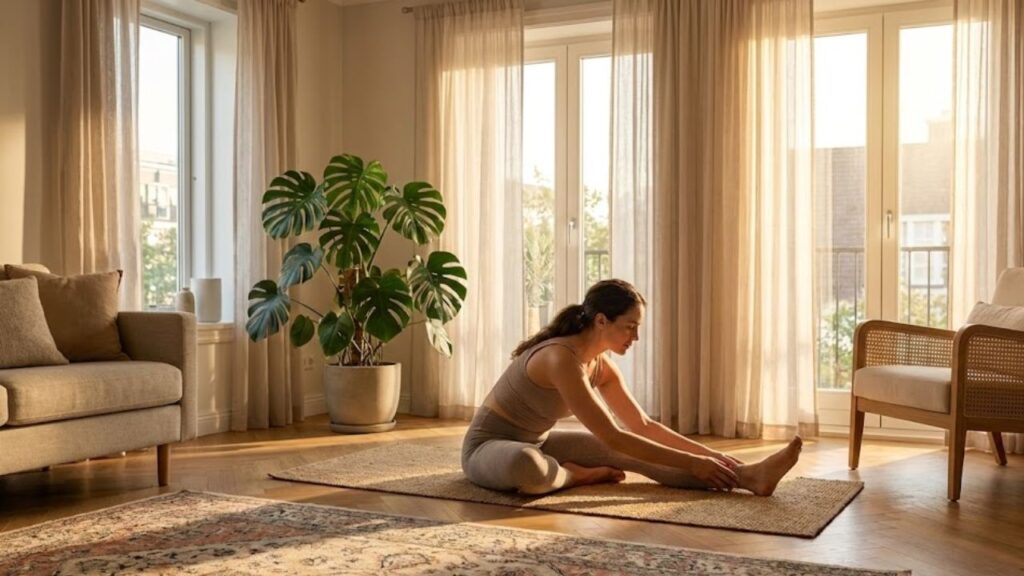
Lie on your back and draw both knees toward your chest, rocking slowly from side to side. You can also add a gentle seated forward fold, allowing the torso to relax over the thighs. Stay within a range that feels relieving rather than straining.
Hips and glutes
Remaining on your back, cross one ankle over the opposite knee and draw the legs in toward you for a figure-four stretch. This helps release tight hip rotators and glutes that have been inactive for hours. Switch sides and breathe into the stretch.
Legs and feet
Use a towel or strap around one foot and gently pull it toward you with the leg extended to stretch the hamstrings. Finish with slow ankle circles in both directions. Light calf and leg stretches can make the entire lower body feel less heavy.
Quick cues to keep your routine gentle
– Move slowly and avoid bouncing or sudden motions.
– Stay well short of pain; mild tension is enough.
– Pair each stretch with a calm inhale and a longer exhale.
Ending the Day on a Softer Note
A short evening stretching routine isn’t about chasing flexibility goals—it’s about how your body feels when you finally lie down to rest. A few calm stretches, steady breathing, and simple awareness can turn the last ten minutes of the day into a small act of self-care. Over time, this quiet ritual can make nights feel more relaxed and sleep come a little easier.