
The first time you notice your own eyebrows is rarely a gentle moment. It might happen in the harsh lighting of a school bathroom when a friend leans toward the mirror and says you should get your brows done. It could be in one of those magnifying hotel mirrors that shows every single hair. Or maybe it happens on an ordinary morning when you’re brushing your teeth & the light comes through the curtain just right and you suddenly see that your left eyebrow looks completely different from your right one. However it happens you have this quiet realization that your eyebrows are not just background details. They tell a story about your face and shape how you express yourself and your moods.
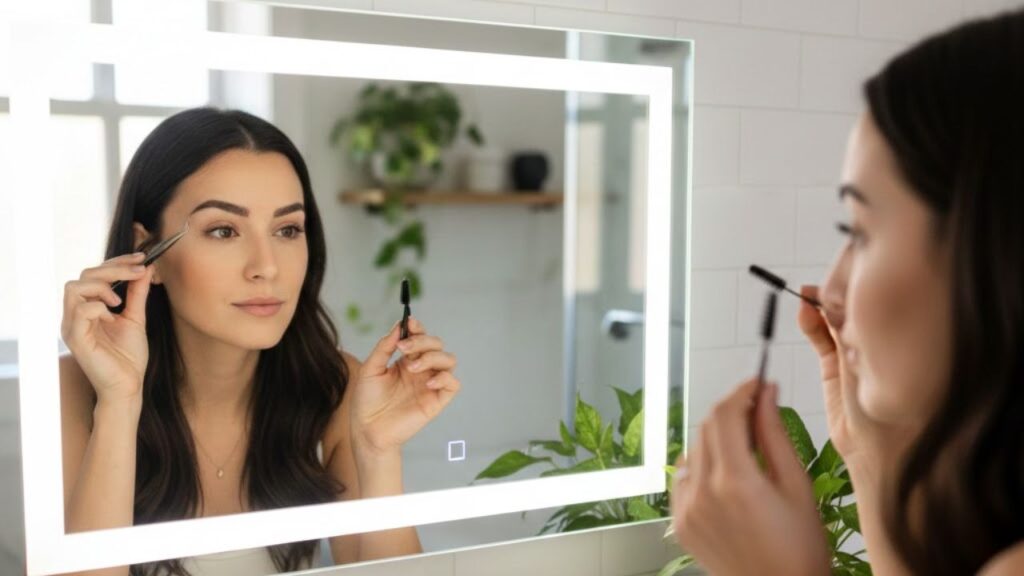
The Ritual of Eyebrows and Why Home Is the Best Studio
There is something personal about shaping your own eyebrows at home. It becomes a quiet moment that feels more like refining something you know well than just another beauty task. Salons treat brows like quick transactions: apply wax and strip it off and smooth the skin and collect payment and move to the next client. At home you take your time. You notice each individual hair & lean in close to the mirror & see the soft fuzz near your temples and observe how your brow lifts slightly when you focus. Without the time pressure of salon bookings or someone else deciding what looks perfect you can pay attention to what your face actually needs. You can decide to keep the dramatic arch that makes you look interested in everything or maintain the fuller front section that makes your neutral expression seem gentler. Doing your own brows is not just about saving time and money. It gives you control over one of the most expressive features on your face. The beauty industry wants you to believe otherwise but you do not need professional training or special lighting or a collection of fancy tools to do this properly. You need some patience and basic supplies & the willingness to work slowly enough to really look at yourself.

Know Your Landscape: Mapping the Brows You Already Have
Before you remove any hair you need to do something simple but important called mapping. This is like studying the area before you begin working on it. Stand near a window if possible because natural light shows things most accurately. Get an eyebrow pencil that you like using. It does not need to be expensive or special. The goal is not to copy someone else’s eyebrow style. You want to find the best version of your own natural shape. Here is an easy method to discover your natural eyebrow shape:

Start of the brow: Hold the pencil straight up against the side of your nose. The spot where it touches your brow marks the natural starting point. Any stray hairs growing past that line toward your nose can be removed later. Arch: Keep the pencil against your nose & tilt it until it lines up with the outer edge of your iris. The point where it meets your brow shows where your arch should naturally peak. End of the brow: Angle the pencil from your nose to the outer corner of your eye. Where it crosses your brow marks where your brow should end. When you do this you will notice small differences between your brows. One might sit slightly higher or one tail might extend a bit longer. This is completely normal. Brows are siblings and not twins. Your goal should be creating balance rather than making them look exactly the same. You can use your pencil to lightly sketch your ideal shape while staying close to your natural brow line. During this mapping process something interesting happens. You begin to see how expressive your brows really are. A slight lift can make you look more awake than you actually feel. A flatter shape can give off a calm & serious impression. You are not simply grooming hair. You are adjusting how your face communicates emotion.
Tools of the Quiet Artist
Your At-Home Brow Studio Essentials You can easily transform your bathroom into a personal brow studio without much effort. However having the proper tools determines whether your grooming session feels rewarding or becomes an annoying struggle. This straightforward guide works perfectly on your phone so you can save it for quick reference
| Tool | Purpose | Helpful Tips |
|---|---|---|
| Slant-tip tweezers | Helps remove individual unwanted hairs accurately | Pick tweezers with a firm grip and pull hair in the natural growth direction |
| Spoolie brush | Neatly combs brows and shows their natural shape | Brush brows upward and outward before starting any grooming step |
| Small brow scissors | Used to trim extra-long brow hairs | Cut only the ends of hairs; avoid trimming too close to the skin |
| Eyebrow pencil or powder | Fills gaps and enhances brow definition | Apply with soft, hair-like strokes using a shade close to your hair color |
| Optional: small razor or wax strips | Removes fine hair around the brow area | Use carefully and stay away from the main brow line until experienced |
The Slow Art of Tweezing: Less, Always Less
Every overplucked brow starts with good intentions. You think you will just clean up a little and twenty minutes later you are searching online for how fast eyebrows grow back. The key to doing this at home is simple: always do less than you think you should. Start with clean skin. Wash your face with warm water and dry it gently. Take your spoolie brush and comb the hairs upward and then outward in the direction they naturally grow. Now you can see clearly which hairs need to go: the strays under the arch and a few random ones between the brows and maybe some fine hairs along the top. Begin with the obvious strays that sit far outside your natural shape. Hold the skin steady with one hand and use your tweezers with the other hand. Pluck in the direction the hair grows. Each small pull is a choice you make. This one stays and that one goes. You are editing your brows and not erasing them. Stop every few hairs and step back from the mirror. This distance of a step or two is where you actually live your life & not pressed up against the glass. From here you can see if you still look like yourself but slightly better or if you are starting to look like someone else entirely. If you have sensitive skin you can prepare it first. Press a warm washcloth over your brows for a minute or tweeze right after a shower when your pores are relaxed. There is still a small sharp feeling with each pluck that reminds you that you are changing something on your face. Breathe slowly and take your time with it.

Trimming the Rebels Without Flattening the Whole Story
Eyebrow trimming requires a careful approach. When done properly it makes messy brows look neat while maintaining their natural thickness and shape. When rushed it creates harsh and unnatural edges that look artificial. Use a spoolie brush to comb your brows straight upward so the longest hairs stick out above the natural brow line. Then take small sharp scissors and cut only the tips that clearly extend past that upper edge. Think of it like trimming the tallest blades of grass rather than cutting everything down. Brush the hairs back into their normal position. The shape will immediately look better with more defined arches and reduced bulk that makes your face appear more awake. Avoid the urge to keep trimming more. Trimming works like adding salt to food where you can always do more later but you cannot reverse excessive cutting.
Color, Gaps, and the Illusion of Fullness
Most eyebrows are not naturally even. There are small gaps where hair grows less densely or maybe a scar cutting through the arch or ends that fade into thin wisps. This is where tint or pencil or powder comes in to gently enhance what is already there rather than create something new. Think of it like sketching with a soft pencil on delicate paper. The goal is to be subtle rather than obvious. Use small light strokes that follow the direction of hair growth especially in areas where the brow line looks incomplete. Near the front go even lighter because too much product there can make eyebrows look harsh or artificial. At the tail you can add a bit more definition and taper the end into a soft point instead of a blunt edge. The color choice is important. As a general rule pick one shade lighter than your natural brow hair if you have very dark hair & one shade darker if you have very light hair. This small adjustment prevents the result from looking too harsh or too faded. The aim is to create the appearance of fuller and healthier eyebrows rather than painting solid blocks of color on your face. After you finish brush through again with the spoolie brush. This blends the product into the hairs & softens any obvious lines while showing whether anything looks too heavy. If it does lightly run a clean fingertip or cotton swab over that area. Eyebrows look better when they are not overdone.
Aftercare: Soothing the Canvas You Just Touched
When you finish your skin might tell the story before your brows do. You will see a flush of pink and tiny dots where follicles protested briefly. This is normal but what you do next matters especially if you are prone to irritation or breakouts. Press a cool damp cloth over the area for a moment. The contrast of the chill against warm freshly plucked skin feels almost indulgent. Then pat dry and apply something gentle & simple like aloe gel or fragrance-free moisturizer or maybe a light soothing serum formulated for sensitive skin. Avoid harsh active ingredients immediately afterward. No retinoids & no strong acids & nothing that would add another layer of aggression to already tender skin. For the next few hours resist touching your brows. Your fingers carry oils and bacteria that newly opened follicles do not especially enjoy. If redness lingers it usually retreats within the day. By tomorrow your brows will have settled into themselves and you will catch their new shape in passing reflections like shop windows or your phone camera or that accidental selfie & feel a quiet satisfaction. Think of this as a cycle and not a one-off crisis. Instead of going weeks between rushed salon appointments you can now tend your brows in small gentle intervals. A couple of hairs here and a tiny trim there. Like any living thing they respond best to consistent kind attention rather than sudden drastic interventions.
Making It a Ritual, Not a Chore
There is a special kind of peace that comes with this routine if you allow it. Rather than rushing under bright bathroom lights moments before you need to leave you can make brow shaping a regular quiet moment for yourself. It might happen on Sunday evenings when the weekend winds down and the coming week still feels fresh. Or it could be early in the morning when the house is silent and you can sense the world slowly starting its day. You arrange your tools and look at your reflection. This is not about finding flaws but about knowing your face better. You notice the curves that rise when you smile and the faint lines that show when you concentrate. You remove a stray hair that disrupts the shape you want and keep another that fits. Slowly & through these personal sessions you become skilled at understanding your own features. Professional salons serve a purpose for major changes or special occasions or for people who like being cared for by experts. But you do not need a salon to have well-shaped expressive eyebrows. In front of your own mirror with good lighting you can learn what works for your face. With each careful removal and adjustment you are doing more than grooming. You are learning to see yourself honestly and choosing thoughtfully what stays.