
I regularly work with clients aged 65 and older, and many find it uncomfortable or impractical to get down onto a yoga mat for traditional floor-based core exercises. That doesn’t mean core training is skipped. Abdominal strength remains essential, even when movements need to be modified to suit comfort and mobility.
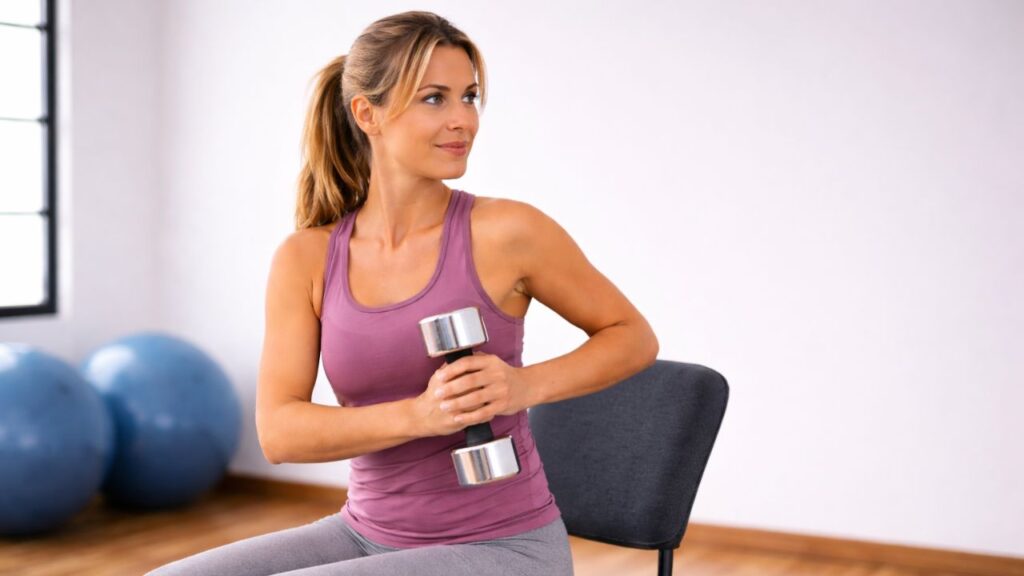
Developing a strong, supportive core is important at every age, but it becomes especially critical for seniors. Key muscles such as the transverse abdominis and internal obliques play a vital role in breathing, posture, and balance—areas that help older adults stay active, stable, and independent.

Why Seated Core Exercises Are Effective
When working with individuals who have mobility limitations, I often rely on a series of seated core exercises. These movements allow for safe and effective abdominal engagement without needing to lie on the floor. Even for those who are comfortable with floor workouts, seated exercises can add variety and a fresh challenge to a core routine.

How to Do These Seated Core Exercises Safely
This routine requires no equipment other than a sturdy chair. Before starting any new exercise program, it’s important to consult your medical team. Working with a certified personal trainer is also recommended, especially if you are new to exercise, as they can help ensure proper form and offer suitable modifications.
Perform each exercise for 1–3 sets of 10–15 repetitions. Beginners should start with fewer reps and sets, gradually increasing as strength and confidence improve.

1. Seated Torso Twist
- Sit on the edge of a chair with your feet flat on the floor.
- Keep a neutral spine and engage your core.
- Cross your arms, resting your hands on your shoulders.
- Rotate your torso to the right while staying tall.
- Return to center, then twist to the left.
- Alternate sides for 10–15 reps per side.
2. Seated Knee Lifts
- Sit upright on the edge of a chair with your feet grounded.
- Engage your core muscles and maintain a tall posture.
- Slowly lift your right foot, keeping the knee bent.
- Lower it back down with control.
- Repeat on the left side.
- Continue alternating for 10–15 reps per side.
3. Seated Side Bends
- Sit on the edge of a chair with your feet flat.
- Engage your core and maintain a neutral spine.
- Place both hands behind your head.
- Lower your left elbow toward the floor, contracting the left side of your torso.
- Return to center, then repeat on the right.
- Alternate sides for 10–15 reps per side.
4. Seated Bicycles
- Sit tall on the edge of a chair with your core engaged.
- Place both hands behind your head.
- Lift your right foot and rotate your torso so your left elbow moves toward your right knee.
- Return to the starting position.
- Repeat on the opposite side.
- Alternate for 10–15 reps per side.
If bringing your elbow all the way to your knee feels difficult, perform the movement within a smaller, comfortable range of motion.
Benefits of Seated Core Training
This seated routine targets essential core muscles, including the rectus abdominis, internal and external obliques, and the transverse abdominis. Together, these muscles help stabilize the body, support internal organs, assist vital bodily functions, and promote proper posture.
Many traditional abdominal exercises require lying on the floor, which may not be appropriate for individuals with mobility challenges or certain injuries. Because these movements are performed while seated, they are accessible across a wide range of fitness levels and can be safely adjusted or progressed with guidance from a qualified personal trainer or physical therapist.