
The first time warm scented oil touched my scalp the treatment room became my entire world. Bright lights & phone alerts faded into quiet breathing and gentle circular motions. The oil had a forest smell that was both earthy and fresh while thumbs found tight spots on my head I never realized existed. I arrived concerned about my thinning temples but left with an unexpected gift: a profound stillness I had not experienced in months. This is what people rarely mention about scalp massage. It can help with healthier hair but it also works on a deeper level by releasing the mental stress we physically hold in our heads. A basic 5-point scalp massage using the right essential oils & some focus can become your personal healing practice after any regular day. You do not need a spa. You only need your hands and scalp along with a few oil drops & enough patience to notice the change.
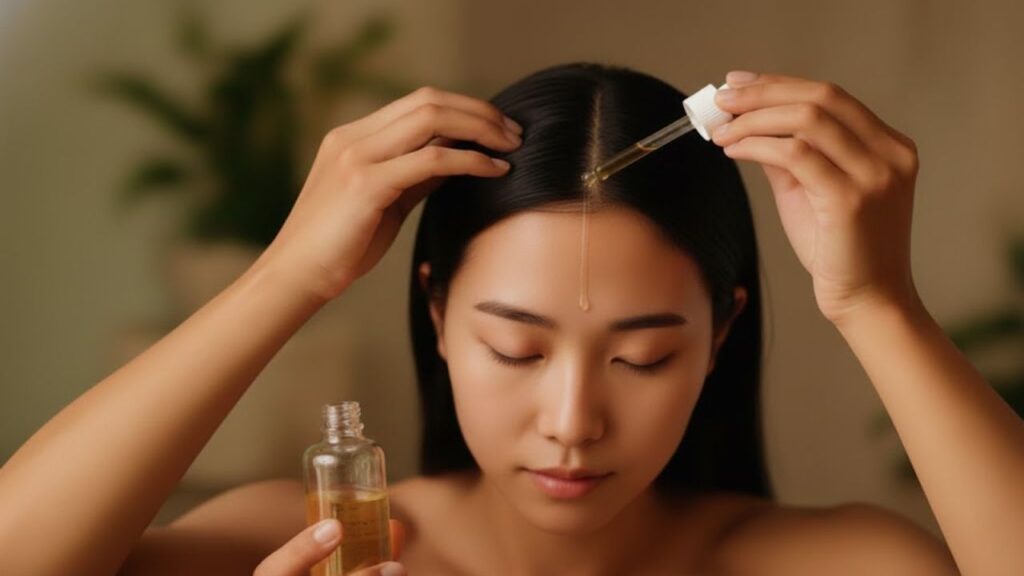
The Quiet Science Behind Touch, Tension & Hair Growth
Before diving into the sensory experience, it helps to understand what truly happens during a scalp massage. Hair doesn’t grow randomly—it emerges from tiny living structures beneath the skin called hair follicles. Each follicle has its own blood supply, delivering oxygen, nutrients, and biochemical signals that determine whether hair should grow, rest, or shed.Chronic stress complicates this process. Ongoing tension, elevated cortisol levels, and poor sleep can push follicles into a resting phase earlier than normal. Over time, this may show up as extra hair in your brush or a widening part line. While massage cannot reverse genetic hair loss or replace medical treatment, it can positively influence the scalp environment where follicles live.

When your fingertips move across the scalp, they gently stretch and compress the skin and underlying tissues. This mechanical action can:

– Increase local blood circulation, improving nutrient delivery
– Support lymphatic drainage, helping remove waste products
– Relax tiny follicle muscles, releasing built-up tension
– Activate the parasympathetic nervous system, promoting “rest and digest” mode
When paired with carefully selected essential oils, the massage becomes more than relaxation. Plant compounds may support circulation, soothe the scalp, and help the nervous system downshift. Over weeks and months, this blend of improved blood flow, reduced tension, and calmer stress responses can create more supportive conditions for hair growth.
Choosing Your Oils: Blending Scent, Science & Skin Comfort
Standing before rows of essential oil bottles can feel overwhelming. For a scalp ritual, simplicity matters. You only need two elements: a gentle carrier oil and a small selection of essential oils suited to your scalp and senses.
Carrier Oils: The Cushion Between Skin & Plant Power
Essential oils are highly concentrated and must be diluted. Carrier oils act as a nourishing buffer, keeping the scalp comfortable while allowing active compounds to work gently.
| Carrier Oil | Best For | Texture & Feel |
|---|---|---|
| Jojoba oil | Most scalp types | Light, non-greasy, fast-absorbing |
| Sweet almond oil | Dry or flaky scalp | Smooth, slightly rich, comforting |
| Argan oil | Coarse or damaged hair | Silky, adds shine |
| Grapeseed oil | Oily or fine hair | Very light, weightless feel |
Beginner base: Use 1 tablespoon of jojoba or grapeseed oil.
Essential Oils: Scent as Therapy, Not Just Perfume
Each essential oil carries both an aromatic personality and a functional role for the scalp and mind:
– Rosemary (cineole) Supports circulation and mental clarity
– Lavender Calms the nervous system and encourages rest
– Cedarwood Grounding, balancing for oily roots
– Peppermint Cooling and invigorating (use sparingly)
– Tea tree Clarifying for flaky or congested scalps
Beginner blend example:
– 1 tablespoon jojoba oil
– 2 drops rosemary oil
– 2 drops lavender oil
– 1 drop cedarwood oil
Blend gently, inhale, and notice your body’s response. Comfort matters.
The 5-Point Scalp Map: Where Your Fingers Will Travel
Think of the scalp as five interconnected zones. This method focuses on intentional movement rather than rigid anatomy.
Point 1: The Front Line (Hairline & Temples)
This area often stores mental tension. Begin here to signal relaxation.
– Apply oil along the hairline and temples
– Massage using slow circular motions
– Pause at the temples and breathe deeply
Point 2: The Crown (Top of the Head)
The crown carries mental load and is often a focus area for thinning.

– Slide fingers from forehead to crown
– Apply gentle pressure in circular motions
– Move the skin, not the skull
Point 3: The Sides (Above & Behind the Ears)
This zone connects to neck and shoulder tension.
– Massage upward in small spirals
– Use gentle thumb pressure behind ears
Point 4: The Back Ridge (Occipital Area)
– This junction holds postural stress.
– Massage along the base of the skull
– Move outward toward the ears
– Brush tension downward into the neck
Point 5: The Nape & Final Sweep
This area completes the ritual.
– Knead gently beside the spine
– Comb fingers upward through the hair
– Finish with light sweeping motions
– Rest both palms on your head and take three slow breaths.
Turning Technique into Ritual: Making It Yours
The power of this practice lies in consistency and presence.
– Timing: Evening or morning, depending on oil choice
– Duration: 5–10 minutes
– Environment: Low light, minimal distractions
– Breathing: In for 4 counts, out for 6
– Frequency: 3–4 times weekly
What You Might Notice Over Time
Early changes are often subtle: mental calm, softer scalp sensation, improved sleep. Over weeks and months, you may observe:
– Reduced scalp tightness or dryness
– More comfortable brushing
– Healthier-looking roots
– A calmer bedtime routine
Some notice baby hairs; others treasure the emotional ease. Both matter.Think of the 5-point scalp massage not as a cure, but as an ongoing conversation with your biology. Each breath, each circle, each drop of oil says: “I’m listening. Let’s grow from here.”