
The first time I buried a banana peel under a struggling rose I did it with hesitant hope. The bush was tired with yellow leaves and small blooms that faded quickly. I had heard the rumor that banana peels could help roses thrive & on a quiet morning I decided to test it myself. I bent down while the air was still cool & dug a shallow trench in the damp earth. The peel was soft & faintly sweet as I tucked it beneath the soil. It felt almost too simple. But nature loves simple things. Over the next weeks that tired rose taught me how powerful kitchen scraps can be when we let them return to the ground.
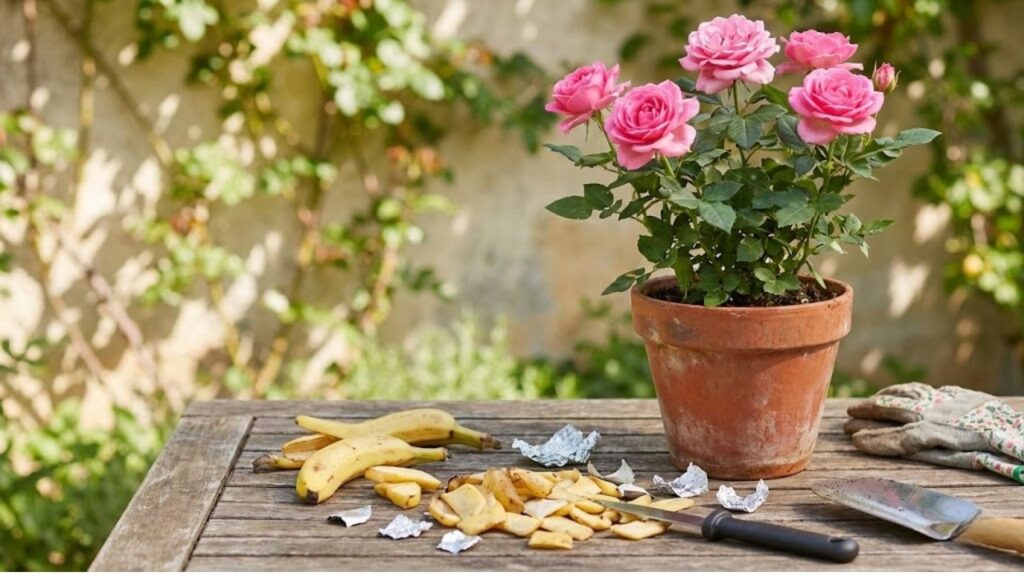
The Quiet Alchemy of a Banana Peel
If you watch a banana peel for a while you can see it stop being fruit. It changes from bright yellow to spotted brown to a dark sunken black. It curls and softens & eventually melts into the soil where it joins the microbes and fungi and tiny creatures that live underground. Roses benefit from what banana peels turn into. That simple scrap contains nutrients that roses need including potassium along with phosphorus & calcium and magnesium and other minerals. When you put a peel in the soil you give the plant a slow steady source of food instead of the quick burst that synthetic fertilizers deliver. Potassium helps roses move water through their systems and build strong stems and resist disease and produce brighter blooms. Phosphorus supports healthy roots and more flowers. Calcium and magnesium keep leaves strong & green. The peel works quietly in the background & keeps feeding the plant without being noticed. There is something satisfying about this process. The banana from your breakfast becomes part of your garden. Instead of going into the trash it helps create the next round of blooms on your roses. Sustainability becomes less like a chore and more like a connection between you and your food and your flowers.

Why Roses Respond When You Feed Them This Way
Walk up to a rose bush that’s been fed with care and you sense the change immediately. The leaves appear firmer, more intentional. Buds form in greater numbers, lined neatly along the stems, full of quiet promise.Most commercial rose fertilizers focus on fast results. They push quick growth, but often leave behind salt buildup, overly soft foliage, and soil that becomes dependent on constant feeding. Banana peels work differently. They don’t shock the plant — they support the soil.As a peel breaks down, it first feeds soil life. Bacteria, fungi, and earthworms process it slowly, turning it into nutrients roses can actually absorb. Instead of a chemical hit, the peel becomes a mini ecosystem that improves soil structure, moisture balance, and root resilience.

Simple Ways to Use Banana Peels for Roses
You don’t need special tools or perfect timing. Just a few consistent habits can turn kitchen scraps into steady nourishment for your roses.
1. Burying Fresh Peels Near the Roots
This classic method has survived generations for a reason.
– Eat the banana and save the peel.
– Cut it into small pieces so it decomposes faster.
– Dig a shallow trench 5–10 cm deep around the drip line.
– Place the pieces inside, cover with soil, and water well.
– Over the following weeks, the peel slowly releases nutrients directly into the rose’s rooting zone.
2. Banana Peel Compost Pockets
For poor or compacted soil, compost pockets act like underground boosters.
– Dig a hole 15–20 cm away from the main stem.
– Add chopped peels, optionally mixed with dry leaves or coffee grounds.
– Cover with soil and water thoroughly.
– These pockets attract earthworms and gradually turn into rich, crumbly soil that roots naturally grow toward.
3. Dry and Grind: A Homemade Rose Booster
Drying peels creates a cleaner, longer-lasting option.
– Dry peels in sunlight or a low oven until fully crisp.
– Grind into flakes or powder.
– Store in an airtight container.
Sprinkle lightly around the base of roses and mix into the topsoil. This method releases nutrients faster and reduces pest risk.
4. Banana Peel Tea
For a gentle liquid feed, banana peel tea offers a mild boost.

– Soak 2–3 chopped peels in water for 24–48 hours.
– Strain out solids.
– Water roses at the base only.
– Used every few weeks, this tea becomes part of a low-stress feeding routine.
5. Adding Peels to Regular Compost
In compost, banana peels blend beautifully with other materials.
– Chop peels into smaller pieces.
– Layer with browns like dry leaves or paper.
– Apply finished compost once or twice a year.
This approach strengthens overall soil health, not just the roses.
How Much, How Often, and When to Feed
Balance matters. Too little shows no effect; too much invites problems.
– Active growth (spring–early autumn): 1–2 peels per mature bush every 2–4 weeks.
– Young or potted roses: Half a peel once a month.
– Dormant season: Pause direct feeding; compost instead.
Common Mistakes and How to Avoid Them
Pests: Never leave peels on the soil surface. Always bury or dry them.
Odor: Chop peels and space applications. Compost excess scraps.
Nutrient balance: Banana peels supply potassium, not enough nitrogen. Pair with compost or manure.
Disease concerns: Use only healthy fruit waste and avoid wet surface application.
Turning Feeding Into a Garden Ritual
This practice becomes less about fertilizing and more about connection. A quiet moment, a small action, repeated over time. Each peel tucked into the soil strengthens the partnership between you and the garden.Over weeks, roses respond with deeper color, sturdier canes, and more reliable blooms. The change is gradual, but unmistakable.
From Kitchen Waste to Living Flowers
A banana peel has no interest in being thrown away. It wants to return, to soften, to become part of something alive. When you feed roses this way, you close a loop — turning everyday waste into petals, fragrance, and growth.The next time you peel a banana, pause. Picture it beneath the soil, slowly transforming into the bloom you’ll admire weeks later. Then let the garden finish the story.