
The blue recycling bin stands at the curb like a quiet confession. Each week, you wheel it out, the lid rattling slightly, packed with rinsed bottles, collapsed cardboard, and that familiar feeling of having done something responsible. There’s a small sense of pride in it. Maybe you imagine glass reborn as park benches or old newspapers returning as fresh pages in someone else’s story. What you don’t imagine is the low groan of a recycling facility forced to shut down because of a single plastic bag, or a half-clean jar that spoiled an entire load of paper, or a takeout cup labeled “recyclable” that was never recyclable to begin with.
The Illusion of “Better Safe Than Sorry”
For many Americans, recycling feels like a moral shortcut: blue bin equals good intentions, trash equals failure. Years of simplified messaging and green branding have taught people to toss items in hopefully—if it looks recyclable, why not try? Sending it to the landfill feels worse than giving it a chance.

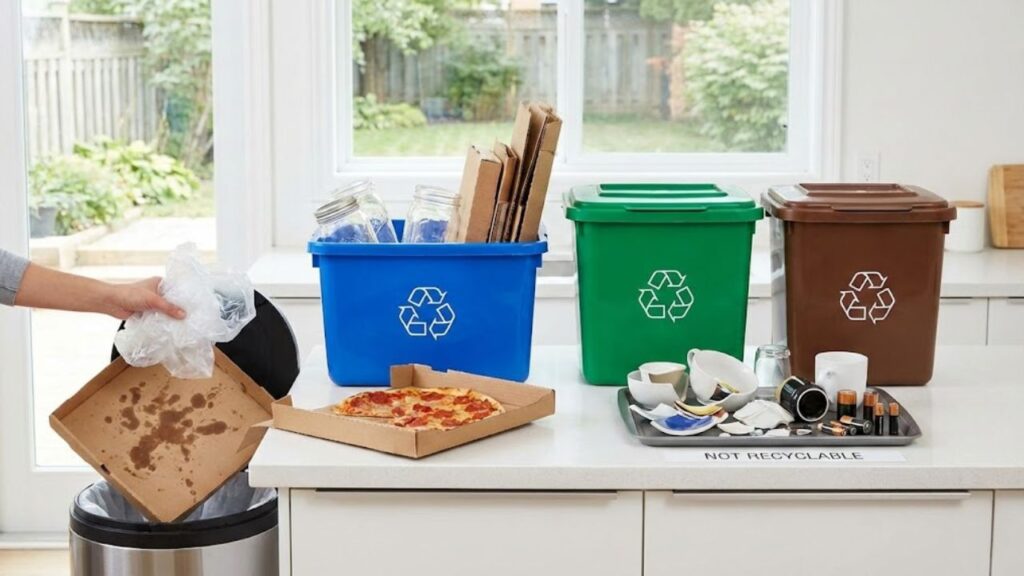
That well-meaning habit is known as wishcycling, and it quietly undermines the entire system. When non-recyclable items end up in the bin, they don’t just get removed individually. They can contaminate whole loads, damage equipment, or force facilities to reject otherwise valuable materials. What starts as a personal effort to help the environment can end with everything—yours and your neighbors’—being diverted straight to the landfill.

Recycling in the United States isn’t one clean, national process. It’s a fragmented network of local rules, contracts, and technologies. Something accepted in one city may be banned in the next. Yet despite those differences, the same mistakes show up almost everywhere. They revolve around a few common household items and stubborn myths that refuse to peel away, much like old labels on a jar.

So imagine opening that blue bin. Hear the clatter of glass, the soft scrape of cardboard, the slippery rustle of plastic film. Now take a closer look at what goes in each week—and what actually needs to happen to it once it’s collected.
Plastic: The Ultimate Recycling Impostor
Plastic is endlessly misleading. It can feel solid like glass, thin like paper, flexible like fabric. It may be stamped with words like “eco,” “biodegradable,” or “plant-based” and still cause serious problems in recycling facilities. Even the familiar chasing-arrows triangle—the symbol many people rely on—often creates more confusion than clarity in the recycling stream.