
Push-ups are a foundation movement in any effective fitness routine, and there’s really no reason to skip them. They don’t require equipment or added weights, and they’re easy to modify, making it simple to adjust the difficulty as your strength improves.
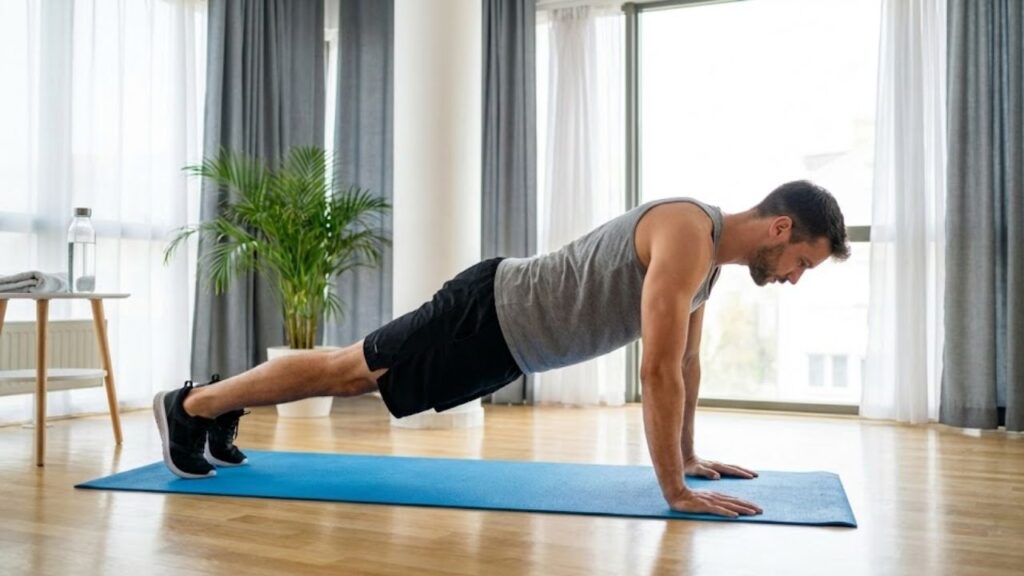
If you’re still working toward a clean standard push-up, a basic technique guide can help you nail the fundamentals. This classic exercise strengthens the upper body by targeting the shoulders, triceps, and chest muscles, while also engaging the core for added stability.

I personally like to sprinkle push-ups throughout my day whenever I can. That might be during a run, between tasks, or while working at a desk. It’s a straightforward, bodyweight-only movement that challenges your muscles effectively, and it’s easy to scale up or down depending on how you’re feeling.

Unlike exercises such as the bench press, where increasing weight is the main way to progress, push-ups rely on variation for progressive overload. By changing your setup or hand position, you can make the movement more demanding. Below are a few variations that can fire up your chest and arms and deliver a fast, effective home workout.
A quick note before you start
If you’re following a push-up workout like this one, there are a few essential form cues to keep in mind. Paying attention to these basics will help you maximize results and perform each rep safely and effectively.
- Engage your core: A push-up closely resembles a plank, so your abs should stay tight throughout. Avoid letting your hips drop as you move.
- Keep your body aligned: Aim for a straight line from your heels all the way to the top of your head.
- Control the movement: Lower yourself slowly until your chest is about an inch from the floor, squeezing your shoulder blades. Pause briefly, then press back up with control.
The workout plan
For each exercise below, complete three sets of 10 to 12 repetitions. Rest for about 60 seconds between sets to allow for recovery.

1. Decline push-ups
The decline push-up increases difficulty by elevating your feet instead of your hands. You can rest your feet on a box, bench, or exercise ball. This has long been a reliable way to make push-ups more challenging, and the higher your feet are raised, the tougher the movement becomes.
- Place a box or bench behind you and set your feet on it, hip-width apart, balancing on the balls of your feet.
- Walk your hands forward into a push-up position with your hands directly under your shoulders.
- Tighten your core and squeeze your glutes and quads.
- Bend your elbows and lower your chest toward the floor.
- Pause briefly, then press back up until your arms are fully extended.
2. Diamond push-ups
This variation shifts more emphasis onto the triceps and is noticeably tougher than a standard push-up. The narrower hand position also demands greater core control to maintain balance and proper alignment.
- Start in a standard push-up position, then bring your hands together beneath your chest.
- Form a diamond shape by touching your thumbs and index fingers.
- Lower your body slowly until your chest is close to the floor.
- Press back up with control, returning to the starting position.
3. Sphinx push-ups
The Sphinx push-up is less common but highly effective for strengthening the front of the shoulders and the triceps. Although it may appear simple, this advanced variation becomes extremely demanding as the repetitions add up.
If reaching 10 to 12 reps feels out of reach, reduce the count to around eight. You can also perform the movement from your knees if needed. As your strength improves, gradually work toward higher reps.

- Begin in a push-up position, slightly rounding your upper back and spreading your shoulder blades.
- Walk your hands forward so they are shoulder-width apart.
- Engage your core, shoulders, glutes, and quads.
- Keep your elbows close to your body as you bend them and lower your forearms to the floor.
- Maintain alignment between your hips and shoulders.
- Pause, then push through your forearms to extend your elbows and return to the starting position without flaring them outward.
