
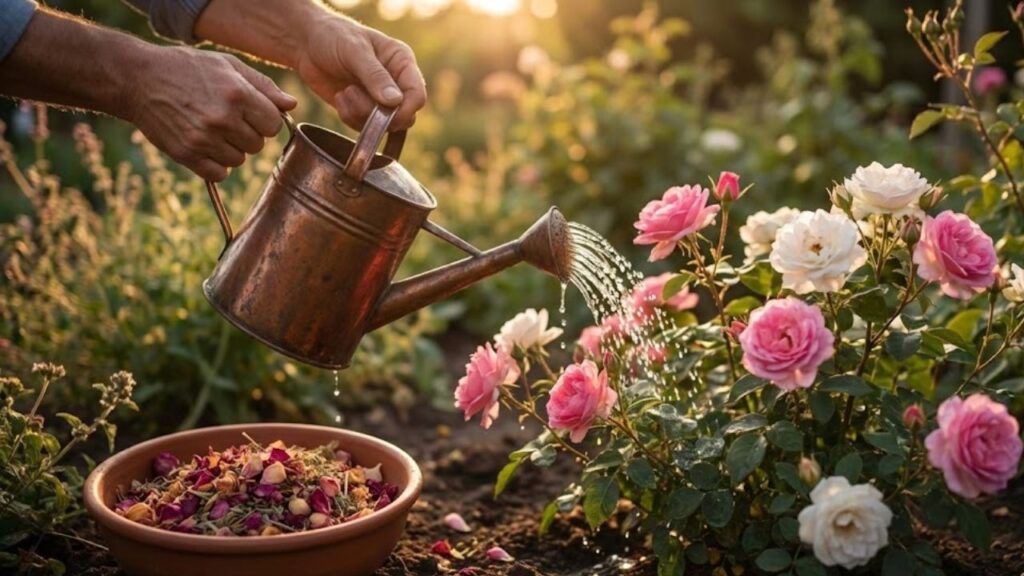
The first time I poured cloudy potato peel water at the base of my roses I expected nothing to happen. It felt almost silly like a half-remembered folk tale I had picked up from a stranger on a garden forum late at night. The water was lukewarm and faintly starchy and carried the soft earthy smell of a kitchen after dinner. My roses stood still & skeptical in the fading light of a late spring evening with their leaves flecked with dust and a few petals tired and crumpled at the edges. I tipped the jug slowly and let the pale liquid sink into the soil. Somewhere between doubt and curiosity I thought that if this works it will be a miracle.
The Hidden Secret in Your Kitchen Scraps
We live in a time when gardening advice often arrives dressed in shiny packaging and bold promises. Bottles claim instant blooms, miracle growth, and scientific breakthroughs. Yet some of the most powerful plant nourishment comes from the simplest places—right beside your kitchen sink. As potato peels slide off the cutting board, they carry more value than most people realize.

Potato peel water is simply the water used to soak or lightly boil potato skins, cooled and reused instead of discarded. As the peels rest in water, they release minerals, trace nutrients, and gentle starches that plants—especially nutrient-hungry roses—can benefit from. What looks like waste quietly becomes nourishment.

There is something deeply satisfying about this cycle. A potato grows in soil, feeds your family, and then its peel returns to the earth to support another plant. The kitchen and the garden stop being separate spaces and begin to work together in a quiet, natural rhythm.
The Science Beneath an Old Garden Habit
Beyond the folklore and charm, potato peel water is a mild nutrient solution rooted in basic plant science. Potato skins contain potassium, an essential mineral that roses rely on for strong stems, rich flower color, and long-lasting blooms. Potassium helps regulate water movement within plant cells and supports enzyme activity, making roses more resilient and balanced.
Alongside potassium, potato peels release small amounts of phosphorus, magnesium, and trace minerals. The starch present does not act as a direct fertilizer, but it can support beneficial soil microbes. These microorganisms help break down organic matter and unlock nutrients already present in the soil, improving overall soil health.
This practice is not new. Older gardeners often poured vegetable water onto flowers without knowing the chemistry behind it. Today, we describe it with words like sustainable, low-waste, and soil biology—but the observation remains the same: plants respond positively to this simple care.
How to Prepare Potato Peel Water for Roses
Imagine a calm moment in your kitchen as you prepare a meal. Instead of throwing potato peels away, collect them in a clean bowl or pot. Once you have enough, cover them with clean water until fully submerged.
You can let the peels soak for several hours, or gently simmer them for 10 to 15 minutes. Simmering draws nutrients out more quickly, while soaking is slower but equally effective. If you heat the peels, keep the water at a gentle simmer rather than a strong boil, then allow it to cool completely.
After cooling, strain out the peels. The remaining water may look slightly cloudy and smell faintly earthy. Before using it, dilute the liquid—one part potato peel water to two or three parts plain water. This keeps the feeding gentle and prevents overwhelming the soil.
How and When to Apply It in the Garden
The best time to apply potato peel water is early in the morning or late in the evening. During these cooler hours, the soil absorbs moisture more efficiently and the plants experience less stress.
Pour the diluted water directly onto the soil around the base of each rose plant. Avoid wetting the leaves, as roses can be prone to fungal problems when foliage stays damp. The nutrients belong at the roots, where absorption takes place.
Apply this treatment once every one to two weeks during the growing and flowering season. Combine it with regular rose care such as deep watering, mulching, pruning, and pest checks. The results tend to appear gradually—slightly richer leaf color, stronger stems, and more consistent bud formation.
| Aspect | Chemical / Traditional Fertilizer | Potato Peel Water |
|---|---|---|
| Main Purpose | Provides a powerful and direct N-P-K nutrient boost | Offers mild minerals and supports beneficial soil activity |
| Cost Factor | Needs to be bought regularly from the market | Prepared at home using leftover kitchen waste |
| Environmental Impact | Involves factory production, packaging, and transport | Eco-friendly, low waste, and sustainable option |
| Overfeeding Risk | High chance if applied in excess or too frequently | Very low risk when mixed and used correctly |
| Impact on Flowers | Quick growth with intense but short-term blooms | Slow, steady growth with healthier and longer-lasting blooms |
Encouraging Continuous Blooming Naturally
The idea of “non-stop” roses does not mean constant flowers without pause. In a real garden, it means shorter gaps between bloom cycles and a steady presence of buds from spring through early autumn.

Potato peel water does not force roses to bloom unnaturally. Instead, it supports their natural growth patterns. Many modern rose varieties are bred to rebloom frequently, but they need steady nutrition to do so consistently.
When roses receive gentle, regular nourishment, they tend to produce stronger stems, healthier foliage, and repeat blooms that arrive with confidence rather than exhaustion. Over time, the plant settles into a natural rhythm where new buds replace old flowers with minimal delay.
Common Mistakes and Simple Fixes
One common mistake is letting potato peel water sit too long. If left for several days, especially in warm conditions, it can ferment and develop a sour smell. Fresh peel water should be used within 24 hours, or stored in the refrigerator for a short time. If it smells unpleasant, add it to compost instead of applying it directly.
Another mistake is relying on potato peel water as a complete replacement for proper rose care. Roses still need sunlight, airflow, good soil structure, and occasional balanced feeding. This method works best as a supplement, not a cure-all.
Overuse can also cause problems. Applying peel water too frequently can lead to nutrient imbalance, especially in containers. If leaves begin to yellow or plants look stressed, pause the feeding and return to plain water for a while.
Using Potato Peel Water in Small Spaces
This method works just as well for gardeners with limited space. Balcony roses, patio containers, and small garden beds can benefit greatly. In pots, nutrients wash out quickly, and diluted peel water helps replenish minerals gently.
For container roses, apply the solution once every two to three weeks and always after watering the soil first. This prevents roots from sitting in overly concentrated liquid and ensures even distribution.
There is a special satisfaction in seeing roses bloom high above the street, knowing their strength comes partly from simple kitchen leftovers rather than store-bought products.
Extending the Practice Beyond Roses
Once you notice the effect on roses, it is natural to experiment with other plants. Many flowering plants respond well, including marigolds, geraniums, zinnias, and dahlias. Some leafy vegetables and herbs can also benefit when the solution is used sparingly.
Roses remain ideal for observation because they clearly show improvement through healthier leaves and repeated blooms. Over time, your garden becomes a living experiment, guided by observation rather than rigid rules.
The greatest reward may not be the flowers themselves, but the shift in perspective. Kitchen scraps become part of a larger cycle, linking daily meals to future blossoms. A potato peeled today may leave its quiet mark on a rose that opens days later, carrying the story from plate to petal.