
The first time I came across the “soft tie and diagonal lash” rose arch method in a glossy gardening reel, it felt almost magical. Long stems flowed neatly along the arch, blooms lined up like a bridal veil, and the comments overflowed with admiration. In just seconds, the video promised a perfect rose arch.
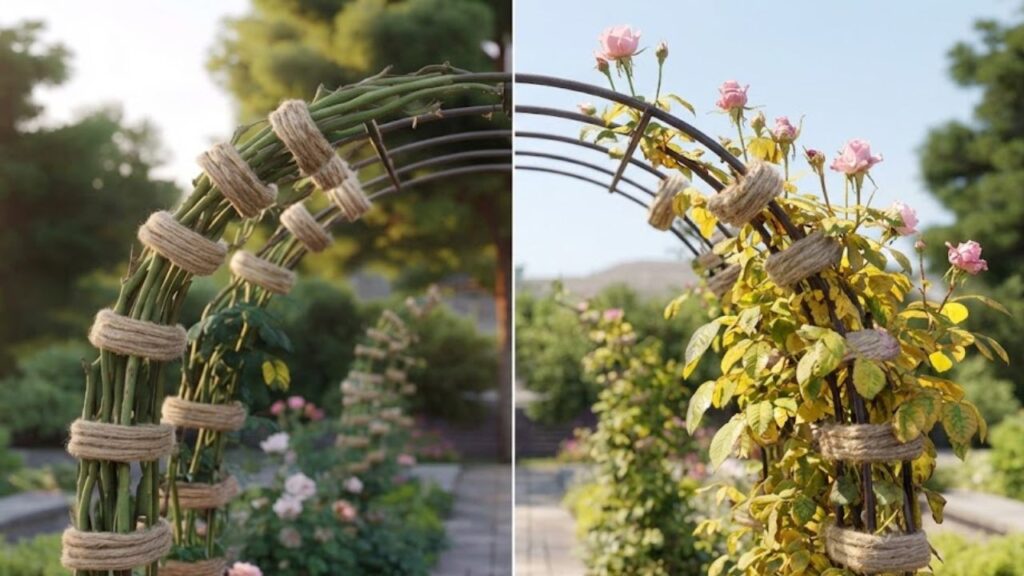
That illusion faded the moment I saw the same technique used in a real garden. Up close, the stems were cinched tightly with fabric ties, bark worn raw, and flowers clustered only at the very top. From a distance it looked fine, but stepping under the arch revealed stressed plants and struggling growth. The truth was clear: what works for photos doesn’t always work for roses.

Why the “Soft Tie and Diagonal Lash” Trend Looks Good but Harms Roses
Spend a few minutes scrolling through gardening feeds and you’ll spot the trend everywhere. Long canes are pulled into sharp diagonal lines, tightly secured to metal arches with pale “soft” ties. The result is dramatic and instantly eye-catching, especially in warm evening light.
 Goodbye Hair Dyes New Grey-Cover Trend Is Everywhere - The “Younger Look” Claim Has People Split
What you don’t notice at first are the crushed leaf joints or stems bent beyond their comfort zone. Roses don’t respond to visual impact — they respond to sap flow, hormone balance, and bark health. When canes are forced into hard angles and tied repeatedly in one place, the plant shifts into survival mode instead of healthy growth.
What Actually Happens Inside the Plant
Roses are designed to bloom along their stems, not only at the tips. Gentle bending encourages even bud development, but harsh diagonals disrupt how hormones travel through the cane. Even so-called soft ties, when pulled too tight or layered together, act like a slow tourniquet.
Sap struggles to pass the pressure points, bark becomes scarred, and parts of the cane begin to shut down. That’s why many picture-perfect arches look stunning for one season, then start to die back in uneven, unhealthy patches. The visual trick eventually demands its price.
A Healthier Way to Train Roses Over an Arch
A more sustainable approach begins with the natural shape of the cane, not the rigid outline of the arch. Each long stem already has a curve — the goal is to guide it gently, not force it into a graphic pattern.
Aim for wide, relaxed curves instead of tight diagonals. Secure the cane where it already wants to bend, using a single loose tie. If the stem creaks or makes you hesitate, it’s a sign you’ve pushed too far. One tie every 30–40 cm is usually enough for mature canes, always loose enough to slide a finger underneath.

Think in Seasons, Not Social Media Patterns
Forget the set-piece designs seen online. Think in layers and years. In the first year, focus on establishing a few main canes along the arch. In the second year, allow side shoots to develop and gently fill the gaps.
Ties should act as temporary guides, not permanent restraints. Natural jute, soft rafia, or even fabric strips work well if left loose and checked once or twice a season. Allow room for growth — because in reality, ties are rarely adjusted as often as they should be.
A Simple Checklist to Undo the Hype
- Choose wide bends, never sharp kinks.
- Use fewer ties, spaced apart and always loose.
- Follow the cane’s natural line before the arch’s outline.
- Recheck ties twice a year and remove any that bite into bark.
- Measure success by next year’s growth, not this week’s photos.
Redefining What a “Perfect” Rose Arch Really Means
Gardens have drifted toward a strange ideal where roses are expected to behave like wallpaper — flat, symmetrical, and camera-ready by midsummer. The “soft tie and diagonal lash” trend feeds that pressure, promising instant perfection if you follow the pattern tightly enough.
Real rose growth is slower and messier. Plants sulk after pruning, surge after rain, and settle again after wind. An arch that looks slightly uneven this year may become the most abundant and character-filled feature next spring. Kind training leaves space to walk beneath, foliage at eye level, and canes that aren’t clenched under stress.
Forcing harsh diagonals is a short-term trade. You exchange several seasons of healthy, well-distributed blooms for one year of rigid control and tired wood. A looser, more generous arch stands out precisely because it feels alive — shaped by time and care rather than by a viral pattern.
Once you’ve seen a cane scarred by last year’s tight “soft tie,” the cost of these trends becomes impossible to ignore. A gentler method may lack instant drama, but it rewards you with rose arches you can walk under, touch, prune, and enjoy for years without hiding damage behind a photograph.