
That familiar weight lands on your thigh. You glance down and see your dog staring up at you with one paw pressed gently against your leg. You smile and say hello while giving a quick scratch before returning to your phone. But the paw remains there. A soft tap follows. Then another one. The staring continues. Something about this moment feels different from the usual trick you taught them for social media posts. Animal behavior experts suggest this interaction means more than it appears. Your dog might be communicating something important that you haven’t noticed before. Dogs use their paws deliberately to get attention and express needs. When your dog places a paw on you and maintains eye contact it often signals a specific request or emotion.
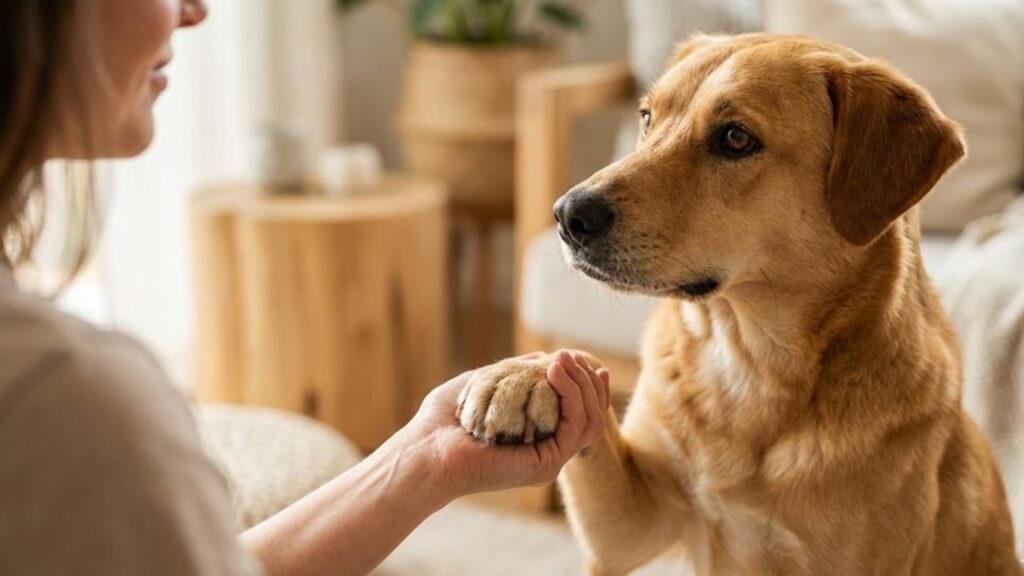
Why your dog really gives you its paw
Watch dogs together and you will see it. The paw is a tool. They put it on each other’s shoulders and tap a muzzle or nudge a back. It is not random. It is a way to cut through the noise and say hey look at me. When that paw lands on your leg or arm it is often the same thing. A focused attempt to reconnect. Your dog is not trying to be polite or shake hands like a tiny gentleman. He is trying to get your full attention in the most direct way he knows. Sometimes it is a request. Sometimes it is nervousness leaking through the fur. Sometimes it is simple quiet affection like a person reaching for a hand on the sofa. The move looks identical but the meaning can be wildly different. Take Maya who is a three year old rescue living in a small flat in London. Her owner Jake thought the paw thing was just her favourite trick. Every evening as soon as he opened his laptop the paw would appear. First on his knee and then on the keyboard. Videos were sent in the family WhatsApp with captions like look she wants to work with me. One night Maya’s paw trembled slightly. Her breathing was shallow and her eyes were a bit too round. Instead of laughing Jake filmed the whole scene and sent it to a trainer friend. The answer came back fast. That is not cute. She is stressed. Once he started paying attention he noticed a pattern. Pawing when the neighbours argued. Pawing during thunderstorms. Pawing when his meetings dragged on and her walk was late. The gesture was the same but the emotion behind it was not play at all. Behaviourists describe pawing as a multi-purpose social signal. Dogs do not have many ways to physically reach out to us. They can bark or lick or lean or stare. The paw is special because it combines touch and focus. It breaks whatever you are doing and anchors you back into the relationship.

How to decode that paw and respond the right way
Start by pausing when it happens. Your dog’s paw touches you and you stop for three seconds. Look at the complete picture including ears and eyes and mouth and tail and body posture and breathing. This quick check tells you what the paw means. When the body is relaxed and the mouth is soft and the tail wags at middle height you are seeing a friendly request for attention or asking for more of something good. This is the typical couch paw where the dog is half asleep during a quiet evening and rests a paw on you as if saying stay here with me. When the body is tight and ears are pulled back & eyes are wide or showing white around the edges the pawing can signal worry or fear. Your dog is not being cute in this moment.

He is asking for help like a child grabbing your arm in a busy place. After you notice this pattern you will always see it. One woman described her labrador named Finn as dramatic with his paw during a behavior consultation. He would slap her leg while she prepared food and hit guests at the table and put his paw on her chest whenever she lay on the couch. It seemed funny at first but became a problem. We recorded a full day with Finn. Every intense pawing moment happened right after a small human action like picking up a phone or opening a laptop or turning on the television or greeting a visitor. Finn had learned that heavy pawing was the only thing that got attention through all the screens and conversations. When the family changed their response by rewarding calm eye contact instead of big paw slaps and adding short predictable play breaks the pawing decreased. This happened not because Finn forgot the behavior but because he finally had better ways to connect. This is where honesty matters.
Many of us accidentally teach our dogs to use the paw as a demand button. We laugh or talk back or give treats or attention every time that paw lands. From the dog’s perspective paw equals reward. No surprise it happens constantly. The solution is not to ignore every paw forever. That approach can confuse dogs and feel cold. The solution is to connect the paw to the right response. A calm paw with a relaxed body can get touch or a smile or a quiet word or maybe a short break. A frantic scratchy paw with a tense body means you should reduce stress instead of rewarding the behavior. When the paw connects to anxiety experts often recommend quiet predictable routines instead of constant training sessions. Short gentle check-ins work well with the message of I see you and you are safe and we are fine. Being realistic almost nobody does this every single day.
Even five focused minutes can change how that paw gets used. One helpful habit is to name the paw when it happens in a calm moment. Your dog lifts a paw slowly while you are relaxing together & you say something like gentle paw in a low relaxed voice and stroke softly for a moment. Then let your hand stay still. Over time this gives the gesture a safe emotional meaning. It tells your dog that when you use your paw softly our contact is mutual and warm and does not need to increase. The paw becomes less of a desperate signal & more of a shared message saying we are here together. When the paw gets too demanding with scratching or poking guests or interrupting meals you should redirect rather than scold.

Quietly move your leg away and wait for one second of calm and then reward eye contact or a sit. Your dog learns that pushy paws do not work but small self-control does. On a practical level give your dog other ways to express needs. Teach a go to your bed command or a nose touch to your hand or a simple chin rest. These are gentler tools than a hard claw on bare skin. They protect both your patience and your dog’s emotional health.
Living with a dog who “talks” with its paws
When you begin to see the paw as a way of communicating, ordinary moments with your dog take on new meaning. That simple gesture stops being just background activity & becomes something your dog is actually saying. You start noticing when it happens & what’s going on around you at the time. Some dog owners notice their pet only uses its paw when emotions run high at home during loud arguments or tense conversations or when music plays too loudly. Other dogs do it during the calmest times instead, like a quiet reminder of their presence when everyone gets absorbed in their phones or computers. Both patterns mean something. Your dog is trying to connect with the family using the one physical tool that’s always available. When you understand this ignoring the paw without thinking starts to feel like cutting off a friend who’s trying to talk to you.
There’s also a physical aspect that often gets overlooked. Dogs may paw more when they feel itchy or hurt or when they have arthritis or sore joints. A dog that never did this before but suddenly does it frequently might not be acting needy. He might be reaching out because something in his body doesn’t feel right. Veterinarians often mention that small changes like increased pawing or leaning or seeking contact at night can show up weeks before more obvious health problems appear. Sometimes that paw is actually a gentle warning about a medical issue rather than just a behavioral habit. This is why animal professionals connect this small action to something more significant: the strength of your relationship with your dog and how comfortable he feels expressing himself to you.
When you pay attention, the paw raises questions that stay with you long after you’ve cleaned the dirt off your clothes. When does my dog reach for me and when does he hold back? What do I do that makes that gesture gentler or more confident? These questions don’t have single correct answers. They mark the start of an ongoing conversation that can continue quietly through years of walks together & time spent on old couches. It’s a language made from small taps on your arm and your decision to truly notice each time it happens.