
The sneakers looked ordinary with grey mesh and a slightly worn sole that carried the faint smell of gym floors and city pavements. They were the kind of shoes you would drop in a donation bin while feeling a small vague sense of having done something good. Before letting them go a man in Geneva slipped a tiny Apple AirTag under the insole almost like a dare. He wanted to know where his old shoes would really end up. He took a photo and knotted the laces together before carrying them to a Red Cross collection point. After a quick signature & a polite smile he went back to work. That should have been the end of the story. Days later his phone buzzed & showed that his lost object had just moved. It had not gone to a sorting center or a refugee camp but to a street market on the other side of town. The blue dot on his screen started to drift between metal stands and tarpaulins. The sneakers that were now donated were up for sale.
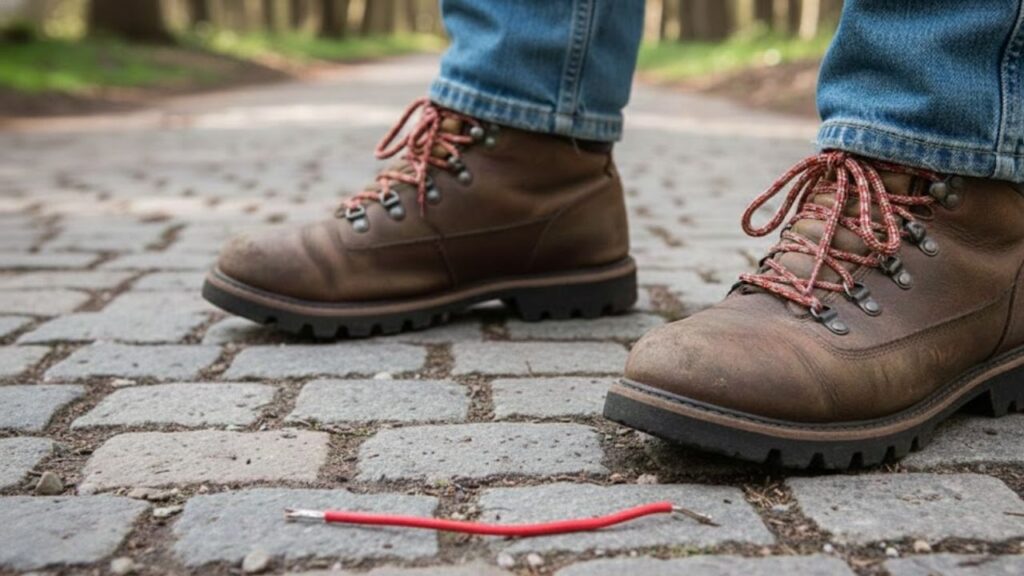
From a Charity Bin to a Flea Market Table
When he first opened the Find My app, he expected to see the AirTag sitting quietly in a warehouse. Instead, the map showed movement, pinpointed near a well-known flea market. A place famous for second-hand coats, tangled chargers, and now, it seemed, donated sneakers with a tracker inside.

Curious and slightly unsettled, he cycled there on a Saturday morning. With every step between the stalls, the AirTag signal grew stronger. Plastic tarps flapped, vendors shouted prices, and children tugged at their parents’ hands. Somewhere in that noisy maze, his old shoes were waiting, now wearing a new price label.

He moved slowly along the rows, scanning piles of footwear. The signal became undeniable. He no longer needed his screen. The sneakers sat right there, neatly arranged with other so-called “donations”, transformed into affordable bargains.
This was not a technical glitch or an urban myth. In recent years, similar tests have spread online: hidden trackers placed in donated clothes, toys, or electronics, quietly mapping their journeys. In this Geneva case, the path was short but revealing: collection point, temporary storage, then a reseller’s stall.
Other items have travelled farther. A winter jacket dropped in Berlin appeared months later in Eastern Europe. A bag of used T-shirts in London pinged from a cargo ship near North Africa. A laptop marked for recycling moved straight from a charity depot to a refurbishing exporter.
Each time, screenshots of these routes spread online, sparking curiosity and anger. The donations did not vanish. They entered a long, opaque chain where good intentions meet economic reality.
For charities, the situation is more nuanced than it appears. Many openly resell part of what they receive to fund programs, pay staff, and keep operations running. Some work with recyclers or wholesalers who buy clothes by weight. This is legal when it is transparent. The tension arises when donors picture their shoes helping someone directly, while the items are actually treated as commodities in a global resale system.
The Geneva sneakers captured that disconnect. One pair, a few francs, yet behind them lies an industry few donors fully understand. Technology exposes that gap. A 35-euro AirTag can reveal an invisible journey worth millions.
Donating More Thoughtfully Without Stopping Altogether
The AirTag story is not a call to stop giving. It is an invitation to give differently. A simple first step is to ask questions before donating. Where do items go? What portion is given freely? What is sold, and through which channels?
Many established charities answer clearly when asked, whether in person or by email. Some publish detailed breakdowns of their donation flows. Spending a few minutes reading those pages can be more useful than hours of online outrage. If answers remain vague, that uncertainty speaks for itself.
Another practical shift is to match donations to actual needs. Some shelters list specific items by season. Urban groups may need sturdy sneakers and coats, while smaller associations focus on baby clothes or school supplies. Aligning what you give with what is needed reduces the chance of items entering the resale stream.
There are also ways to keep generosity personal. Local social groups often connect donors directly with families, students, or newcomers. You give an item, you see the response, you hear the story. This does not replace large organizations, but it restores a human connection.
In many cities, social workers quietly prepare wardrobes for people moving off the streets into housing. They know exactly who needs size 43 sneakers and which interview is coming up. Donating directly through them can shorten the path from your hallway to someone’s closet.

Not everyone can manage perfect donations. Sometimes, carrying a bag to the nearest bin already feels like an achievement. In those moments, a shift in perspective helps. Instead of imagining a flawless journey for each item, think of supporting an entire ecosystem: charities, staff, beneficiaries, and shops.
Soyons honnêtes : personne ne lit les rapports d’activité chaque semaine. Still, checking once a year how a preferred charity operates can prevent disappointment. Do they run stores? Export surplus goods? Publish audits? These details are often visible to anyone who looks.
Some donors will continue tracking items out of curiosity or mistrust. That choice raises its own ethical questions around privacy and consent. Yet it also reflects something deeper: are we testing organizations, or our own idealized vision of generosity?
“I wasn’t shocked that my sneakers were sold,” the donor later said. “I was shocked that nobody had clearly said this was happening, while asking me to give from the heart.”
From this single pair of tracked shoes, several practical lessons emerge:
- Choose organizations that clearly explain resale and export practices.
- Donate items in very good condition; damaged clothes often become waste.
- Balance giving through charities with direct support when possible.
When a Hidden Tracker Makes Discomfort Visible
The Geneva case resonated because it felt like an experiment anyone could repeat. A cheap tracker, an old pair of sneakers, a donation bin. No hacking, no cameras, just a quiet test many had imagined but never tried.
At a deeper level, the glowing dot on a phone screen forces an uncomfortable question: how much do we truly want to know after we do the right thing? We sort, fold, and drop off donations. Our mental story ends there. The real journey continues through warehouses, ships, markets, and sometimes landfills.
At a busy market, a vendor may see those sneakers simply as stock. A recognizable brand, decent condition, easy to sell. A few francs earned, perhaps a meal paid. Blame is hard to assign in a system designed long before any tracker was hidden. The neat moral story rarely matches reality.
What the AirTag reveals is not a scandal, but a gap between imagined impact and global second-hand logistics. Closing that gap requires conversation, not more tracking. With charities, with communities, and with ourselves.
Some will turn away from large organizations. Others will accept resale as a necessary way to fund social work. Many will remain uncertain yet willing to help. That discomfort may be the most valuable outcome. It encourages thought instead of habit.
Giving has always been about more than objects. It is about trust, the stories we tell ourselves, and the fragile link between giver and receiver. A small tracker in a sneaker does not break that link. It simply draws it on a map, bringing it out of the shadows and into view.

| Key point | Details | Why it matters to readers |
|---|---|---|
| Ask charities how donations are used | Before dropping bags, call or email to ask what percentage of clothing is given directly, what’s sold in shops, and what’s exported or recycled. Many organizations now have clear policies they can share. | Knowing this upfront avoids that “AirTag surprise” effect and helps you choose charities whose practices match your expectations. |
| Prioritize direct, local giving when possible | Combine traditional donations with direct help via local groups, shelters, student associations or neighborhood apps where people post concrete needs. | You see the immediate impact of your shoes or clothes, which restores trust and cuts out some of the opaque middle steps. |
| Donate only items in real “ready-to-wear” condition | Check soles, zips and seams, and wash everything. Many worn-out items end up as low-value textile waste, despite the donation label. | Your contribution is more likely to be used as-is, not discarded or downcycled, which makes your gesture more effective. |
