
One of the first things you learned after walking & saying your first words was probably tying your shoes. You might have been sitting on a playground bench with your mother showing you how to do it. Or perhaps you were in a classroom with your teacher kneeling down & helping your small fingers learn the steps of making loops & bunny ears. Maybe you just worked it out by yourself one day because you didn’t want to keep asking others for help. However it happened by age six or seven you had learned a simple but useful skill. You could take two shoelaces and tie them together in a way that kept your shoes on your feet so you could walk & run wherever you needed to go.
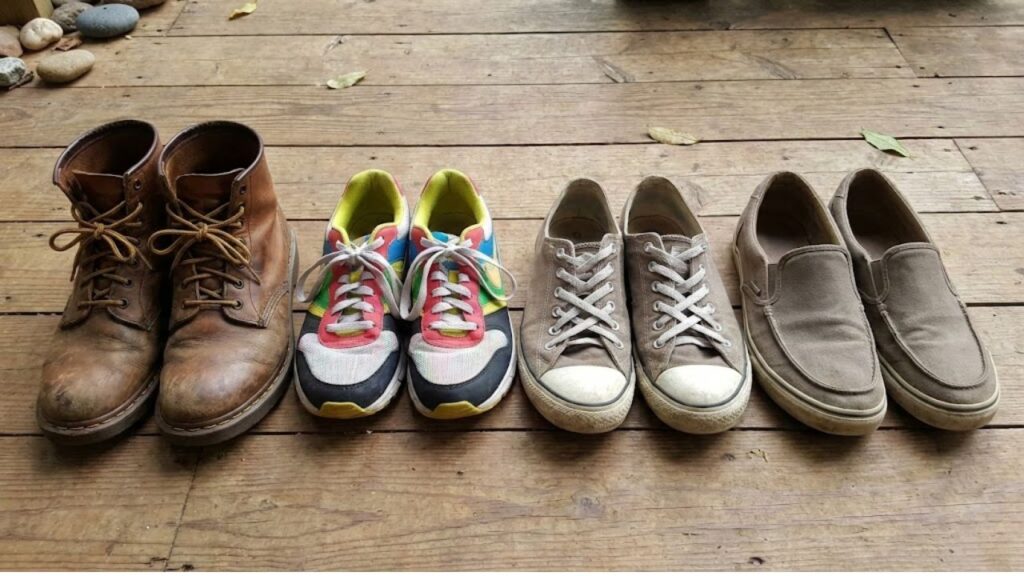
The Secret Language at Your Feet
Most days, your shoes barely register in your thoughts. You slip them on, tug the laces, form the knot almost without looking, and head out. Yet down near the ground, close to dust, pavement, and motion, a quiet personal ritual unfolds—one that reveals more about you than you might expect.

Shoe-tying is strangely intimate. It’s a habit repeated thousands of times, usually unnoticed, rarely witnessed, yet filled with subtle clues. The tightness of the pull, the shape of the loop, the choice to double-knot or not—each detail carries traces of your temperament, your patience, your sense of control. Like a soft-spoken personality test, it travels with you everywhere.

While researchers tend to study shoelaces through physics and friction, everyday observation tells another story. The way people prepare—buttoning a shirt, zipping a jacket, tying shoes—often mirrors their emotional style. This isn’t about judging by footwear; it’s about noticing how small gestures quietly echo who we are.
Imagine every shoe-tying style as a character in a story. Which one feels most like you?
The Classic Bow: The Quiet Traditionalist
If you tie your shoes with a clean, familiar bow—one loop, one wrap, pull tight—you’re following a method learned early and kept for good reason. It’s simple, balanced, and dependable. This style often reflects a preference for order, clarity, and routines that work without drama.
Classic bow wearers often appreciate structure: a reliable morning ritual, a familiar route, a steady rhythm to the day. Creativity still exists here, but it rests on a solid foundation. Like the bow itself, your approach brings balance that allows everything else to move freely.
There’s also a quiet courtesy in this style. It doesn’t demand attention. It simply does its job well. Even when no one is watching, you tend to do things properly, guided by an internal sense of rightness rather than external approval.
The Double Knotter: The Determined Protector
Double knotters don’t act by accident. Pull once, then again, sealing the bow with intention. This style reflects someone who prefers certainty over chance. Perhaps experience taught you that loose ends can trip you up—so you plan ahead.
People who double-knot are often prepared without being anxious. They’re the ones who carry backups, read instructions carefully, and think two steps ahead. This preparation allows them to move confidently, knowing the basics are secure.
Emotionally, this can show up as loyalty and care. When you commit, you hold tight. Like your laces, your bonds are not easily undone.
The Quick, Messy Tie: The Free-Roaming Improviser
Uneven loops, off-center bows, dangling ends—but it holds, and that’s enough. If this is your style, momentum matters more than perfection. Your mind likely runs ahead of your hands, eager to get moving.
You adapt easily. Plans change, and you pivot. Mistakes don’t stop you; they simply mean you’ll adjust later. Sometimes your laces come undone, but retying is just part of the journey.
This approach reflects a comfort with imperfection. Life doesn’t need to be flawless to function, and neither do your shoes.
The Symmetry Seeker: The Aesthetic Organizer
You notice when things are slightly off. After tying, you adjust—loops equal, ends aligned, knot centered. This attention reflects a love for harmony and visual balance.
Symmetry seekers often build systems that feel calm and efficient. There’s satisfaction in alignment, whether it’s a straight picture frame or a neatly arranged schedule.

Behind this order is a quiet appreciation for beauty. Your laces resting neatly across your shoes are a small, private expression of that value.
The Creative Looper: The Quiet Rebel of Routine
Standard bows feel limiting. You experiment—side knots, hidden loops, unconventional lacing patterns. Shoes become another medium for expression.
This style often belongs to those who question defaults. You don’t reject structure entirely, but you enjoy bending it, adding personal meaning where others see routine.
Your laces may quietly signal independence, creativity, and a willingness to explore alternative paths—even in small, everyday ways.
The Tuck-and-Go: The Minimalist Navigator
You tie once, then tuck the rest away. No daily retying, no extra steps. This reflects a desire to reduce friction between intention and action.
Minimalists like systems that work without constant attention. Your routines are flexible, efficient, and designed to save energy for what truly matters.
Hidden laces, clear priorities—that balance defines your approach.
The Slip-On Soul: The Intentional Untier
You’ve chosen shoes without laces—or laces that never change. Slip-ons, zippers, elastic designs. You value ease and clarity.
This often reflects strong self-knowledge. You know what feels right and design your life accordingly, removing small irritations that slow you down.
Your footwear says you’re already moving forward while others are still tying knots.
A Glance Down: What the Details Whisper
Look at people’s feet as they pass—a parade of quiet stories. Neat bows, tight knots, loose laces, clean slip-ons. No single style defines a person, and most of us shift between several.
These small choices reflect how we negotiate safety, freedom, control, and expression. Even in an offline, analog act like tying shoes, personality leaves its trace.
Next time you bend down, pause briefly. Feel the lace, the tension, the hold. Notice what you secure and what you leave loose—not just on your shoes, but in your life.
Common Shoe-Tying Styles and What They Suggest
These patterns aren’t rules—just gentle hints, like footprints in sand, reminding us that even the smallest rituals can quietly reflect who we are.

| Shoe-Tying Habit | Personality Insights |
|---|---|
| Clean, traditional bow | Dependable and structured, enjoys routine, values stability and balance in daily life |
| Secure double knot | Cautious and forward-thinking, prefers safety, commitment, and long-term reliability |
| Fast, loose, uneven tie | Energetic and spontaneous, adapts quickly, prioritizes action over perfection |
| Perfectly centered, adjusted bow | Highly detail-focused, visually mindful, strives for harmony and polished outcomes |
| Unique or unconventional lacing | Creative and independent thinker, enjoys expressing individuality and bending norms |
| Laces tucked inside (no visible bow) | Minimalist and efficient, avoids distractions, conserves effort for important tasks |
| Slip-on shoes or rarely ties laces | Comfort-oriented and practical, self-aware, prefers simplicity and ease over fuss |
