
Double cleanse, foaming wash astringent toner, mattifying serum. By eight in the morning her skin felt tight and squeaky clean. By lunchtime her nose was shiny and new pimples had appeared on her cheeks. She stood in the office bathroom applying powder and wondering what she was doing wrong. It seemed impossible that someone who cleaned her face so thoroughly could still have oily skin. At the sink next to her a coworker simply rinsed her face with water and applied a light moisturizer before heading back to work. Her skin looked smooth & healthy throughout the entire day. She had no complicated routine & no skin problems. Two women in the same office breathing the same air and drinking coffee from the same machine had completely different experiences with their skin. The surprising truth is that the woman who cleaned her face the most might actually be causing her skin to produce more oil.
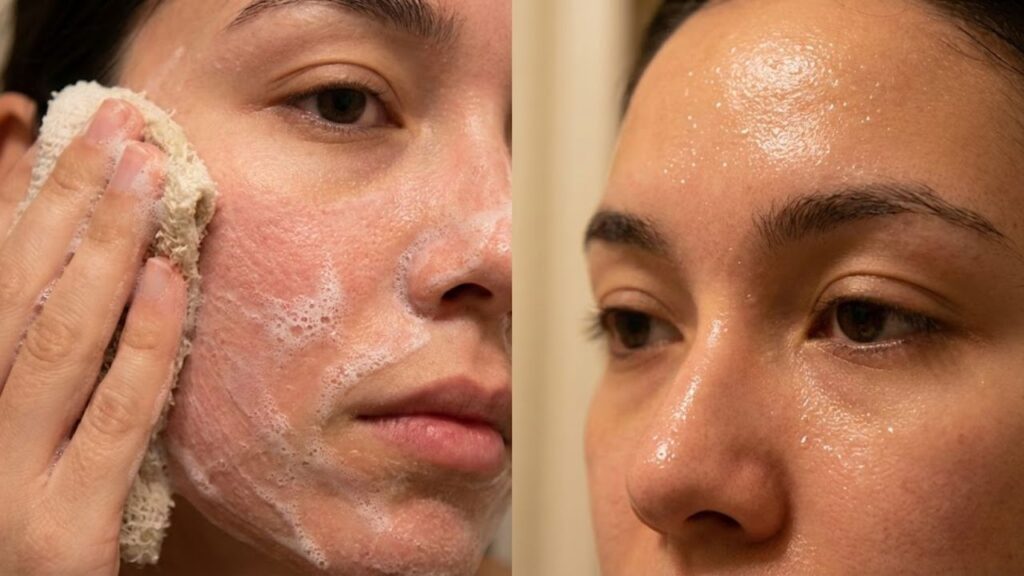
When Over-Cleansing Disrupts Your Skin’s Natural Balance
The Squeaky-Clean Feeling That Tricks Your SkinThere’s a familiar sound many people recognize: that faint squeak when a fingertip glides across freshly scrubbed skin. It feels rewarding, almost moral, as if every trace of pollution, makeup, and yesterday’s stress has been wiped away. Your face feels tight, light, and unusually smooth. In that moment, it’s easy to believe this is what true cleanliness should feel like.

Why Oil and Shine Always Come Back StrongerA few hours later, reality sets in. Shine slowly returns, especially around the T-zone. Pores look more visible, and makeup starts breaking apart. The instinctive response is to wash again—more foam, more stripping, more urgency. Without realizing it, this habit teaches your skin to defend itself. The harder you chase that “ultra-clean” feeling, the more aggressively your skin produces oil in response.

The Hidden Cycle Dermatologists See Every DayDermatologists encounter this pattern constantly, particularly in people with acne-prone or combination skin. Feeling oily leads to more cleansing. Over-cleansing signals danger to the skin, triggering sebaceous glands to work overtime. The face essentially flips into survival mode, producing even more oil. This feedback loop traps many people in a cycle where their efforts to fix the problem actually make it worse.
A Real-Life Example of Over-Cleansing Gone WrongTake Maya, a 24-year-old student who moves to a polluted city and suddenly starts breaking out. Panicked, she turns to late-night skincare videos and fills her routine with foaming cleansers and oil-control products. Soon, she’s washing her face three or four times a day, especially after the gym. Her cleanser tingles and burns slightly, and she assumes that sensation means progress.
When the Routine Becomes the ProblemWithin weeks, Maya’s skin is oilier by midday, yet dry and flaky around her mouth and jawline. A dermatologist finally explains what she never expected to hear: she’s cleansing too much. Her skin barrier is damaged, and her oil glands are overcompensating. Simply switching to a gentle cleanser twice daily begins to restore balance and calm the chaos.

The Simple Biology Behind Over-CleansingThe science is surprisingly straightforward. Your skin is protected by a thin layer of sebum, sweat, and lipids known as the acid mantle. This invisible shield helps lock in moisture and block irritants. Harsh surfactants, high-pH soaps, and abrasive scrubs don’t just remove dirt—they strip away this protective layer, leaving skin vulnerable and reactive.
Smarter Cleansing Habits That Calm Excess Oil Production
A Simple Approach to Managing Oily Skin The best way to control excess oil production often begins with an unexpectedly basic step: doing less. Most people find that washing their face twice daily is sufficient. In the morning and at night you should use lukewarm water with a mild low-pH cleanser instead of harsh foaming products or aggressive scrubbing that leaves skin feeling stripped. Consider face washing similar to brushing your teeth. It should be consistent and careful without being harsh. Apply the cleanser & massage it into your skin for about 30 seconds while paying extra attention to your T-zone where oil production tends to be higher. Then rinse everything off completely. If you wear heavy sunscreen or makeup at night you might start with a light oil or cleansing balm before using your regular gentle cleanser. Just make sure both products are mild. The objective is not to fight against your skin but to work together with it. Everyone knows that feeling when you get home after a long day and want to scrub away everything from your face. The pollution and sweat and stress & grime all seem to demand immediate removal. Some people cleanse with real intensity after getting a breakout. They scrub harder thinking it will solve the problem. They add rough exfoliating scrubs for good measure. These are exactly the times when skin tends to react most negatively. Washing after every workout and using alcohol-based toners & applying hot water because it seems to dissolve oil faster all gradually damage your skin barrier. During stressful weeks you might even avoid moisturizer because you worry it will make your skin more oily. The truth is that nobody maintains a perfect skincare routine with the consistency shown on social media. Real improvement happens when you replace harsh treatment with gentle care. You can achieve that clean feeling without the tight uncomfortable sensation. You can manage oil production without treating your face like an enemy.
Restoring Harmony by Working With Your Skin’s Biology
There is a quiet relief when you stop chasing the impossible idea of perfect matte skin all day long. A human face moves and blushes and sweats and sometimes shines. Oil is not an enemy but a normal function. When you treat it that way your entire routine becomes kinder and actually works better. The next time you want to scrub away a bad day just pause for a second. Look at your skin not as a project but as a living organ that has worked for you nonstop since birth. It protects you from bacteria and pollution and wind and sun and your own habits. There is something quietly beautiful about helping it do its job instead of fighting it. In group chats friends share selfies and routines. One person swears by three steps & another by ten and a third barely uses more than cleanser & sunscreen. The only common thread between the ones with calmer skin is that their cleansing looks almost boring on paper. No extremes and no burning sensations and no obsession with that squeaky clean feeling. We have all stared at our reflection convinced something is wrong with us when the problem was just that we went too hard on the soap. Oil overproduction from over-cleansing is one of those topics that spreads quickly once someone says it out loud. Someone admits they washed their face too much and made things worse. It is strangely liberating to admit it. It opens space for more honest conversations about how marketing & filters and stressed-out late-night decisions shaped our habits. When you share that story a cousin will quietly reply that they think that is happening to them too. A colleague will show up with a gentler cleanser in her bag. A friend will cancel an order of three harsh toners. Little by little routines become more realistic and more human. Your skin when given the right conditions often finds its natural rhythm again. Not perfect & not porcelain but more stable and more like you.

| Key Insight | Refined Explanation | Why It Matters to Readers |
|---|---|---|
| Skin barrier disruption | Excessive cleansing removes the skin’s natural acid mantle, weakening its defense and increasing moisture loss. | Clarifies that a tight, “squeaky clean” feeling signals damage rather than healthy skin. |
| Oil rebound effect | When the skin senses dryness and stress, oil glands react by releasing more sebum to protect the surface. | Helps readers understand why frequent washing often leads to increased shine and acne flare-ups. |
| Balanced care approach | Using a gentle cleanser twice daily and following with suitable hydration helps maintain skin equilibrium. | Provides a practical, sustainable routine for smoother, calmer, and more resilient skin. |
