
The girl sitting in the café looked flawless from a distance. Her eyebrows were neatly shaped, her eyeliner was clean, and her lips had a soft shine. But as she moved closer to the window, something felt off. A heavy stripe of blush sat right beside her nose, as if her cheeks were flushed from running upstairs. The makeup quality was good, yet the placement was wrong. You have likely noticed this effect on social media or while passing people on the street. When blush sits too close to the center of the face, features can appear smaller and compressed. What looks balanced in a bathroom mirror can feel uneven in natural light or on camera. A difference of just a couple of centimeters can separate a fresh, healthy glow from a crowded look. This is less about trends and more about simple facial geometry.
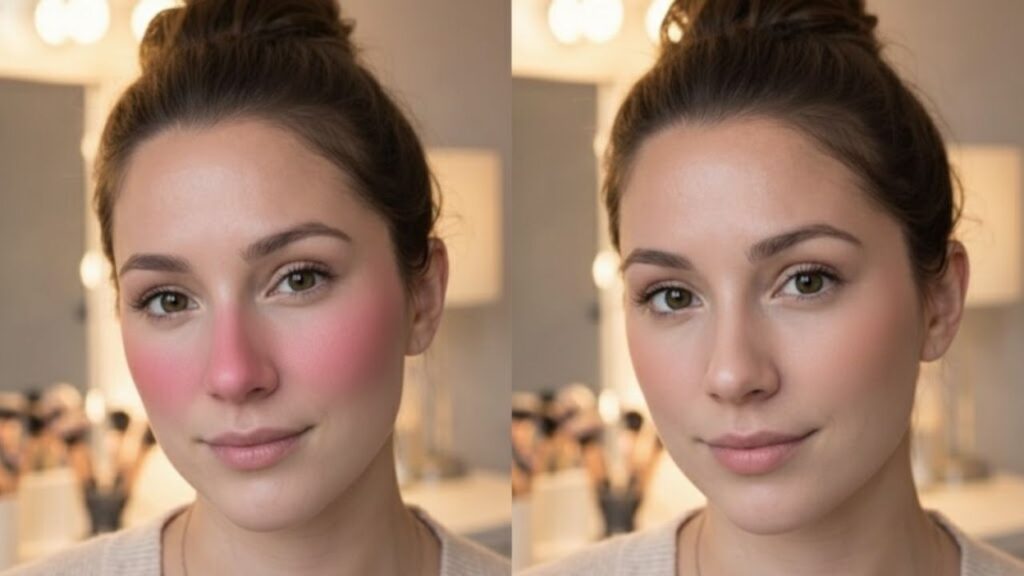
How Blush Too Close to the Nose Disrupts Facial Balance
When blush is applied near the nose, the face can appear narrower and slightly strained. The center of the face becomes dominant, while the eyes and cheekbones fade into the background. Instead of lifting the features, the color pulls everything inward. The outer cheeks can seem to disappear, and redness around the nostrils may look more noticeable. From a distance, this placement can feel puffy or congested rather than soft. In photos, especially under harsh lighting, blush near the nose often blends with natural redness and forms a solid block of color. Phone cameras exaggerate this effect by sharpening contrast and shadows. Makeup professionals often describe a danger zone around the nose where excess color makes the face look smaller and more tired. This is why blush on red carpets is placed higher and further out, helping the face appear longer and more open.
Also read: Microwaves Face a Serious Challenger as a Faster Kitchen Device Emerges
Smarter Blush Placement That Lifts Instead of Compresses
A simple guideline can help prevent blush from creeping too close to the nose. Imagine a vertical line running down from the center of your eye. This line marks your inner limit, and your blush should stay outside it. Place color on the part of the cheek that gently lifts when you smile slightly. From there, blend outward toward the top of your ear in a soft, curved motion. Applying thin layers is key, since it is easier to build color than to fix placement mistakes. Leaving a small strip of bare skin beside the nose helps maintain balance. Many people apply blush too far inward by taking advice about the “apples of the cheeks” too literally, especially when rushing. On round faces, this can add unwanted fullness. On angular faces, it can make the center look harsh. Often, the issue is not how much blush is used, but where it is placed.
Also read: This Abs Exercise Targets the Core Deeply Without Stressing Your Back
Quick Visual Checks to Keep Blush Away From the Nose
- Leave at least one finger-width of bare skin between the nose and blush.
- Angle the brush slightly upward instead of sweeping straight across.
- Tap off excess product before touching the skin.
- Blend more on the outer edge than the inner edge.
- Step back from the mirror and check your face from arm’s length.
Also read: This Winter Boiling Ritual Combines Lemon, Ginger, and Cinnamon for a Reason
Because no one spends long minutes blending blush every day, these simple visual rules are often more effective than complicated techniques. The center-of-eye line and one-finger gap work whether you use an affordable cream stick or a luxury compact, even on busy mornings.
Finding Facial Balance Beyond Social Media Makeup Trends
There is no single correct blush placement, as the effect depends on what you want to achieve. Moving color slightly toward the nose can create a youthful, cold-weather flush on some faces, but going too far can look unbalanced. Preferences vary widely. Some people enjoy a bold, central blush inspired by Korean beauty styles, while others prefer a subtle touch high on the cheekbone. The key is understanding how placement changes where attention falls. A helpful exercise is to apply blush differently on each side of your face and compare them in natural daylight. Notice which side highlights your eyes and which allows your nose to blend naturally. This comparison is not about criticism but about learning how color guides attention. Over time, experimentation shows that the face is not something to fix, but a canvas to arrange with intention.
Also read: Heating Rules Changed Quietly and the Old 19-Degree Advice No Longer Works
Key Placement Guidelines and Why They Matter
- Space near the nose: Keep a narrow strip of bare skin to avoid a congested center and preserve natural balance.
- Blush stopping point: End application before the vertical line under the eye’s center to create a lifted look.
- Blending direction: Diffuse color outward and slightly upward toward the temples to visually open the face.