
She glances at her phone, scrolls past emails, checks the time. Anything to avoid that fine silver line creeping through her parting. Across the chair, her colourist is already preparing bowls of warm beige tones for another balayage refresh. The work is flawless — soft, creamy, Instagram-ready. And it lasts roughly six short weeks.
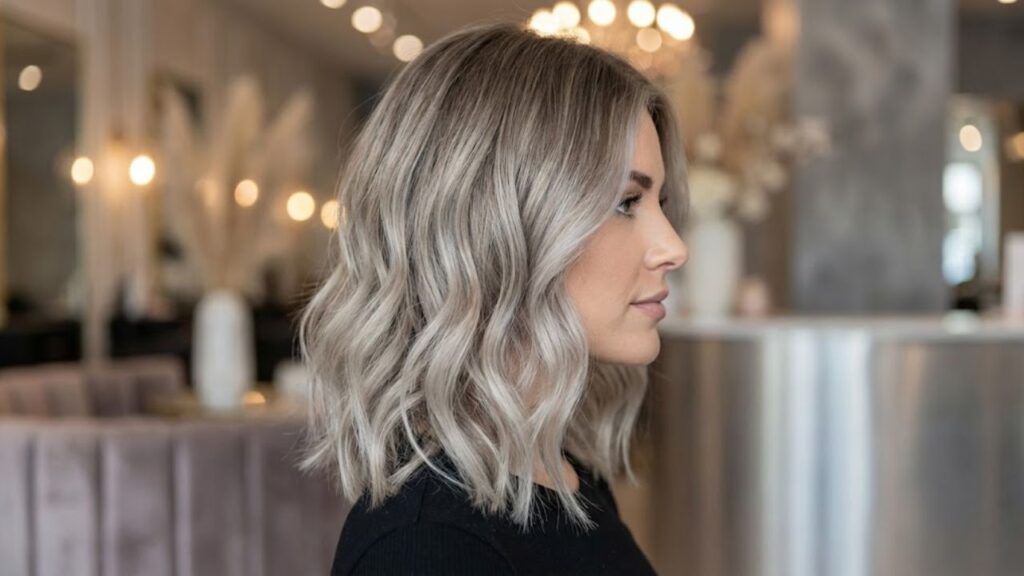
The price quote lands, and with it the familiar weight of time, money, and mental effort. What once felt indulgent now feels repetitive. “Isn’t there a way to just stop the grey from showing?” she murmurs, more to the mirror than anyone else.

The colourist pauses, smiles, and reaches for a different toolkit. Something in hair colour is quietly changing.

Balayage Fatigue: Why Grey Coverage Is Being Rethought
Step into a modern city salon and balayage is impossible to miss. Lightener bowls, wide brushes, cotton strips, and a ring light waiting for the final photo. While balayage still dominates, many professionals admit a truth clients are starting to feel: it was never built to truly handle persistent grey regrowth.
This is where a new approach is gaining attention — often referred to as micro-blended grey dissolution. Rather than softly disguising grey, it changes how natural and coloured strands interact at the root. Colourists abandon broad strokes and work in millimetre-thin sections, addressing grey clusters with precision instead of wash-over coverage.
The effect isn’t “freshly dyed.” It looks like naturally forgiving genetics. As hair grows, the boundary between grey and colour stays intentionally blurred, making it hard for the eye to pinpoint where silver begins. Grey isn’t erased — its visibility is dismantled.
What Happens When Grey Stops Standing Out
A London salon group followed 430 balayage clients frustrated by rapid regrowth. When half transitioned to this micro-blend technique, visits didn’t increase. They stretched by two to three extra weeks. The grey still grew, but visually it dissolved into the colour pattern.
Claire, 49, had spent years alternating between full-coverage colour and bright balayage. Both looked great — briefly. Then the hard root line returned. When her stylist began placing tiny diagonal micro-weaves along the hairline and crown, alternating sheer and opaque dyes on each grey cluster, the result shifted.
At eight weeks, her hair looked naturally lived-in. Not perfect, not artificial — just quietly youthful. Friends noticed her glow, not her roots.
The Science of Confusing the Eye
Traditional balayage adds brightness through mid-lengths and ends, leaving roots softer but still contrasting against grey. Full tints create a solid pigment wall — flawless at first, harsh weeks later.
Grey-erasing techniques focus on pattern mapping. Greys rarely appear evenly; they cluster at the parting, temples, and crown swirl. Colourists combine demi-permanent dyes, translucent glosses, and gentle developers, layering them like a textile weave. The goal isn’t full coverage — it’s visual disruption.
Our eyes read patterns, not individual strands. When tones are broken up, grey fades from conscious notice. This optical illusion is the backbone of modern grey control.
Inside the Technique That Makes Grey Fade Away
At the heart of this shift is root mapping and strand targeting. Appointments begin on dry hair under unforgiving light. The colourist studies growth direction, density, and placement, marking micro-zones like a detailed map.
Hair is lifted in thread-thin slices. Within each, individual greys are treated differently. Some receive soft demi coverage, others a sheer wash that dulls brightness without removing shine. The result is a mosaic of tones that makes grey feel absent in daily life.
Clients often discover this method through quiet conversations — a freelancer tired of touch-ups, a teacher fielding questions about “going platinum,” a new parent watching temples turn silver overnight.
 Low-Impact Jump Training After 50: 4 Safer Workouts That Build Power Without Beating Up Joints
Why Maintenance Starts to Feel Lighter
One Paris salon listed “Invisible Grey Coverage” with no fanfare. Demand outpaced their social media. Clients weren’t chasing transformation — they wanted hair that didn’t broadcast stress on video calls.
This approach shifts the emotional rhythm of hair care. Instead of counting days until the next appointment, there’s breathing room. Grey becomes background texture, not the headline. Emergency root sprays fade from routine. Some days, you forget the grey exists.
The appeal goes beyond aesthetics. It’s about regaining control. Balayage often amplifies contrast — warm ends against cool silver roots. Micro-blending restores harmony at the root without creating obvious regrowth blocks.
Designing Colour for Real Life
In practice, this often means lowering contrast. Brunettes may lift the root slightly so greys melt into a softer base. Blondes might keep roots semi-transparent, using sheer toners that stain rather than saturate.
Longevity comes from two principles: graceful fading via demi-permanent colour and staggered coverage. Not every grey is addressed every visit. Over time, layers build a visual story where grey no longer dominates.
How to Ask for Grey Blending the Right Way
Requesting “grey coverage” often leads to solid colour. Instead, ask for soft-focus grey blending at the root. Show how your hair looks in natural daylight, not just salon lighting.
Bring inspiration focused on diffused partings, not lengths. Be honest about maintenance — if you return every ten weeks, say so. The pattern should be designed for your real schedule, not ideal behaviour.
Uniform dark roots feel safe initially but make every millimetre of regrowth louder later. A little intentional translucency early buys weeks of visual calm.
The Long Game of Modern Grey Control
Milan-based colourist Lara V. explains it simply: clients don’t want grey gone — they want the shock of seeing it first to disappear. By shifting focus between hairline, crown, and parting over time, the eye loses a clear starting point. Grey reads as texture, not age.
- Ask for grey blending, not full root coverage
- Choose a root tone within one or two levels of your base
- Allow soft translucency at the temples
- Schedule visits around real life, not ideals
- Discuss grow-out strategy from the start
When Grey Stops Being a Deadline
There’s a quiet shift when silver no longer triggers panic. Not because it’s embraced loudly, but because it’s been designed to whisper instead of shout. Clients spend less time scrutinising roots and more time seeing the whole picture.
Hair appointments align with milestones, not calendars. Grey continues to arrive — but with less contrast, less aggression, and less mental space. This technique doesn’t stop time; it simply redirects attention.
In a world overloaded with upkeep, perhaps the real luxury isn’t looking younger. It’s having hair that doesn’t announce your age every time you catch your reflection.

Key Technique Overview
- Micro-blended grey erasing uses ultra-fine sections and translucent dyes to dissolve visible grey
- Root mapping consultations tailor colour placement to natural growth patterns
- Low-contrast root design extends time between appointments and softens regrowth
