
In the chair beside her, a younger client scrolls through her phone and holds up a photo. “This is the look I want. I want my grey to blend, not disappear.” The colorist nods and begins mixing shades that resemble watercolor more than traditional dye—sheer, translucent tones instead of heavy, solid color.
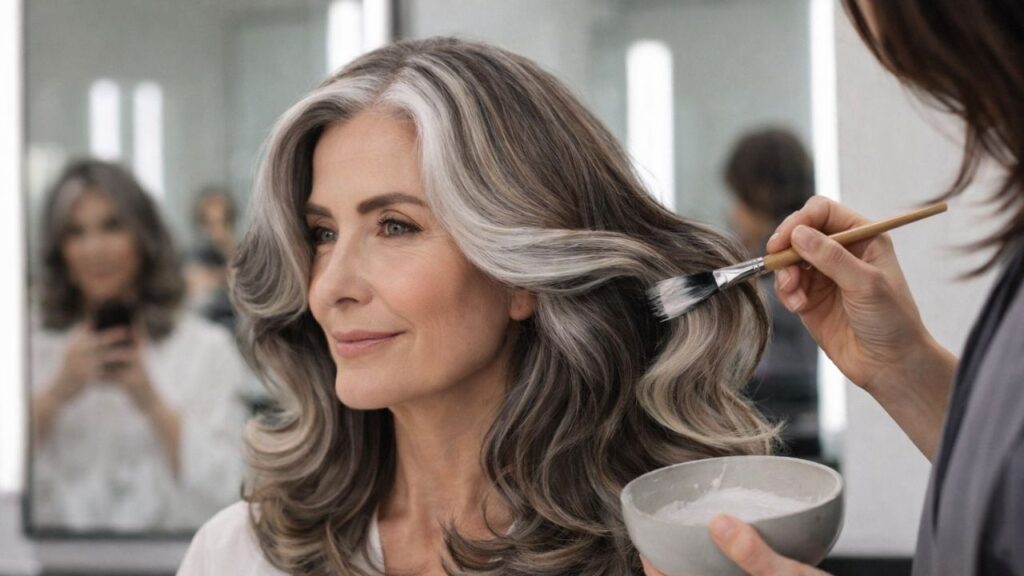
The salon atmosphere no longer feels like a battle against aging. It feels more like a creative space where hair and time are learning to coexist. Something meaningful is changing, and it goes far beyond a new shade chart.

A subtle shift happening at the mirror
Step into a modern salon today and you’ll hear a different language at the color station. Clients aren’t asking to “cover the grey” anymore—they want to blend it. Terms like soft halo, smoky shimmer, and diffused highlights have replaced talk of hiding and masking. Colorists focus on depth, transparency, and smooth transitions, not erasing every sign of silver.
 Use These 13 Deeply Nourishing Night Creams to Support Skin Repair and Better Overnight Recovery
This technique doesn’t fight grey hair. It works alongside it, using ultra-fine highlights and lowlights to weave around natural silver so everything melts together. The result feels modern, relaxed, and intentional. The grey remains visible, but it looks designed. It shifts from “my roots are showing” to “this is my color.”
A London colorist shared that five years ago, nearly every client over 40 booked strict root coverage every six weeks. Now, she estimates almost 60% specifically request grey blending or soft grow-out services. In New York, one popular studio even created a dedicated grey blending menu after clients kept bringing social media screenshots and asking for the look without starting over.
Emma, 52, spent a year transitioning from dark brown box dye to a blended salt-and-pepper shade. One day, a colleague told her she looked younger. She laughed—she hadn’t touched her roots in months. The change wasn’t less grey. It was less contrast, less stress, and less pretending.
Why traditional dye feels harsher over time
Permanent dye works like a curtain. It lays down a dense, opaque color that hides everything underneath. For a short time, it looks crisp. Then regrowth appears, and a sharp white line forms at the roots. That sudden contrast is what makes many people feel like they’ve aged overnight.
Grey blending behaves more like a filter. Semi-sheer glazes, micro highlights, and carefully placed lowlights soften the grey instead of erasing it. Regrowth looks gentler because there’s no stark jump from dark to white. Psychologically, this matters. Instead of chasing roots every few weeks, you live with a color designed to evolve.
How modern grey blending techniques work
The foundation of this approach is a combination of ultra-fine highlights and translucent tones. Colorists begin by mapping where grey appears most—often at the temples, parting, and around the face. They then add micro-babylights throughout the hair to echo that lightness, creating balance.
Next come the lowlights. These slightly deeper strands run alongside the grey, adding dimension and structure. A final sheer gloss or toner is applied to neutralize warmth and create finishes like pearl or smoky ash. The aim isn’t perfection—it’s movement.
For those coming from years of box dye or heavy coverage, the transition is usually gradual. The base may be softened first, followed by lighter ribbons in key areas so grey can grow in naturally. Marc, 45, had jet-black dye and bright white temples. His colorist lifted his base to dark chocolate, added ash highlights near the temples, and finished with a cool gloss. After three sessions, his silver blended seamlessly instead of standing out.
Online before-and-after photos tagged “grey blending” often look like two different stories on the same face. The “after” images don’t necessarily look younger—they look lighter. With less visual tension between natural and colored hair, something else relaxes too.

The science behind the softness
Grey hair reflects light differently because it lacks pigment. When surrounded by colors that are too dark or too warm, the contrast becomes harsh. By using cooler or neutral tones across multiple depths, that visual jump is smoothed out. It’s similar to blending foundation into the neck instead of stopping sharply at the jawline.
Modern formulas help as well. Many glosses and toners are ammonia-free, low-odor, and semi-permanent. They fade gradually rather than growing out in a hard line. Maintenance becomes a periodic glow refresh instead of a constant root emergency. Grey blending isn’t one product—it’s a new way of thinking about time and color.
How to approach grey blending the right way
If you’re considering this method, start with a conversation, not a product. Bring photos that show real texture and visible grey, not heavily filtered images. Be honest about how often you want salon visits and how much change feels comfortable.
Ask for soft grey blending or a low-contrast grow-out instead of full coverage. Let your colorist know you want your grey included in the design. Many professionals suggest beginning around the face and parting, then expanding gradually. A strand test can prevent unwanted surprises.
A common mistake is jumping from years of dark permanent dye to a full grey reveal in one session. That approach often leads to heavy bleaching and damage. A gradual blend is usually healthier for both hair and patience.
Another frequent issue is choosing tones that are too warm. Cool, silvery grey paired with golden highlights can turn brassy quickly. Neutral or ash tones tend to echo natural silver more effectively. And while purple or blue shampoo can help, moderation matters.
Beneath all the technique lies something emotional. As one Paris colorist put it, people no longer ask to hide their age—they ask to recognize themselves in the mirror again. Grey blending offers continuity, not artificial youth.
Helpful reminders before making the switch
- Show realistic photos with visible grey you genuinely like.
- Be honest about budget and visit frequency from the start.
- Begin with small adjustments rather than drastic changes.
- Match tones to your natural grey, especially cool versus warm.
- Allow time—your perception needs a few months to adjust.
From hiding age to refining it
This movement reflects a deeper change in how people view aging. Grey hair was once treated as an emergency. Now, many are stepping off the cycle of cover and panic. Grey blending doesn’t erase time—it rearranges it into something intentional.
You can spot it quietly in everyday life: hair that shifts from charcoal to silver with purpose, salt-and-pepper curls that look designed rather than neglected. Beauty is no longer frozen at one point—it lives across the spectrum.

- Grey blending vs. full coverage: Uses highlights, lowlights, and toners to soften grey instead of hiding it completely, creating a calmer alternative to constant root touch-ups.
- Maintenance rhythm: Salon visits often extend to 8–12 weeks with simple gloss refreshes, reducing time, cost, and pressure.
- Personalization: The approach adapts to your natural grey pattern, tone, and lifestyle, helping the color feel like you—not a standard anti-aging mask.
