
The first itch feels like nothing much. You scratch near your ear while waiting at a traffic light or looking at your phone. Then it happens again. Small white flakes fall onto a dark shirt and suddenly you notice. You brush them off fast & hope nobody saw. Your bathroom shelf probably has several anti-dandruff shampoos by now. Each bottle promised to fix the problem but none of them really worked. The labels are bright and the bottles take up space but your scalp still feels tight and itchy. Instead of buying another product you might want to try something different. Consider going back to simpler and older methods that people used before all these commercial products existed. These are things you can find in your kitchen or garden & they require a slower & more thoughtful approach. Before all the clinical branding existed people used oils & herbs and gave their scalp time to heal. They learned to treat the scalp as living skin instead of just a problem that needed to disappear.
Listening to Your Scalp as Part of the Story
The scalp usually receives less attention than hair. People style and judge their hair while the skin underneath works without notice. Dryness and dandruff often mean this forgotten skin needs care. When you touch your scalp you might feel tightness in some spots & oiliness in others or soreness near the top. Dry scalp typically means the skin lacks moisture and has a damaged protective layer. Dandruff happens when yeast interacts with scalp oils and causes flakes and irritation. Both problems can occur at the same time after using harsh shampoos that remove natural oils. Natural care aims to soothe the scalp & help it recover its balance instead of attacking flakes directly.

Oil, Water, and the Art of a Gentle Reset
Think of your scalp as dry soil. When you pour water too fast it just runs off the surface without soaking in. But if you soften the soil first it absorbs the moisture and becomes fertile again. Oils and gentle rinses work the same way for your skin. A careful routine lets your scalp relax before you wash it. This reduces irritation and flaking over time. The method focuses on consistency and gentle care rather than harsh treatment. It helps your scalp return to its natural balance instead of becoming reactive & defensive.

The Pre-Wash Oil Ritual
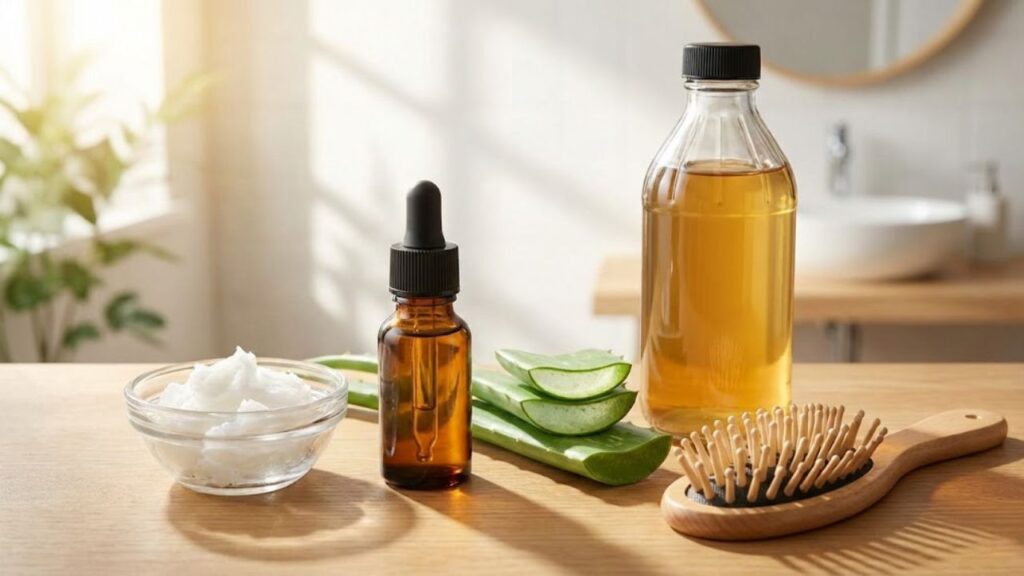
Before washing your hair massaging a light oil into your scalp helps prepare it for cleaning. Jojoba oil works well because it resembles the natural oils your skin produces. Sweet almond oil provides gentle nourishment while coconut oil delivers deep hydration for many people. Warm a small amount between your hands & work it into your scalp one section at a time. Take your time with this step rather than rushing through it. You might notice areas that feel different or more tender than others. These spots can tell you something about the health of your scalp. Let the oil sit for 20 to 30 minutes before shampooing. This waiting period loosens any flakes and protects your skin while reducing how much your cleanser strips away natural moisture.
The Vinegar Rinse That Restores Balance
After washing your hair with a gentle shampoo you can use a diluted apple cider vinegar rinse to help restore your scalp’s natural pH balance. Mix one to two tablespoons of vinegar with a cup of water to create a mild solution that helps prevent yeast from growing and clears away product residue. Pour the mixture slowly over your scalp & massage it in gently before rinsing it out after a minute or two. When you use this treatment once or twice each week your scalp will typically feel more comfortable and cleaner without any feeling of dryness or tightness.
Kitchen Remedies with Texture and Memory
Natural Scalp Care from Your Kitchen Your pantry likely contains several ingredients that can help soothe your scalp. Honey and yogurt along with olive oil & lemon have been household remedies for many years. These are not miracle solutions that work overnight but they can provide helpful support when used consistently. The key to success with these natural ingredients is gentle and regular application. They work best when you make them part of your ongoing routine rather than expecting immediate results from a single use. Think of them as supportive care that gradually improves scalp health over time. These traditional remedies have stood the test of time because people have found them useful across generations. While they won’t replace medical treatment when needed they offer a natural approach to maintaining scalp comfort and health.
Honey as a Moisture-Restoring Mask
Raw honey pulls in moisture and provides gentle antimicrobial properties. Mix it with warm water and massage it into your scalp to calm dryness and minimize flaking. Let it sit for roughly 20 minutes before washing it out. Despite its sticky texture honey typically makes the scalp feel soft and nourished instead of dried out.
Yogurt for Cooling and Calm
Plain yogurt that contains live cultures offers mild exfoliation and a cooling sensation. When you mix it with a little bit of oil it helps reduce tightness and minor inflammation. You should apply this mixture to your scalp for 15 to 25 minutes. This treatment works particularly well for scalps that feel overheated or sensitive.

Botanicals with a Quiet Medicinal Strength
Beyond the kitchen herbs and plant extracts offer deeper support. Aloe vera gel hydrates and soothes irritated skin. Tea tree oil can help control dandruff-related yeast when properly diluted. Rosemary provides a subtle toning effect when used as a rinse. It also adds a grounding herbal scent that turns routine washing into a sensory ritual.
Daily Habits That Influence Flaking
Scalp Health & Daily Life Your scalp condition shows what happens in your everyday routine. When you spend time in dry indoor spaces or take very hot showers, your skin reacts. Not drinking enough water and dealing with ongoing stress also throw off your skin’s natural balance. You can make practical changes that help. Adding a humidifier to your room puts moisture back in the air. Washing your hair with warm water instead of hot water protects your scalp. Including foods with healthy fats in your meals supports your skin from the inside. Building small stress management routines that you can stick with makes a real difference. These adjustments might not seem directly connected to dandruff at first. But they actually create better conditions for your scalp to recover and stay healthy. When you address these basic factors you remove many of the things that cause dandruff in the first place.
Creating a Gentle Weekly Rhythm
A steady weekly routine works better than looking for quick fixes because it gives natural remedies time to show results. You might use oil massage & vinegar rinse on one day & try aloe or honey on another day. Herbal rinses can be part of a different day in your schedule. Taking rest days between washes lets your scalp recover and breathe properly. This approach helps you develop patience & consistency while making you more aware of what your hair actually needs instead of rushing to see immediate changes.
Knowing When Extra Help Is Needed
Natural care methods work well for treating common dryness and dandruff problems. However you should see a doctor if you notice ongoing redness or thick scales on your scalp. Pain in these areas can also be a warning sign. These symptoms might indicate psoriasis or seborrheic dermatitis rather than simple dandruff. Medical advice becomes necessary when dealing with these more serious skin conditions. You can still use natural remedies alongside professional treatment. Getting the right diagnosis early helps you avoid months or years of trying solutions that won’t work for your specific problem.
A Kinder Way to Respond
Dry scalp and dandruff are simply signs that something needs attention. Using natural remedies does not mean turning away from modern treatments. It means taking a gentler path that focuses on understanding rather than harsh fixes. When you use light touch and basic ingredients while building consistent routines your scalp usually returns to a healthy state gradually. The process happens quietly without dramatic intervention as the flaking slowly disappears & comfort returns.