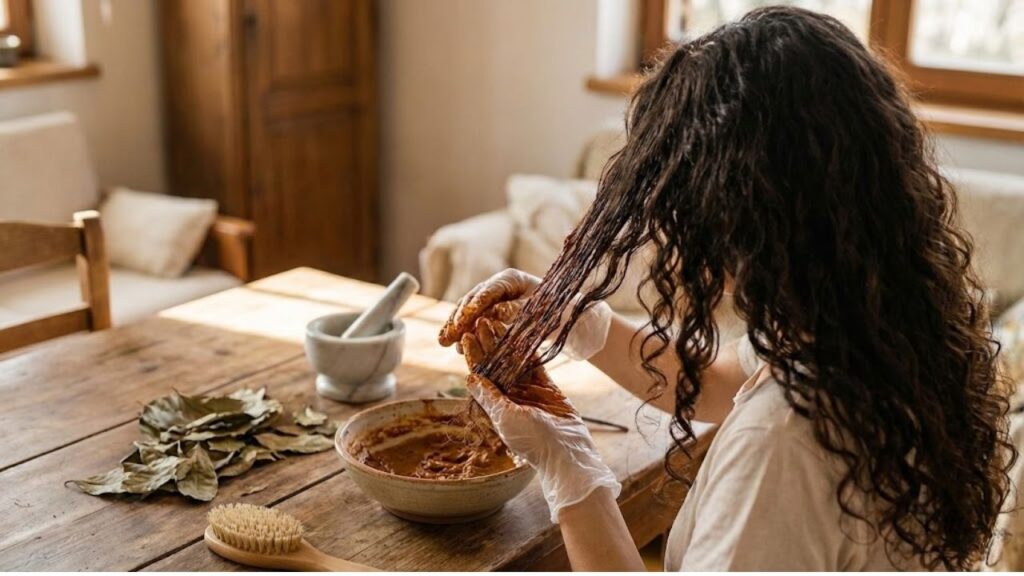
The first time I used henna to dye my hair the house filled with a smell like wet spices. Steam covered the windows while the kettle made its soft noise. On the kitchen counter I had mixed a bowl of green powder that looked like plant food instead of something meant for hair. My friends questioned my choice and asked why I would put mud on my head. I had grown tired of chemical dyes that stung my scalp and made it itch. The artificial red color always faded quickly and washed away in the shower. I wanted something that worked more slowly and felt gentler on my hair. I preferred a natural color that reminded me of leaves in sunlight and old traditions rather than something made in a laboratory with warning labels in small print.
Why Henna Feels Different from Regular Hair Dye
Henna doesn’t rush. It doesn’t blast your hair open with chemicals & shove pigment inside before slamming the cuticle shut again. Instead it works more like an old friend sitting beside you & weaving color into your hair strand by strand. The plant magic settles in with patience and time. The plant behind the color is Lawsonia inermis. This shrub thrives in hot & dry climates with desert air and clay soil & the kind of sunlight that makes stones glow. Its leaves are dried and powdered to stain skin & fabric and most famously hair. The active dye molecule called lawsone has a unique talent. It binds to the keratin in your hair and wraps each strand in a translucent veil of color rather than replacing what’s inside. That’s why hennaed hair doesn’t look flat or artificial. Light slips through the translucent stain and bounces back off your natural pigment below.

This creates layered & shifting tones instead of a single unchanging color. Under a cloudy sky it may look like a deep auburn. In bright sunlight copper flashes awake. There’s movement in hennaed hair as if the plant carried a memory of wind and sunlight along with it. And then there’s the feel. Many people first discover henna after a long romance & eventual breakup with conventional hair dye. They’re tired of brittle ends and the smell of ammonia that clings to towels and the constant cycle of coloring and repairing & re-coloring. Henna steps into that chaos with quiet strength. It binds to hair like armor and often makes it feel thicker and stronger. It adds weight and shine instead of stripping & roughening. Of course natural doesn’t automatically mean harmless or right for everyone. But when used wisely pure henna can be a radically different experience from the ordinary salon routine. It’s less about erasing what you have & more about enhancing it.

The Heart of Henna: Choosing the Right Powder
Before you mix your first bowl you need to choose the right kind of henna. When you shop in stores or browse online you will find many green packages labeled as herbal color or black henna or henna mix or instant henna. Some of these products contain ingredients that your scalp should not be exposed to. Pure henna powder should contain only one thing: dried & ground Lawsonia inermis leaves. It should not have metallic salts or added dyes or unknown chemicals. The powder looks mossy green to olive in the package and when you mix it with liquid & let it sit the paste turns into a rich earthy brown that smells like hay and green tea and freshly cut grass. Any product labeled as black henna should make you cautious. Real henna cannot dye hair black because at its darkest it only produces deep auburn or brownish red tones. Black henna usually contains synthetic dyes like PPD which is para-phenylenediamine and this chemical can cause severe allergic reactions and create long term sensitivities. It might stain quickly and look impressive but it can damage your skin & hair. Some henna products include additional ingredients like amla or indigo or cassia or hibiscus or bhringraj. These additions can be beneficial when used properly but they should be clearly labeled so you know exactly what touches your scalp. When you see a long list of chemicals with complicated names you should avoid that product. Henna has been used for thousands of years and its ingredient list should be simple. Here is an easy way to test henna: if the brand shows the botanical name and lists only plant ingredients and leaves a faint orange stain on your fingertip or on white paper after a few minutes then you probably have genuine henna.
Designing Your Natural Color: Henna-Based Recipes
Henna is rarely used alone by people who mix hair color at home. It serves as a foundation that other plants & kitchen ingredients can build upon. Your hair has its own base color whether that is blonde or mouse-brown or gray or dark chocolate. The henna mixture works like a see-through layer that goes on top of that natural color.
Classic Copper Glow
Best for: light brown, dark blonde, or gray hair.
Ingredients: 100 g pure henna powder Warm water or strong black tea Juice of half a lemon or 1 tbsp apple cider vinegar (optional)
Deep Auburn with Amla Shadow
Best for: warm brown hair or those wanting muted reds.
Ingredients: 80 g henna 20 g amla powder arm water or cooled black tea
Amla softens orange tones and helps maintain curls and waves. The final shade resembles **deep wine or redwood bark**, rich and understated.
Brown and Soft Red with Indigo Blends
Best for: medium to dark hair or natural gray coverage.
Henna and indigo work together to create **natural browns**.
Two-step method
– Apply full henna, rinse and dry.
– Apply fresh indigo paste for brown depth.

One-step blends:
– Warm medium brown: 50% henna / 50% indigo
– Dark brown: 30% henna / 70% indigo
Always mix indigo fresh with **lukewarm water and a pinch of salt**. Apply immediately—indigo acts fast.
Golden Honey with Cassia
– Best for: blondes, light gray hair, or conditioning treatments.
– Ingredients: 100 g cassia powder Optional 10–20 g henna for strawberry warmth Warm chamomile teaCassia offers shine and strength with minimal color, producing a soft golden glow on light hair.
Enhancement Add-Ins from Your Kitchen
– Black tea or coffee: deepens tones slightly
– Hibiscus: boosts rosy undertones
– Aloe vera gel: soothes scalp and improves slip
– Plain yogurt: adds moisture, softens intensity
– Essential oils: light fragrance and scalp comfort (use sparingly)
A Simple Henna Hair Journey: Step-by-Step Ritual
| Step | Action | Tips |
|---|---|---|
| 1 | Strand Test | Test on shed hair; wait 24–48 hours for final color. |
| 2 | Mix Paste | Aim for smooth, herbal-scented paste. |
| 3 | Rest Paste | 4–8 hours; surface darkens naturally. |
| 4 | Prep Hair | Clean hair, no conditioner. |
| 5 | Apply Generously | Section hair; apply like frosting. |
| 6 | Wrap and Wait | Cover and keep warm for 1–4 hours. |
| 7 | Rinse Gently | No shampoo for 24–48 hours. |
Listening to Your Hair: Safety and Sensitivity
Natural doesn’t mean careless. Always do a patch test before full application. While pure henna reactions are rare, blends may contain herbs unfamiliar to your body.Henna is permanent and cumulative. Chemical lightening afterward can be unpredictable, especially if low-quality henna was used. Treat henna as a long-term commitment, not a temporary experiment.For dry or damaged hair, shorten processing time or add aloe or a drop of oil. Hydration—inside and out—matters.Gray hair may stain brighter at first, creating copper highlights. Embrace the effect or plan indigo blends to soften contrast.