
The first time I tried face tapping it happened almost by accident. I had woken up with puffy eyes after staying up late. It was one of those mornings when you look in the mirror & your reflection seems disconnected from how you actually feel inside. Coffee did not help. Moisturizer felt inadequate. Without really thinking about it I began tapping my fingertips gently on my cheeks and forehead and jaw. Two minutes later my skin looked more awake. I felt more awake too. The change was subtle but it was real. It was like someone had turned up the brightness on my face and lifted my mood at the same time.
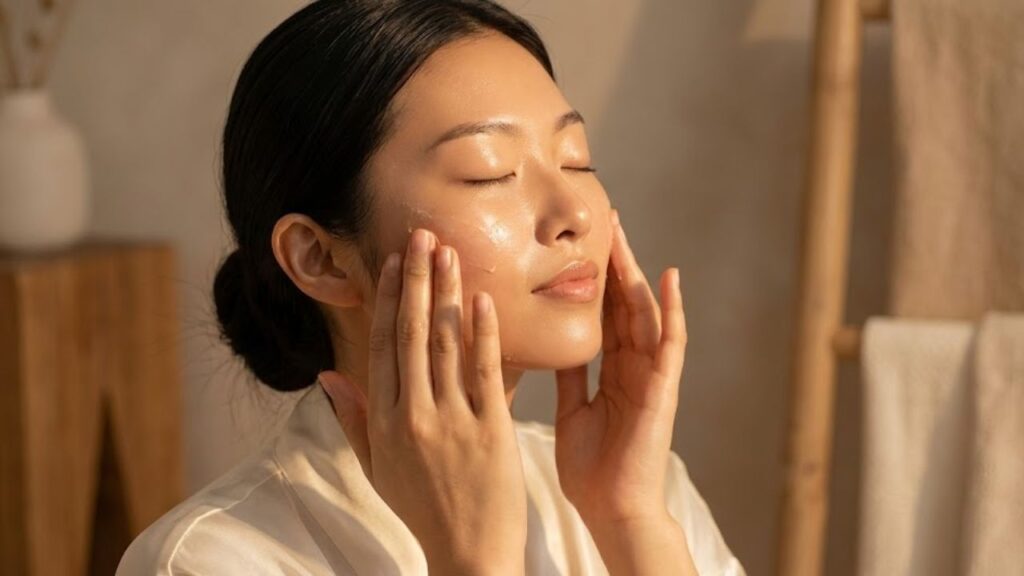
Why Your Skin Thrives When It’s Gently Activated Each Morning
The first time I tried face tapping it happened almost by accident. I had woken up with puffy eyes after staying up late. It was one of those mornings when you look in the mirror & your reflection seems disconnected from how you actually feel inside. Coffee did not help. Moisturizer felt inadequate. Without really thinking about it I began tapping my fingertips gently on my cheeks and forehead and jaw. Two minutes later my skin looked more awake. I felt more awake too. The change was subtle but it was real. It was like someone had turned up the brightness on my face and lifted my mood at the same time.

The Science-Backed Two-Minute Face Tapping Ritual to Start Your Day
You don’t need tools or serums or a bathroom full of products. Just clean hands and a bare or lightly moisturized face & two unhurried minutes. You can do this in silence or with a podcast playing or standing in front of the mirror breathing fog onto the glass. Here’s the flow from center outward and bottom upward following the natural pathways of circulation and lymph drainage. Imagine you’re gently encouraging everything to move toward the edges like a slow luminous tide rolling out.

Step 1: Sync Breath and Body to Signal a Calm Wake-Up (10–15 seconds)
You do not need any tools or serums or a bathroom filled with products. All you need are clean hands and a bare face or one with light moisturizer and two minutes without rushing. You can do this quietly or while listening to a podcast or standing before a mirror while your breath fogs the glass.
Step 2: Activate Chest and Neck for Better Circulation Flow (20–30 seconds)
Start right below your collarbones. Use all ten fingertips to tap lightly across your upper chest from the middle outward toward your shoulders. The pressure should feel like raindrops & not hailstones. It should be stimulating but never sharp. Next move up to the sides of your neck. Tap gently from behind your ears down toward your collarbones. You are greeting the lymph nodes that handle drainage. This step opens the exit doors so fluid from your face has somewhere to go.
Step 3: Release Jaw and Chin Tension Built Up Overnight (20–30 seconds)
Place your fingertips at the middle of your chin. Gently tap along your jawline as you move outward toward your ears on each side. You can use both hands together in matching movements or use one hand at a time depending on what feels right to you. Pay attention to how frequently your jaw tightens up on its own. While you tap, picture the joint of your jaw loosening a bit, similar to a stuck door that finally opens smoothly. When you discover a tight or sore area spend more time there with gentler and slower taps. Simply becoming aware of these sensations is an important part of the healing process.
Step 4: Stimulate Cheeks and Smile Muscles for Natural Glow (25–30 seconds)
Put your fingertips next to your nose and start tapping outward along your cheekbones toward the top of your ears. Move down and tap the rounded part of your cheeks where you would naturally blush or apply highlighter. Many people notice immediate results in this area. You might see a slight flush and less of that tired morning droop. Your face may look fuller from within. Your cheeks contain thick muscles that hold all your daily expressions. Every smile and frown & sigh lives there. The tapping gives these hardworking muscles a small celebration.
Step 5: Soothe Under-Eye Area and Relax Brow Pressure (25–30 seconds)
Place your fingertips beside your nose and begin tapping outward along your cheekbones until you reach the top of your ears. Then move downward and tap the rounded area of your cheeks where you would typically see a natural blush or add highlighter. Most people see quick results in this spot. You may notice a mild flush and less of that tired sagging look from the morning. Your face might appear fuller from the inside. Your cheeks have thick muscles that handle all your everyday expressions. Every smile and frown and sigh happens there. The tapping gives these busy muscles a small reward.
Step 6: Energise Forehead and Scalp to Reduce Morning Heaviness (20–30 seconds)
Put all ten fingertips in the middle of your forehead and tap outward toward your temples. Then begin again a bit higher in stripes until you have covered your entire forehead. You can continue the pattern into your scalp by drumming lightly across your hairline. It is nearly impossible to do this without feeling at least three percent more human.
Step 7: Complete the Routine with a Grounding Full-Face Sweep (15–20 seconds)
Finish by tapping down the sides of your neck again to guide everything back toward the collarbones. Then stop & let your hands drop. Close your eyes for one more slow inhale and exhale. Notice any warmth or tingling or softness or brightness in your face. That is your circulation and nervous system responding to what you just did.
How Gentle Face Tapping Calms Inflammation and Reduces Puffiness
We use the word inflammation a lot now as either a villain or a warning. In skin it can appear as redness or swelling or breakouts or a general sense that your face looks stressed. While face tapping is not a miracle cure it works with the body’s natural systems in a very real way. Here’s what’s likely happening beneath your fingertips: Microcirculation improves because tapping increases blood flow in the tiny vessels near the surface of your skin. More blood means more oxygen and nutrients and better delivery of anything you’ve applied to your face. Lymph fluid gets moving since lymph is slow by nature.

It doesn’t have a pump like the heart so it relies on movement & breath and muscle action. Gentle tapping plus directionality from center out and top down gently nudges this fluid toward its drainage points. Stress chemistry shifts because brief soothing touch signals safety to your brain. That can help lower stress-related compounds that contribute to inflammatory cascades all over the body including in your skin. Muscle tension eases since tight muscles around the jaw and brow and temples can restrict free flow of blood & lymph. Releasing them creates more openness for fluids to circulate. None of this is harsh or dramatic. It’s more like opening windows in a stuffy room. The air was always there but now it can move.
Designing a Two-Minute Morning Ritual You’ll Actually Stick With
The difference between a routine and a ritual comes down to how it makes you feel. A routine is something you do out of obligation. A ritual is something you actually look forward to. Face tapping becomes a ritual when you approach it as more than just a series of movements. Most people tap their face while thinking about their next meeting or scrolling through their phone.
Anchor Face Tapping to an Existing Morning Habit
Attach your tapping routine to something you already do each morning so it becomes automatic. You can tap while waiting for water to boil or while your coffee cools down enough to drink. You can also do it while your toothbrush sits on the counter. These small windows of time already exist in your day & you just need to use them.
Turn Tapping into a Simple Mind-Body Check-In
Instead of letting your mind wander you can use the rhythm to check in with your body. While tapping your cheeks you might wonder where you are holding tension today. While tapping your forehead you could ask yourself what is the one thing you want to handle with more ease. The answers matter less than simply asking the questions.
Why This Routine Works Best When It’s Not Perfect
Some mornings you will complete the entire routine. Other days you will only manage to tap under your eyes and along your jawline for thirty seconds. That still matters. Being consistent does not require flawless execution. It means returning to the practice repeatedly in whatever form you can manage. The key is showing up for yourself regularly even when your effort looks different from day to day. A shortened version of the routine holds value. What counts most is the habit of reconnecting with yourself through these small actions.
Morning Face Tapping vs Night Tapping: What Feels Better for Your Skin
You can do this routine in the morning but it works for the evening too. The feeling will just be a little bit different.
| Time of Day | Morning Routine Focus | Evening Routine Focus |
|---|---|---|
| Purpose | Refresh the face, boost energy, ease morning puffiness | Calm the mind, relax facial muscles, prepare for rest |
| Movement Style | Light, faster tapping with an uplifting rhythm | Gentle, slower taps held slightly longer |
| Breathing Pattern | Full, deep breaths to feel awake and alert | Slow breathing with extended exhales for calm |
| Key Focus Areas | Eye area, cheeks, forehead, upper face | Jawline, temples, brows, neck and shoulders |
How to Layer Face Tapping Seamlessly with Your Skincare Routine
Face tapping works with any skincare routine you follow whether you keep things simple or use many products. It acts as a connection between what you apply & how you care for your skin. You can tap on clean bare skin if you have sensitive or acne-prone skin that does better with fewer products. You can tap over a light serum or essence because the tapping helps spread the product and press it into your skin without rubbing. You can also tap after applying moisturizer which works well on dry days or in cold weather when you want to boost circulation under that protective layer. Just skip the tapping right after using harsh exfoliants or strong active treatments like acids or retinoids if your skin reacts easily. The routine should feel calming and not irritating. To know if you are tapping too hard use this simple test. If your skin stays red for more than a few minutes after tapping or if your face feels tender then you are pressing too firmly. The right pressure should feel like someone gently drumming their fingers on a table and not like knocking on a door.
Listening to Your Skin: Adapting the Routine to Your Face’s Daily Needs
Over time your face will start sending clearer messages about what it needs. Tapping just makes it easier to listen. If you wake up with puffy eyes spend extra time with those ring-finger taps under your eyes and along the temples. Always move from the inner corners outward and slightly upward. If you have jaw tension or teeth grinding add small circular taps in front of your ears along the hinges of your jaw & down toward your chin. If you notice forehead lines from frowning or screen time soften your expression consciously then tap horizontally across those lines while visualizing the muscles beneath melting like ice under warm water. If your skin looks generally dull increase the tempo slightly on your cheeks & forehead to create a gentle flush. You might even name your variations like the Zoom-call recovery or the didn’t-sleep-enough rescue or the post-cry softener. They all start with the same simple thing which is your fingertips and your presence & your face learning to be approached with curiosity instead of critique.