
The first thing that hits you isn’t a strong smell. It’s something quieter — that dull, closed-in feeling of air that hasn’t moved properly in days. Not the sharpness of bleach or the sweetness of perfume, just a slightly heavy stillness. The heating has been running, the windows sealed tight against the rain, and your living room — meant to be a place of comfort — feels oddly draining. Your eyes feel strained. Your breathing feels shallow. The air itself feels tired. This is the unnoticed reality of many UK homes: warm, well-insulated, and slowly filling with invisible pollutants.
Why UK Homes Quietly Struggle With Indoor Air
Modern housing has brought us double glazing, energy-efficient insulation, plush carpets, and beautifully painted walls. But along with comfort comes a hidden trade-off. When homes are sealed to keep heat in, they also trap the by-products of everyday living.

New furniture and MDF boards release formaldehyde. Paints, varnishes, and solvents contribute benzene and toluene. Cleaning products, air fresheners, and scented sprays emit VOCs — volatile organic compounds that linger long after the “fresh” smell fades. Even that faint scent from a new sofa, rug, or mattress is often chemical off-gassing rather than cleanliness. Research over many years has shown that indoor air can easily be more polluted than outdoor air, even in urban areas.

In the UK, where cold weather, rain, and short winter days keep windows shut for long stretches, these pollutants quietly accumulate. Add candles, plug-in fragrances, and heavily perfumed sprays, and we unknowingly load the air even further — all while expecting our homes to feel calming and clean.

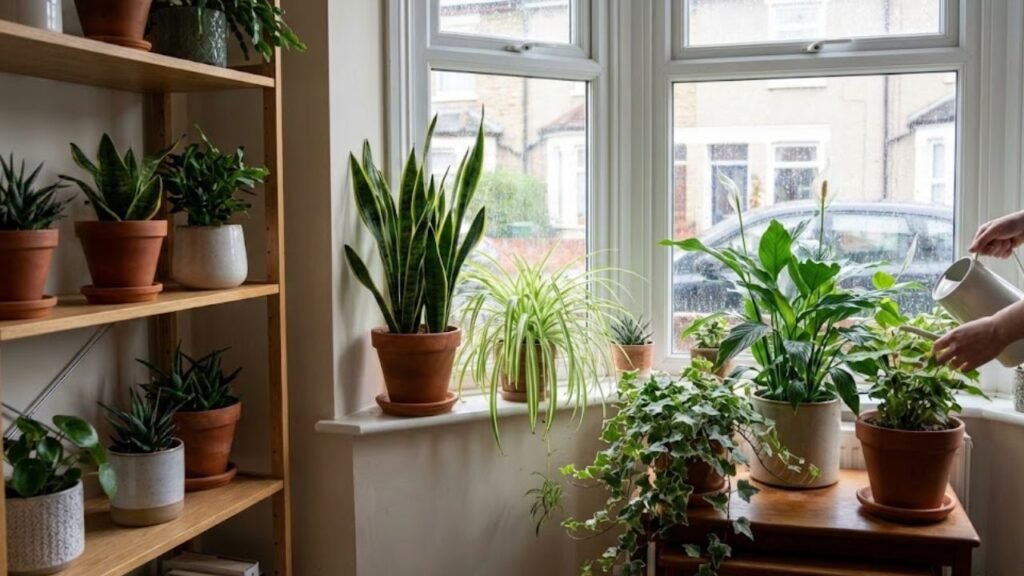
Nature offers a softer solution. Long before filters and purifiers existed, plants evolved to survive in challenging environments, absorbing compounds from the air through their leaves and roots. When a few of these plants enter a flat in Manchester or a semi-detached home in Kent, something changes almost imperceptibly. The atmosphere feels lighter. Breathing feels easier. The space feels more alive.
Houseplants aren’t magic fixes. They won’t solve serious mould issues or counter heavy smoke exposure. But as part of a balanced, natural approach to indoor living, they play a quiet role that matters. They help transform sealed, stagnant rooms into living spaces that feel calmer, fresher, and gently connected to the natural world.