
18 Hip-Opening Yoga Stretches to Improve Mobility and Flexibility Tight hips have become a widespread problem in our modern world. Spending long hours sitting at desks and moving less throughout the day creates stiffness in the hip flexors and surrounding muscles. When you add stress and poor posture to the mix, your hips pay the price. This tightness doesn’t stay isolated either. It can lead to lower back pain & reduced mobility and even affect how well you perform in sports or daily activities. Yoga provides a practical solution for restoring hip mobility and flexibility. The practice combines intentional stretching with mindful breathing to release tension that builds up in your hips over time. Regular practice strengthens the muscles around your hip joints while improving their overall health. This guide presents 18 hip-opening yoga stretches that instructors recommend most often. These poses work for everyone from complete beginners to experienced practitioners. Whether you spend your days at a desk or you’re an active athlete looking to improve your range of motion these stretches can help you move better & feel more comfortable in your body. The following poses target different areas around your hips to give you a complete approach to releasing tightness and building strength. You can practice them individually or combine several into a flowing sequence that addresses your specific needs.
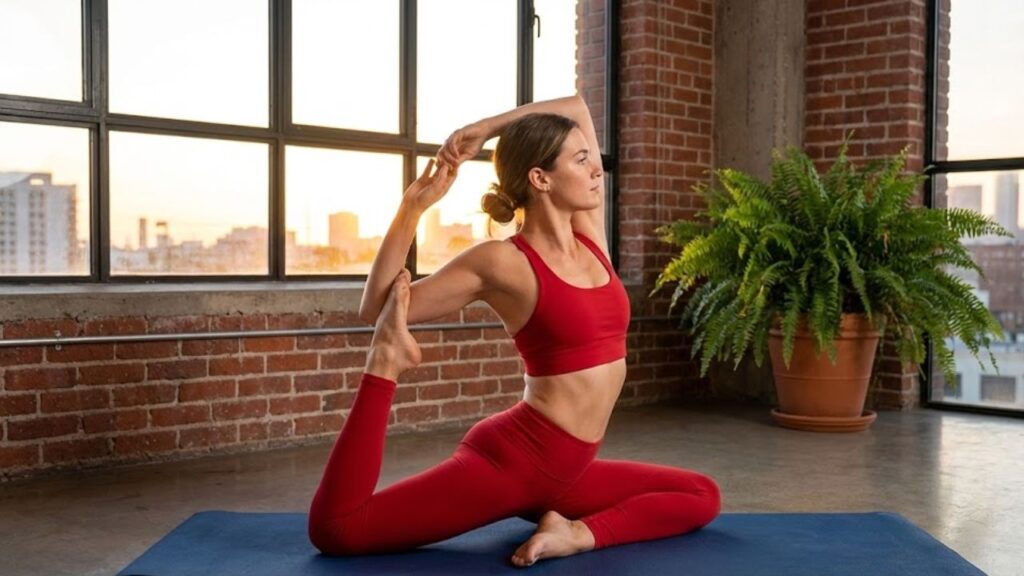
Why Hip Mobility Matters
Healthy hips play a vital role in everyday movement and long-term physical well-being. They support essential actions such as walking, running, bending, and sitting. Strong, mobile hips also help protect the lower back and knees from excess strain. When hip joints move properly, posture and body alignment naturally improve. Athletic performance benefits as well, thanks to better power transfer and balance. Tight hips force other areas of the body to compensate, which often leads to discomfort, pain, and muscular imbalances over time.

Types of Hip Muscles Yoga Targets
Hip-opening yoga stretches focus on a wide range of muscles that influence mobility and stability. These include hip flexors that tighten from prolonged sitting, underactive glutes that affect posture, and inner thigh muscles known as adductors. Yoga also targets the outer hips and deep hip rotator muscles. Creating a balance between flexibility and strength in these areas improves movement efficiency, coordination, and joint health.

How Often Should You Practice Hip-Opening Yoga?
For noticeable improvements, practicing hip-opening yoga three to five times per week is ideal. Poses should be held anywhere from thirty seconds to two minutes, depending on comfort and experience level. Movements should be slow and controlled, with steady breathing throughout. Forcing a stretch can cause strain, so patience is essential. Consistent, mindful practice delivers better results than pushing intensity.
Hip-Opening Yoga Stretches to Improve Mobility and Flexibility
Low Lunge (Anjaneyasana)
Targets: Hip flexors, quadriceps
Benefits: Reduces stiffness from sitting and improves stride length
Step one foot forward into a lunge, lower the back knee, and gently shift the hips forward while maintaining an upright torso.
Pigeon Pose (Eka Pada Rajakapotasana)
Targets: Glutes, outer hips
Benefits: Deep tension release and relaxation
Fold forward over the front leg and allow the breath to soften tight areas.
Butterfly Pose (Baddha Konasana)
Targets: Inner thighs, hips
Benefits: Improves hip rotation and flexibility
Sit tall, bring the soles of the feet together, and gently guide the knees toward the floor.
Garland Pose (Malasana)
Targets: Hips, ankles, inner thighs
Benefits: Enhances mobility and supports digestion
Lower into a deep squat while keeping the heels grounded when possible.
Lizard Pose (Utthan Pristhasana)
Targets: Hip flexors, groin
Benefits: Builds deep hip strength and mobility
Lower onto forearms for a deeper stretch if comfortable.
Frog Pose (Mandukasana)
Targets: Inner thighs, groin
Benefits: Releases deep hip tension
Use props for support and ease into the pose gradually.
Happy Baby Pose (Ananda Balasana)
Targets: Hips, lower back
Benefits: Gentle release and relaxation
Hold the feet or ankles and softly rock side to side.
Figure Four Stretch (Supine or Seated)
Targets: Glutes, outer hips
Benefits: Relieves lower back tightness
Cross one ankle over the opposite knee and press gently away.
Warrior II (Virabhadrasana II)
Targets: Hips, inner thighs
Benefits: Builds strength and mobility
Maintain a strong stance with active external hip rotation.
Extended Side Angle Pose
Targets: Hip flexors, inner thighs
Benefits: Improves lateral hip mobility
Lengthen the side body while grounding firmly through the legs.
Cow Face Pose (Gomukhasana – Legs)
Targets: Outer hips
Benefits: Enhances hip alignment
Stack the knees if comfortable and sit upright.

Fire Log Pose (Agnistambhasana)
Targets: Deep hip rotators
Benefits: Advanced hip flexibility
Support the knees with blocks if needed.
Wide-Legged Forward Fold
Targets: Inner thighs, hips
Benefits: Increases adductor flexibility
Fold forward while maintaining a neutral spine.
Crescent Lunge Twist
Targets: Hip flexors, spine
Benefits: Improves balance and mobility
Add a gentle twist to enhance circulation.
Reclined Bound Angle Pose
Targets: Hips, inner thighs
Benefits: Passive release and relaxation
Use bolsters or pillows to support the knees.
Half Split Pose (Ardha Hanumanasana)
Targets: Hamstrings, hips
Benefits: Improves posterior chain flexibility
Shift the hips back while extending the front leg.
Yogi Squat with Twist
Targets: Hips, spine
Benefits: Functional mobility
Add a gentle rotation to deepen the stretch.
Supine Windshield Wipers
Targets: Outer hips, lower back
Benefits: Gentle mobility and relaxation
Slowly drop bent knees from side to side.
Tips for Safe Hip Opening
Always warm up before deep stretching. Use blocks, bolsters, or blankets for support. Stretching should feel strong but never painful. Deep breathing helps release muscular tension, and progress develops gradually with regular practice.
Who Benefits Most from Hip-Opening Yoga?
Hip-opening yoga is especially beneficial for desk workers, runners, cyclists, older adults, individuals with lower back discomfort, and anyone experiencing limited mobility.
Why Hip Openers Can Feel Emotional
The hips are often associated with stored emotional tension. During practice, emotional release, deep relaxation, or increased mental clarity may occur. Practicing with patience and awareness allows these sensations to pass naturally.
How to Build a Hip-Opening Routine
An effective routine includes a gentle warm-up, five to eight hip-opening poses, longer holds with steady breathing, and a calming final posture. Even fifteen to twenty minutes of focused practice can create meaningful improvements.
Conclusion
Hip-opening yoga stretches go beyond improving flexibility—they support better posture, reduced pain, and smoother movement in daily life. With consistent practice, mindful breathing, and patience, these eighteen stretches can transform how the body moves and how it feels. Healthy hips form the foundation of a healthy body.