
The first time I heard a carrot snap cleanly under my fingers, it echoed through a quiet garden like a twig breaking in winter. The air smelled of cool sand and fresh green tops, and in that small moment I understood something fundamental: this is what a carrot is supposed to be. Not soft. Not rubbery. But crisp, sharp, and alive. Years later, standing in a wind-brushed patch of sandy soil that many gardeners dismiss as useless, I heard that sound again. This time, it came from a carrot grown using a science-backed approach that turns so-called “bad” sandy soil into an unexpected carrot paradise.
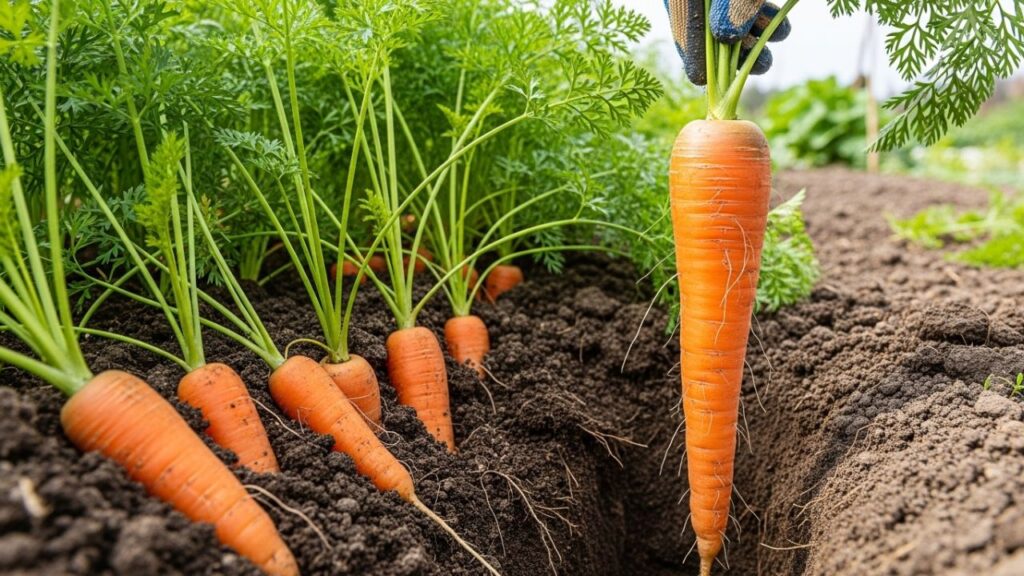
The Myth of Bad Soil and the Carrot That Proved It Wrong
Sandy soil has long carried a bad reputation. It drains too quickly, refuses to hold nutrients, and dries out almost as soon as it’s watered. In the hierarchy of soil types, sand is often treated like an inconvenience rather than an asset. Yet when you let it run through your fingers, you notice its hidden advantage: it stays loose, never crusts, and never suffocates roots. What was once considered a weakness is now being redefined as a powerful advantage for growing straight, crunchy carrots when managed correctly.

Why Sandy Soil Can Be Perfect for Carrots
Modern soil science has quietly overturned old gardening assumptions. Carrots are tap-rooted plants that dislike resistance. In heavy or compacted soils, their roots twist, fork, and swell awkwardly. In loose, sandy soil, they move freely downward. Research into root growth shows that lower mechanical resistance allows carrots to grow longer, straighter, and more uniform. Sandy soil, by nature, avoids compaction and provides constant airflow to developing roots.

Watering in Pulses: The Secret Behind Crunch
Traditional advice said sandy soil must be kept constantly moist. New plant physiology research suggests something more nuanced. Short, controlled dry periods encourage carrots to build denser tissue and concentrate sugars. Instead of daily light watering, the new method uses deep watering followed by brief drying of the topsoil. This pulse-like rhythm allows oxygen back into the soil while gently stressing the plant just enough to improve texture, sweetness, and crunch without causing woody growth.
Designing a Root Lane Instead of Fixing the Whole Bed
Rather than trying to turn sand into loam, this approach creates a narrow “root lane.” Only the planting row is enriched with a precise blend of fine compost and slow-release nutrients. The surrounding sand remains loose and untouched, allowing deep, straight root growth. Research shows that carrots perform best when organic matter is moderate, not excessive. Too much compost causes forking; too little leads to weak growth. Precision, not volume, is the key.
| Practice | Traditional Method in Sandy Soil | Modern Science-Backed Method |
|---|---|---|
| Soil Preparation | Deep tilling with compost mixed throughout the bed | Light loosening with nutrients focused only in a narrow root channel |
| Watering Style | Frequent shallow watering to keep the top layer wet | Deep watering in intervals, allowing brief drying between cycles |
| Fertilization | Heavy fertilizer applied before planting | Balanced, low-dose feeding with optional small boosts later |
| Seed Management | Seeds sown dry, relying on rainfall or occasional sprinkling | Consistently moist seedbed with covered rows until sprouting |
Feeding Carrots Without Feeding the Sand
Sandy soil loses nutrients quickly, so timing matters more than quantity. Studies show that small, split applications of nutrients outperform heavy pre-plant feeding. Carrots prefer steady availability over sudden abundance. Excess nitrogen pushes leafy tops at the expense of root density, leading to watery carrots. A balanced, restrained feeding schedule produces upright foliage and firm, mineral-rich roots with superior crunch.
Getting Tiny Seeds Through a Fragile Start
Carrot seeds are slow to germinate and vulnerable to drying out, especially in sandy soil. The solution lies in microclimate control. Covering seeded rows with boards, burlap, or fabric reduces evaporation and stabilizes moisture. This temporary protection shortens the risky germination window. Seed priming—soaking and drying seeds before planting—further improves success by speeding up emergence and synchronizing growth.

Thinning as a Tool for Better Harvests
Crowded carrots compete for space, water, and nutrients, resulting in thin and fibrous roots. Research confirms that proper spacing directly affects root size and texture. Thinning seedlings early allows each carrot to develop fully. The removed seedlings can be eaten as microgreens, turning what feels like waste into an early harvest and protecting overall yield.
Reading the Signs of Healthy Growth
Healthy carrots tell their story clearly. Smooth, straight roots indicate loose soil and consistent moisture. Even thickness suggests balanced nutrition. When pulled, a good carrot snaps cleanly, revealing dense flesh and tight internal rings. That sound and texture reflect an entire underground system working in harmony—soil structure, microbial life, and precise water management all playing their part.
Why This Method Matters Now
This new approach to growing carrots in sandy soil is about more than better vegetables. It represents a shift toward efficiency and resilience. As weather becomes more unpredictable, sandy soils offer advantages when managed intelligently. Fast drainage protects against heavy rains, while precision watering conserves resources during dry spells. By working with the soil instead of against it, gardeners can grow more food with less waste and more consistency.
From Sand to Crunch
In the end, it comes down to listening. Hands in the sand. Eyes on the foliage. Ears tuned to that sharp snap when a carrot breaks cleanly in two. What once seemed like poor soil becomes a partner. With a little science and careful attention, dust and water transform into something vibrant, crisp, and deeply satisfying.