
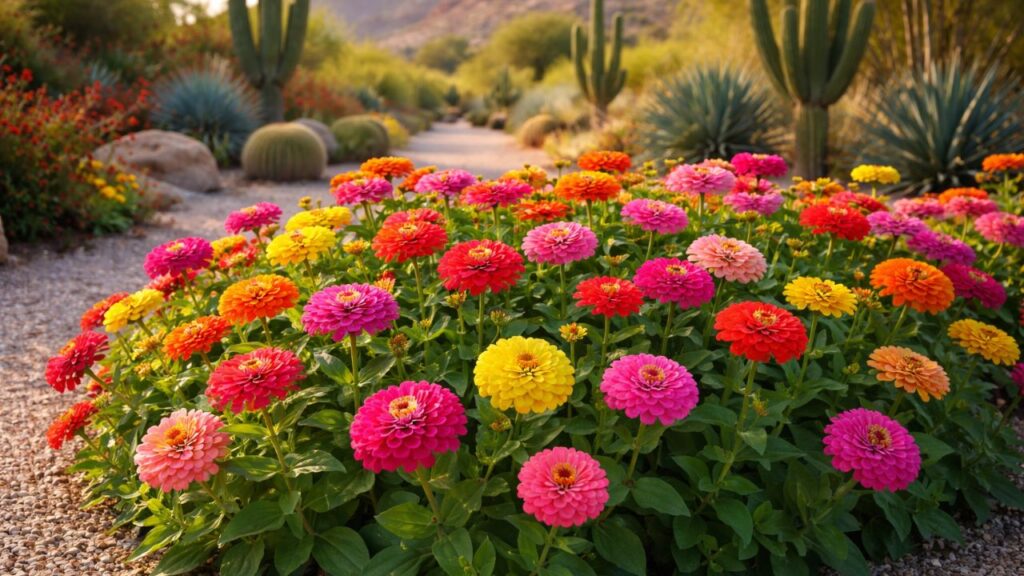
The first time I saw zinnias thriving in the desert, I almost didn’t believe my own eyes. It was late afternoon in mid-July, the kind of searing day when the air itself seems to shimmer and breathing feels like sipping from a hot teacup. Yet there they were: a patch of zinnias blazing in neon color—magenta, tangerine, lemon, and deep ruby—like someone had dropped a painter’s palette in the middle of the sand. The petals didn’t look tired or washed out, the way many flowers do after too many hours under an unforgiving sun. They looked alive, alert, defiant. This wasn’t a delicate spring garden; it was a riot of colour in a place that usually settles for dust and beige.
The Desert Problem: Heat, Silence, and Fading Colour
If you’ve ever tried to grow classic garden flowers in a desert or semi-desert climate, you probably know the script. You fall in love with a seed packet’s promises—profuse blooms, continuous colour, butterfly magnet. You plant, you water, you whisper encouragement. Then the heat moves in, the soil bakes, and your plants respond with a heart breaking combination of sulking, crisping, or outright vanishing.

Zinnias, on paper, should be perfect for hot climates. They love sun, grow fast, and attract pollinators. Many seed catalogs even call them heat tolerant. But in true desert conditions—alkaline soil, low humidity, intense UV, and wild temperature swings—zinnias often stall, scorch, or bloom briefly before fading out.

So how did that blazing zinnia patch keep blooming from spring until nearly Halloween? It wasn’t luck. It was a quiet revolution in how zinnias were grown—one that managed heat, light, and water without fighting the desert itself.
The Revolutionary Technique: Creating a “Cool Root, Hot Sun” Oasis
The gardener behind that miraculous bed, an older woman named Gloria who had lived in the desert for decades, summed up her secret simply:
“I let their heads live in full summer, but I keep their feet in spring.”
That sentence holds the heart of the technique. Zinnias thrive because their leaves and flowers enjoy blazing sunlight, while their roots never truly experience desert extremes. Beneath the surface, conditions stay cool, stable, and forgiving.
Building the Cool Root Zone
The first and most radical shift is how the soil is prepared. Desert soil often drains too fast, lacks organic matter, and heats up rapidly. Instead of scattering seeds into shallow dust, this method creates a deep, insulated root zone.
The soil is loosened 12–15 inches deep, breaking up compacted layers. Organic matter is mixed generously into the top layers to hold moisture. A deeper band of compost or coir acts as a moisture sponge, and a thick mulch layer shields the surface from turning into an oven.
Dig just below the mulch on a hot afternoon and you’ll feel the difference immediately—cool, slightly damp soil that smells alive instead of baked.
Timing: Sowing Zinnias with the Desert’s Pulse
Desert success isn’t only about soil; timing matters just as much. Plant too early and cold nights stunt seedlings. Plant too late and young plants hit extreme heat before roots are ready.
Instead of using calendar dates, this approach follows temperature cues. Seeds go in once soil stays above 65°F, nights remain mild, and days haven’t crossed brutal heat levels. Successive sowing every few weeks ensures that fresh plants replace older ones through the season.
This rhythm prevents the garden from aging all at once. When one generation slows, another takes over.
Strategic Shade for Endless Blooms
Zinnias love sun, but desert sun can become punishing. In Gloria’s garden, plants soaked up full morning light, then received gentle afternoon shade from trees, trellises, or tall companions.

This filtered late-day light prevents leaf scorch and bloom fade without weakening the plants. Six to eight hours of sun remain, but the harshest rays are softened. The result is stronger stems, greener leaves, and flowers that last longer.
Water Wisdom: Deep Drinks, Slow Sips
Zinnias dislike erratic watering. Shallow daily sprinkling creates weak roots, while overwatering invites rot. The solution is deep, slow irrigation that soaks the entire root zone.
During mild weather, beds are watered deeply every few days. In peak heat, watering becomes slightly more frequent but never shallow. Drip lines or soaker hoses under mulch deliver moisture gently, keeping roots cool and consistent.
The soil should feel like a wrung-out sponge—never muddy, never dusty.
Feeding for Color, Not Excess
Desert soil often locks up nutrients, so steady feeding matters. Instead of heavy fertilizer, plants receive slow, balanced nutrition.
A mild organic fertilizer goes into the soil before planting. Compost side-dressings follow every few weeks, and a light bloom booster is used only if flowers lag. This steady approach produces sturdy stems and richly colored petals without weak growth.
Deadheading and Diversity for Nonstop Color
Even with perfect conditions, gardener involvement matters. Deadheading faded blooms tells plants the season isn’t over. Regular pinching keeps new buds forming and extends flowering deep into fall.
Mixing tall, medium, and short varieties creates layers that buffer heat and wind. Different forms and colors respond differently to stress, ensuring that something is always in peak bloom.
What a Thriving Desert Zinnia Patch Feels Like
By late summer, when most landscapes retreat into survival mode, a well-managed zinnia bed explodes with life. Plants crowd together, blooms rise at different heights, and pollinators hum constantly.
It doesn’t feel like defeating the desert. It feels like making peace with it—using its light and space while softening its extremes below ground.
That is the real revolution: respecting the desert, adapting to it, and gently bending its harshness in your favor.