
Growing tomatoes in an Arizona summer for the first time feels like trying to keep ice cream frozen in an oven. The heat is intense. The ground is too hot to touch. The sun beats down relentlessly. But across Phoenix and Tucson people are successfully growing beautiful red tomatoes in their backyards and patios in a place famous for cacti rather than gardens. You can do it too. You just need to work with the heat instead of against it.
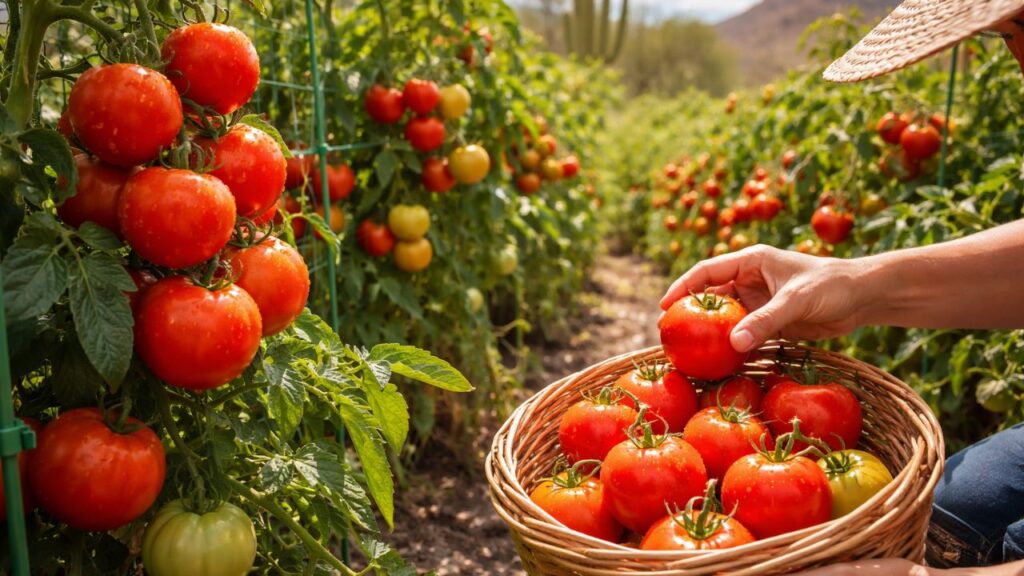
Best Tomato Varieties That Thrive in Arizona Heat
| Variety | Type | Why It Performs Well in Arizona |
|---|---|---|
| Solar Fire | Slicer | Developed for extreme heat; continues setting fruit when others fail. |
| Heatmaster | Slicer | Consistent producer in high temperatures; ideal for new growers. |
| Phoenix | Slicer | Desert-bred variety that tolerates intense sun and scorching days. |
| Sun Gold, Sweet 100 | Cherry | Small, fast-ripening fruits handle stress better than large tomatoes. |
| Juliet | Grape / Plum | Hardy, productive, and resistant to splitting during heat waves. |
You don’t need to chase down rare varieties from specialty catalogs. Start with what your local nursery recommends—those plants are often quietly tested by nearby growers who know what survives in your exact desert conditions. In low-desert cities like Phoenix, Mesa, and Yuma, focus on heat-tolerant, early-maturing tomatoes. In higher elevations such as Prescott or Flagstaff, cooler nights and milder summers give you more flexibility to experiment with heirloom types.

Timing Your Planting by Arizona’s Desert Seasons
Tomatoes in Arizona don’t grow through one long summer. Success comes from working with two cooler windows and avoiding the brutal heat in between. Think of tomato season as riding spring and fall while respecting the furnace of midsummer.

Spring Wave: Your Primary Tomato Window
In most low-desert regions, late February through March is the ideal time to plant tomato transplants. Cold nights are largely behind you, but the intense heat hasn’t arrived yet. This window allows plants to build strong roots, full foliage, and set their first major flush of flowers before temperatures soar.
Planting too early risks damage from surprise cold snaps. Planting too late—especially into May—often means plants grow well at first, then drop flowers once daytime temperatures exceed 100°F, halting fruit production just when expectations are highest.
Fall Wave: Arizona’s Overlooked Second Tomato Season
Many beginners don’t realize Arizona offers a second tomato season. As summer heat eases in late August and September, you can plant again. In low-desert areas, late August to early September is ideal for new transplants or for rejuvenating existing plants with deep pruning and fresh fertilizer.
Warm soil combined with cooling nights triggers fruit set again. These fall tomatoes often carry you through and even December during mild winters. With staggered plantings and light frost protection, you can harvest tomatoes during most months of the year.
Designing the Perfect Tomato Microclimate
In Arizona, gardening is really climate design. Your goal is to provide enough sun for growth, enough shade for survival, and enough water to prevent stress.
Smart Shade for Extreme Sun Protection
“Full sun” in Arizona often means filtered sun. The harsh midday sun causes the most damage, leading to sunscalded fruit and burned foliage. Providing afternoon shade makes a major difference.
Using 30–50% shade cloth once temperatures reach the high 90s can dramatically reduce stress. Attach it to simple frames, fences, or patio structures. Natural shade also works well—east-facing walls or taller companion plants can soften the worst afternoon exposure without blocking essential morning light.
Soil: Transforming Desert Ground into Tomato-Friendly Beds
Native desert soil is often compacted, alkaline, or caliche-heavy. Tomatoes need loose, nutrient-rich, well-draining soil. Raised beds or large containers are often the easiest solution.
Incorporate generous amounts of compost—30–50% for beds and containers. Add perlite or coarse sand if drainage is poor, and mulch heavily with straw, leaves, or wood chips. Well-prepared soil stays noticeably cooler and moist below the surface, even in peak summer.
Watering the Right Way in Desert Conditions
Inconsistent watering is one of the fastest ways to stress tomatoes. Flood-and-dry cycles cause splitting, blossom end rot, and weak plants. Aim for deep, steady moisture.
Water early in the morning, use drip irrigation when possible, and encourage deep roots by watering thoroughly but less frequently. In extreme heat, containers may need daily watering, while in-ground plants often require water every one to two days. Healthy plants stay perky, with steady fruit growth and minimal leaf wilt.

Planting, Training, and Feeding for Long Harvests
Once varieties, timing, and microclimate are set, proper planting and care determine long-term success.
Planting Deep to Build Strong Roots
Tomatoes can grow roots along buried stems, so plant seedlings deeper than they were in their pots. Remove lower leaves and bury the stem to encourage a strong, heat-resistant root system.
Space plants 18–24 inches apart, allowing airflow that reduces disease and helps dissipate heat—important even in dry climates.
Training and Supporting Tomatoes in Small Spaces
Vertical growing works especially well in Arizona’s compact yards. Cages, stakes, and trellises improve airflow, keep fruit off hot soil, and help leaves dry quickly after watering.
Use sturdy supports to withstand desert winds. Tie plants gently and prune lightly only when necessary. Extra foliage often helps protect fruit from sunburn, so aggressive pruning is rarely helpful in desert conditions.
Feeding Without Overstimulating Growth
Use a balanced fertilizer at planting time, then feed lightly every three to four weeks during active growth. Excess nitrogen encourages leafy growth at the expense of fruit and can increase heat stress.
Healthy plants show deep green color, steady flowering, and consistent fruit development. Pale leaves or weak growth often signal the need for improved nutrition.
Managing Heat and Light Frost for Extended Seasons
Arizona tomatoes require flexibility. Helping plants survive extreme heat and mild winter cold keeps harvests coming far longer than in cooler regions.
Helping Tomatoes Through Peak Summer Heat
During June and July, many tomatoes pause fruit production. This is normal. Increase shade, maintain mulch, water consistently, and avoid heavy pruning. Existing green fruits will continue to ripen, and plants rebound quickly once nights cool.
Protecting Plants from Occasional Frost
While winters are mild, frost can still occur. Cover plants on cold nights with frost cloth or blankets, and move containers near walls or under patios to capture radiant heat. Even brief protection can extend harvests by weeks.
Harvesting Tomatoes at the Ideal Stage
In extreme heat, harvest tomatoes as they reach full color or at the breaker stage, when they first begin to blush. Letting them finish ripening indoors prevents cracking and sunscald while preserving flavor.
Tomatoes ripened during Arizona’s spring and fall often develop exceptional sweetness and depth, thanks to warm days and cooler nights—making every harvest especially rewarding.