
Growing peppers for the first time in extreme summer heat can feel like a personal challenge. The ground turns hard and dry. Leaves droop before lunch. Flowers disappear without explanation. Those beautiful seed catalog pictures showing abundant colorful harvests seem impossible to achieve. But then you visit markets in the hottest parts of the world like Mexico or India or West Africa or Southeast Asia. There you see massive displays of peppers in red and bright green and dark brown and pale yellow. This proves that peppers can actually grow very well in hot climates. The key is learning to work with the heat rather than trying to overcome it.
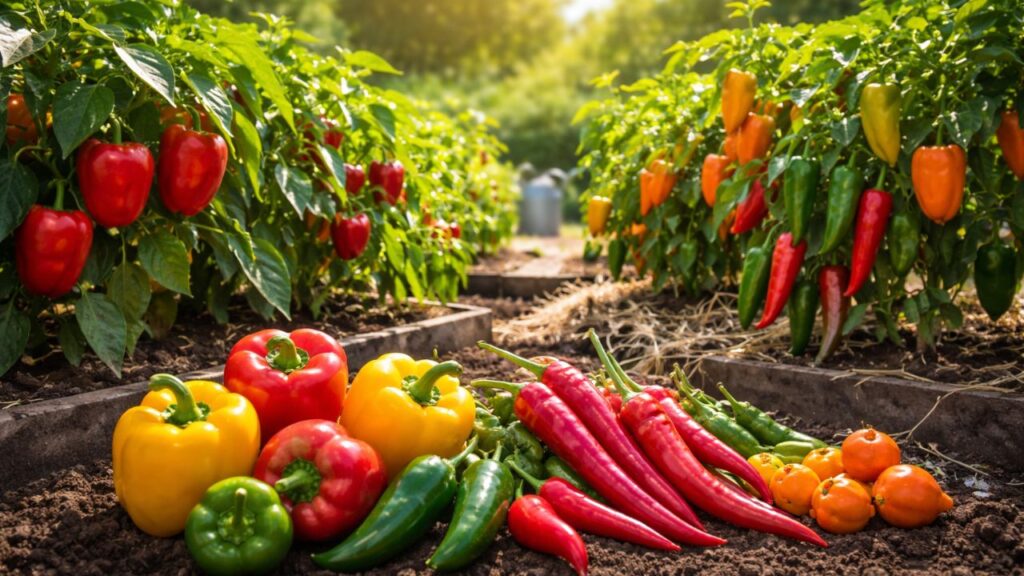
Understanding Peppers in a Land of Extremes
Peppers originally come from warm regions in the Americas and naturally thrive in sunny conditions. However there is a point where even these heat-loving plants cannot cope with excessive temperatures. In many hot areas the issue is not simply warmth but rather prolonged exposure to extreme heat that extends through the night. Peppers typically grow well when daytime temperatures range from 85 to 95 degrees Fahrenheit. When temperatures climb significantly higher & nighttime temperatures remain above 80 degrees Fahrenheit the plants begin to experience stress. The flowers wither before they can produce fruit and the pollen loses its ability to fertilize. Buds fall off the plant and growth becomes extremely slow. The soil surface becomes hard & compact while the roots struggle to access adequate moisture. Under these conditions the plant exists in a state between barely surviving and giving up entirely.

Heat-Tolerant Varieties Worth Knowing
In truly hot climates, aim for peppers that have already proven themselves in similar environments. Think beyond the typical supermarket bell and look to peppers with long histories in hot countries.

Jalapeño and Serrano – Classic Mexican workhorses that can handle strong sun with adequate moisture.
Cayenne and Thai chiles – Slim, productive, and surprisingly resilient in relentless heat.
Habanero and Scotch Bonnet – Caribbean natives adapted to humid, hot summers.
Shishito and Padrón – Mild, thin-skinned, and forgiving in heat with a bit of shade.
Italian frying peppers (like Corno di Toro) – Sweet, elongated, and often more heat-tolerant than blocky bells.
Not all sweet peppers are fussy. Long, tapered types often handle stress better than big, blocky bells. If your summers are brutal, grow fewer “giant” bells and more slim, long varieties. You’ll usually get more fruit, faster ripening, and far less frustration.
Matching Variety to Your Microclimate
Even in a single backyard, you have microclimates. A sun-baked wall that radiates heat all night is one world; a gently shaded corner with afternoon relief is another. In the hottest, most exposed spots, plant your toughest hot peppers. Save the shyer bells and sweet types for beds that receive morning sun and dappled shade later in the day.
This simple reshuffling can mean the difference between productive plants and crispy memorials.
Planting for Survival: Timing, Soil, and Mulch
In hot regions, your calendar is as important as your compost. Start peppers too late and young plants face peak heat before they are strong enough. Start too early and they sulk through cool nights, barely growing.
Timing the Pepper Dance
Peppers love consistency. Transplant them outdoors when night temperatures stay above 55–60°F (13–16°C), but at least four to six weeks before truly brutal heat arrives. That window allows roots to establish and stems to thicken before stress season.
In climates with mild winters and blazing summers, some gardeners start peppers in late winter under protection. These plants fruit before peak heat and often produce a second flush as late summer cools. In tropical climates, plant during shoulder seasons—when extreme heat is easing or just beginning, not at its peak.
Soil: Cool Feet, Happy Peppers
In hot climates, soil can turn into an anvil of heat. Good pepper soil should be rich but well-drained, moisture-holding without being heavy, and shaded at the surface.
Texture: Aim for loamy soil. Add compost and coconut coir or leaf mold to sandy soils. Loosen heavy clay with compost and coarse material.
Fertility: Moderate fertility is best. Too much nitrogen produces lush leaves but drops flowers.
pH: Slightly acidic to neutral (pH 6.0–7.0) suits most peppers.
Mulch is non-negotiable. Spread 2–4 inches of straw, shredded leaves, or composted bark around plants, leaving space near the stem. Mulch cools roots, conserves moisture, feeds soil life, and softens extreme conditions.

Simple Pepper Planning Table
| Condition | What Peppers Prefer | Your Action |
|---|---|---|
| Daytime temperature | 75–90°F (24–32°C) | Add shade cloth above 95°F (35°C) |
| Night temperature | 60–75°F (16–24°C) | Plant early or late to avoid hot nights |
| Soil moisture | Evenly moist, never soggy | Deep watering plus mulch |
| Sun exposure | 6–8 hours with afternoon relief | Morning sun, afternoon shade |
| Fertilizer | Balanced, higher potassium for fruit | Avoid excess nitrogen |
Watering, Shade, and the Art of Stress Prevention
In hot climates, water is language. The way you water tells peppers whether conditions are safe enough to invest in flowers and fruit—or whether they should brace for survival.
Deep, Calm Watering
Peppers prefer a steady rhythm: deep watering followed by slight surface drying. Shallow, frequent watering keeps roots near the hot surface. Deep watering encourages roots to grow down where temperatures are cooler.
Water two to three times per week during extreme heat, using drip irrigation or slow watering at the base. Early morning is ideal so plants are hydrated before heat builds.
Shade: A Safety Net, Not a Weakness
In extreme heat, full sun all day can damage peppers. A light 30–40% shade cloth can dramatically improve flower retention and soil temperature. Even taller companion plants on the west side can provide lifesaving afternoon shade.
If leaves curl tightly at midday or flowers keep dropping, exposure—not nutrition—is often the problem. A bit of shade frequently increases harvests rather than reducing them.
Feeding, Pruning, and Keeping Plants on Track
Once peppers are well-rooted, shaded, and watered, your job is guiding their energy. Strong stems and steady growth allow plants to carry fruit without stress.
Balanced Feeding for Fruiting
Too much nitrogen creates lush foliage and poor fruiting. At planting, use compost and a balanced fertilizer. At first flowering, side-dress with slightly higher phosphorus and potassium. Feed lightly again mid-season if plants fade.
Organic options such as compost tea, fish emulsion, and seaweed extract help plants recover from heat stress without forcing growth.
Gentle Pruning and Support
Avoid heavy pruning in hot climates, which exposes stems to sunscald. Remove only damaged or crowded interior growth. Stake or cage plants to prevent branches from snapping under fruit weight, especially in hot, dry winds.
Reading the Signs: Heat Stress and Recovery
Peppers communicate clearly. Curling leaves often mean heat stress. Flower drop with healthy foliage points to hot nights or inconsistent watering. Sunscald shows as pale or blistered patches on fruit.
During extreme heatwaves, flowering may pause. Keep plants shaded and watered. When temperatures ease, flowers often return quickly.
Keeping Plants Productive Through the Season
Experienced hot-climate gardeners plan for production waves. Early fruit sets before peak heat, a maintenance phase during extreme temperatures, and a strong late-season flush as conditions cool.
In mild-winter regions, peppers can behave like short-lived perennials. Light pruning and frost protection may reward you with earlier, stronger growth the following season.
Harvesting Heat and Sweetness
Hot climates intensify flavor. Fully ripened peppers develop deeper sweetness or heat, but protection from sunburn is important. Harvest some fruit green to reduce plant stress, and allow others to color under light shade.
Thin-walled peppers dry beautifully in warm climates and can be air-dried in shaded, breezy spots.
Final Thoughts
Growing peppers in heat is not about fighting the climate. It’s about observing light, soil, and temperature, then responding with shade, mulch, timing, and patience. When you do, peppers reward you with steady harvests and flavors that capture the fire of a long, blazing season.