
The first time you step outside on a July afternoon in Arizona and feel that wall of heat hit your face, lettuce is probably the last word that comes to mind. The idea of crisp cool tender greens in a place where even your flip-flops threaten to melt on the patio seems almost absurd. Lettuce is supposed to be a cool-season diva after all. It is delicate and temperamental and prone to bolting at the slightest hint of stress. And yet scattered across this sunburned landscape there are quiet little oases where gardeners are harvesting salad bowls in August. They are plucking pale green leaves that taste as if they grew beside a mountain stream instead of in desert gravel. Growing lettuce year-round in Arizona is not a miracle. It is a series of small clever choices. You need shade here and water there along with timing and soil & a bit of observation. Anyone can learn it even a beginner.
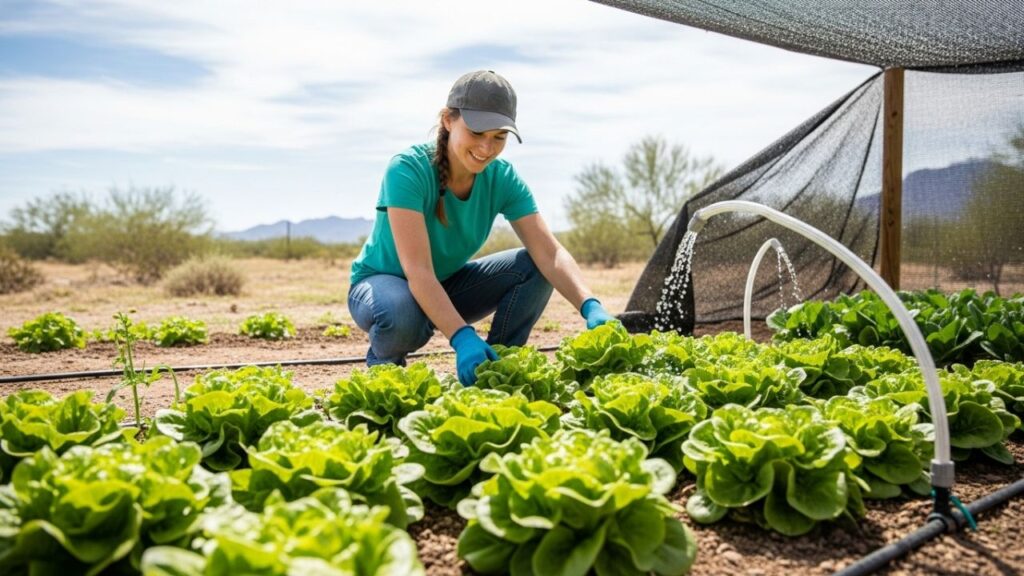
Listening to the Desert: Why Lettuce Struggles (and How You Can Help It)
Arizona doesn’t just get hot. It gets intense. The sun is hard & bright and unrelenting. Summer afternoons can push well over 110°F and even in the milder seasons the light feels sharper than in most places. Lettuce by nature is a creature of cool moist mornings and gentle evenings. Its roots prefer steady moisture and its leaves prefer soft light. In the desert it’s like an introvert dropped into a raging party at high noon. When lettuce gets stressed in heat two things happen fast. It wilts and it bolts. Wilting is obvious enough because leaves droop and edges crisp and colors dull. Bolting is sneakier but just as ruthless because the plant senses it’s in trouble and sends up a tall central stalk racing to produce seeds. Once that happens the tender sweetness you imagined in your salad turns into bitterness that no dressing can hide. So the secret to growing lettuce year-round in Arizona isn’t some magic fertilizer or expensive gadget. It’s about giving lettuce the illusion that it lives somewhere cooler. You need to build a microclimate that feels gentler than the desert just beyond your fence. The more you think in those terms the more lettuce suddenly feels possible even in August.

Desert Timing: Planting Lettuce by Season
In Arizona, the calendar is your quiet ally. The same seeds behave very differently depending on when you drop them into the soil. Timing is the first lever you can pull to tilt the odds in your favor.

Cool-Season Sweet Spot
From late fall to early spring the desert becomes a good place for growing lettuce. In low desert regions such as Phoenix Tucson and Yuma the best time for lettuce is approximately October through March. During these months you can plant seeds directly in the ground or use raised beds or containers and they will produce crisp leaves with minimal effort. The sunlight remains bright but becomes much gentler and nighttime temperatures drop to the cool range that lettuce prefers.
The Tricky Season You Can Still Win
Summer is when beginners usually give up and assume lettuce just isn’t possible. Yet this is exactly where the fun starts. To grow lettuce in Arizona’s summer, you don’t fight the sun directly; you negotiate with it.
– Plant in the “edges” of heat: late spring for early summer harvests, late summer for early fall ones.
– Use partial shade and cooler microclimates to keep plants from frying.
– Choose heat-tolerant varieties that can stand a bit more stress.
Instead of whole heads that stay in the ground for weeks, you’ll lean toward “cut-and-come-again” lettuces—leafy types you harvest a little from at a time. They grow fast, and you eat them young, before the heat and stress build up.
Choosing Lettuce Varieties that Don’t Melt in the Heat
Not all lettuces react to Arizona’s sun the same way. Imagine you’re gathering a cast of characters—some are delicate and dramatic, others are sturdy and unbothered by a little adversity. You want a mix, but in summer especially, you need survivors.
Heat-Tolerant Heroes
From late fall to early spring the desert becomes ideal for growing lettuce. In low desert regions like Phoenix Tucson and Yuma the optimal planting window runs from October through March. During this period you can sow seeds directly into the ground or use raised beds and containers with excellent results. The plants will produce crisp tender leaves without requiring much attention. The sunlight stays bright but loses its harsh intensity while nighttime temperatures drop into the cool range that lettuce thrives in.
Best Lettuce Varieties to Grow in Arizona
Think of your garden as a seasonal wardrobe—swapping varieties as temperatures shift. Arizona’s intense sun and fluctuating temperatures mean your lettuce strategy should adapt too. In the cooler months, nearly all types will thrive. But when the heat arrives, it’s time to shift toward resilient, shade-loving options that mature quickly and stay tender.
| Type | Example Traits | Best Use in Arizona |
|---|---|---|
| Looseleaf Lettuce | Fast-growing, harvest a few leaves at a time; many heat-tolerant strains available | Year-round in shaded spots and containers; perfect for summer cut-and-come-again harvests |
| Romaine (Cos) | Thicker, crunchy leaves; handles sun and stress better than most | Ideal from fall through spring in open beds; use partial shade in summer |
| Butterhead / Bibb | Soft, sweet leaves; more delicate and heat-sensitive | Best grown during cooler periods—fall, winter, and early spring only |
| Loose Mixes / Mesclun | Young baby greens and lettuces; quick to grow and ready for frequent harvest | Great for small containers and shaded balconies, especially during hot months |
Tips for Arizona Lettuce Success
– In summer, provide afternoon shade or grow under shade cloth.
– Use mulch to retain soil moisture and cool roots.
– Harvest young and often—tender leaves handle heat better.
– Don’t aim for large heads in summer; focus on baby leaves and quick regrowth.
Creating Shade and Cool Pockets: Microclimates that Save Your Lettuce
If timing & variety are your first moves then microclimate is your masterstroke. Arizona gardens are not flat equal spaces. They exist as a patchwork of hotter and cooler spots with harsher and softer light. Once you see your yard this way you can put lettuce in the places that feel like dusk while the rest of the garden is still noon. The key is learning to read your space. Walk around your property at different times of day and notice where shadows fall. Pay attention to which areas get morning sun versus afternoon heat. Check where walls or fences create shade or trap warmth. These observations will show you the hidden zones in your garden. East-facing spots get gentle morning light and afternoon shade. This makes them perfect for heat-sensitive plants like lettuce and spinach. South-facing areas receive intense sun all day long. Reserve these for your toughest desert natives & heat lovers. West-facing zones get the brutal afternoon sun that can scorch even adapted plants. North-facing spaces stay cooler and shadier throughout the day. Structures create their own weather patterns. A wall radiates stored heat at night & creates a warm pocket. An overhang provides consistent shade and protection. Large rocks absorb heat during the day and release it slowly. Trees offer dappled shade that changes with the seasons. Even a slight slope affects how water drains and where cold air settles. You can also build microclimates intentionally. Plant tall crops to shade shorter ones. Use shade cloth to filter harsh light. Add mulch to cool the soil surface. Group plants with similar needs together. Create windbreaks to reduce drying effects. Install drip irrigation to maintain consistent moisture in specific zones. This approach lets you grow a wider range of plants than you thought possible. Your garden becomes a collection of small environments rather than one challenging space. Each plant gets conditions that suit its needs instead of fighting against the default setting.
Playing with Light, Wind, and Surfaces
If your soil is poor or your yard is mostly rock, don’t fight it. Containers and raised beds give you more control over both temperature and moisture. In summer, you can:

– Move containers as the sun shifts—tucking them under a patio roof in the afternoon.
– Use light-colored pots that don’t absorb as much heat.
– Cluster pots together to reduce drying winds and create little humid pockets.
Indoors, a bright window, sunroom, or simple grow light setup can turn lettuce into a kitchen companion you harvest as you cook. In the peak of summer, a small indoor lettuce corner might carry you through when the outdoor heat is simply too much.
Containers, Raised Beds, and Indoor Nooks
If above-ground life is all about light and heat, below-ground life is about comfort. Lettuce roots are shallow and easily stressed. In the desert, that stress usually shows up as dry, hard soil that swings wildly between soaked and bone-dry. To grow tender leaves, you need to make the soil feel like a steady, cool blanket rather than a baking pan.
Soil, Water, and Mulch: Building a Cool, Moist Root World
Begin with a light and nutrient-rich soil that drains water easily. When planting directly in the ground, add compost along with worm castings & some aged manure to boost nutrients and help the soil retain moisture. Desert soil that contains mostly sand or rocks drains water too quickly and becomes extremely hot. Adding organic material transforms it into a more stable medium that holds water better. For raised beds or containers choose a mixture that feels soft & has a slight bounce when you squeeze it. Avoid soil that feels heavy and clumps together or feels powdery and bone dry. The ideal soil should absorb water quickly and hold it for a reasonable time before draining away without creating puddles.
Soil That Holds Moisture Without Drowning Roots
In Arizona, water is not just a resource; it’s an art. Lettuce prefers consistent moisture rather than feast-and-famine watering. Instead of blasting plants every few days, try to keep the soil evenly damp:
– Water deeply enough to reach the root zone, not just the surface.
– In summer, early morning is best—leaves dry quickly, and roots have cool hours to drink.
– Drip irrigation or soaker hoses are ideal, delivering water slowly right where roots need it.
Mulch is your quiet ally. A thin layer of straw, shredded leaves, or even clean pine needles around lettuce plants shades the soil, keeps it cooler, and slows evaporation. In a place where every drop of water is precious, mulch isn’t optional—it’s a simple, powerful tool.
Watering Like a Desert Lettuce Whisperer
Once you’ve chosen your varieties, created gentle light, and built soft, moist soil, the final piece is learning to read your lettuce. It will tell you what it needs if you pay attention with a beginner’s curiosity instead of a perfectionist’s stress.
Planting, Harvesting, and Reading the Plants
Lettuce seeds are very small and should not be planted deep in the soil. Sprinkle them on the surface and add just a thin layer of soil or compost on top. When the weather is hot the seeds can struggle to sprout because the top layer of soil dries out fast. You can solve this problem by starting your seeds in small containers or shallow trays in a shaded area and then moving them to the garden later. Another option is to place shade cloth or a wooden board over the planted area for a few days to keep the soil moist. Remember to remove the cover as soon as you see the first seedlings coming up. Rather than planting all your lettuce seeds at the same time you should plant small amounts every week or two throughout the growing season. This method is called succession planting and it gives you a steady supply of fresh lettuce instead of having too much at once & then none at all.
Sowing and Spacing for a Desert Rhythm
Growing lettuce in Arizona works best when you harvest it young instead of waiting for full heads like you see in stores. The intense heat & sun cause too much stress on the plants if you let them mature completely. The best approach is to harvest frequently using one of two methods. You can pick the outer leaves while leaving the center intact so the plant continues producing new growth. Another option is to cut the entire plant about an inch above the ground with scissors. Most lettuce varieties will grow back and give you a second harvest. Young lettuce leaves taste sweeter and more tender than mature ones. They also have much less bitterness. This harvesting approach gives you both more lettuce and better quality greens. Pay attention to your plants as they grow. When they begin stretching upward and developing a central stalk or when the leaves suddenly taste sharp and bitter the plant is bolting. This is a natural process you should accept rather than resist. Consider allowing some plants to bolt and produce seeds. The lettuce that grows from these seeds might adapt better to your specific Arizona location than the varieties you purchase from seed companies.
The Joy of Harvesting Young and Often
There is something quietly rebellious about walking outside in August when the pavement is radiating heat and returning inside with a handful of cool greens. It feels like you have bent the rules just a little & turned the desert’s reputation upside down. But what you have actually done is listen to the sun and the shade and the soil & the water and the days that grow longer & shorter and the plants themselves telling you what they like & what they cannot tolerate. Growing lettuce year-round in Arizona is not about perfection. Some plantings will fail. Some days the heat will win no matter what you do & a patch will bolt overnight. That is part of the process. But between those moments you will taste the tenderness that comes from attention. You will enjoy crisp leaves that snap gently in your fingers with a faint earthy sweetness and the way they cool your mouth like a sip of water from a cold glass. Over time you will develop your own rituals. Maybe it will be the pre-dawn walk outside in July when you water barefoot while the world is still soft and blue. Maybe it will be the winter afternoon when the sun is low and golden and your lettuce beds are full and emerald and thriving while the rest of the country shivers. You will plant by instinct as much as by calendar. You will know which corner by the wall is perfect in May but too harsh in June. You will tuck seeds in containers by the kitchen door just because it feels right. That is the real secret for beginners. It is not just about techniques but about relationship. When you stop trying to force lettuce to behave as if you are gardening in Vermont and instead learn to work with the desert then year-round lettuce stops being a fantasy. It becomes just another rhythm of your days. It becomes one more small and beautiful defiance against the idea that the desert cannot be soft. So the next time the forecast threatens triple digits do not write off your salad dreams. Think about shade. Think about microclimates. Think about fast-growing and heat-tolerant leaves you will harvest young. Build a small green haven like a raised bed under a tree or a group of pots tucked by the porch or a row of romaine under shade cloth. Then one hot evening when the light finally eases and the sky goes lavender walk out with a bowl & a pair of scissors. Listen to the quiet snip of stems and feel the coolness of fresh-picked leaves against your fingers and know that even here in Arizona’s bright and fierce desert crisp & tender lettuce can be yours in every season.