
Margaret, 82, stood quietly as her grandson tipped a full sack of supermarket potatoes into a raised bed lined with black fabric. There were no neat furrows, no carefully sliced seed potatoes, no murmured guesses about the weather. Just a power drill, a roll of weed membrane, a viral tip from TikTok, and a tight weekend schedule.
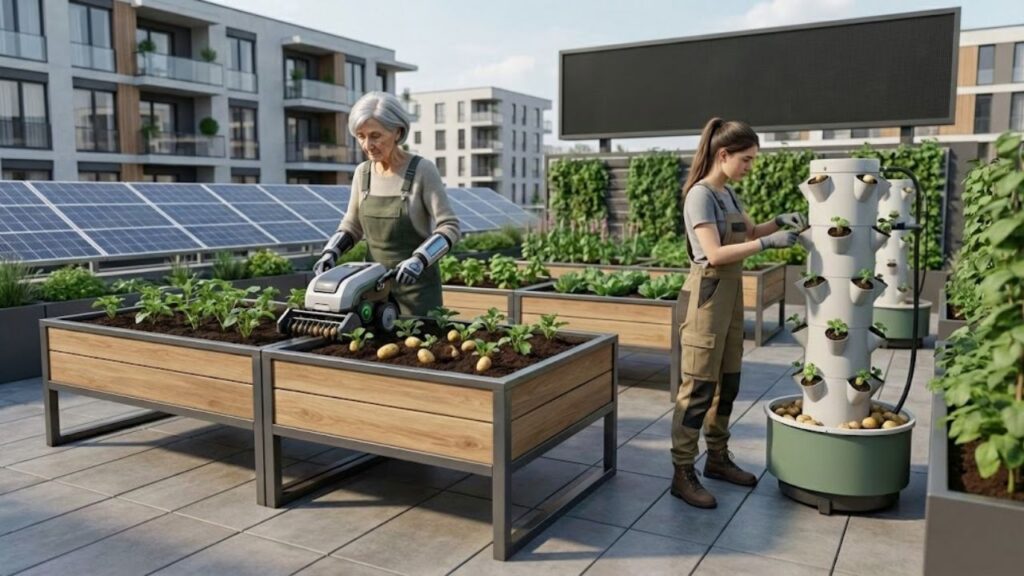
She didn’t comment much. Just a soft “Hmm” that seemed to carry decades of gardening and the memory of a husband now gone. In less than an hour, he finished what once took her three slow evenings. Then he headed back indoors, laptop open, energy drink in hand. Outside, the soil lay cold and strangely quiet.

The crop will likely be fine. It might even be better than before.
 12 Surprisingly Enjoyable Hobbies That Build Confidence Creativity and a Strong Sense of Purpose
From muddy hands to viral shortcuts
For generations, growing potatoes followed a deliberate, unhurried rhythm. Gardeners saved their best tubers from the previous year, waited for pale sprouts to appear on a kitchen windowsill, and planted only when the soil felt right between their fingers. There was no calendar reminder, just instinct and long hours spent watching the sky.
Now, online guides promise you can raise a full potato harvest in a plastic bag on a balcony, with barely any effort. No digging, no rotation, hardly any contact with soil at all. The appeal is obvious: more food, less labour, no fuss.
But something subtle slips away in that exchange.
A UK survey from 2023 found that nearly 40% of under-35 vegetable growers learned primarily from social media rather than parents or grandparents. That shift shows in how potatoes are discussed today. They’re framed as content, as yield-per-container, as “quick hacks for lazy gardeners”.
One viral clip shows supermarket potatoes being sliced, dusted with cinnamon “to stop rot,” and dropped into a grow bag layered with compost and shredded paper. The video moves fast, set to cheerful music. There’s no voice, no backstory, no winter spent planning next season’s rows.
We still plant and we still harvest. Yet with every shortcut, the thread between generations thins a little more.
Efficiency versus tradition in modern potato growing
On paper, the logic behind today’s potato hacks is hard to fault. A weed membrane is rolled out, holes are drilled at precise intervals, pre-sprouted potatoes are tucked in, compost added, and water applied. Weeks later, the fabric is lifted like a curtain to reveal clean, soil-free tubers. It’s efficient, predictable, and easy to share online.
The traditional approach was intentionally messy. Trenches were dug by hand, spacing was guessed, some plants were lost to slugs, and others were shared with neighbours. You learned through trial, error, and patience. Yield mattered, but so did the quiet moments alone in the evening light.
The newer methods fit crowded lives and shrinking urban spaces. What’s harder to measure is the cost, not in kilograms harvested, but in stories that no longer get told.
The simple potato hack reshaping gardens
The technique spreading through gardening forums is deceptively straightforward. A flat patch of ground—or even concrete—is covered with a thick tarp or weed membrane, pinned securely, and sliced with evenly spaced crosses.
Into each opening goes a scoop of rich compost and a chitted potato, tucked away neatly. Watering is minimal. There’s no digging, almost no weeding, and no need for repeated earthing up as stems grow.
Once the foliage dies back, the membrane is peeled away and potatoes are lifted cleanly from soft pockets below. The soil beneath remains largely undisturbed, backs are spared strain, and schedules stay intact.
 Say Goodbye to Your Old Power Strips: Why This 2026 Innovation Is Dividing Homes Everywhere
Many gardeners adapt this approach for balconies, using grow bags and large containers. Compost is layered with seed potatoes, topped up as shoots appear, and sometimes stretched with shredded leaves or lawn clippings. The system is portable, modular, and neatly contained.
Its popularity comes from how measurable it is. People can say, with certainty: three bags, fifteen minutes, six kilos of potatoes. Photos show tidy progress shots, with dirt kept firmly within the frame. What’s missing are the long conversations that once unfolded along half-earthed rows.
Where efficiency meets emotion
There are clear reasons this shortcut spread so quickly. Modern lives are busy, gardens are smaller or rented, and landlords dislike permanent changes. Councils favour low-maintenance plots. A drill and a roll of membrane fit neatly into that reality.
The emotional side is less visible. Older gardeners watch fabric cover beds they once double-dug each spring. Their knowledge—how frost settles, where moisture lingers—doesn’t always translate to these systems. That can feel like a quiet dismissal, even when none is intended.
When advice shifts from a grandparent to an algorithm, it’s not just guidance that changes. Intimacy is traded for convenience.
“It’s not that their way is wrong,” Margaret said, studying her grandson’s perfectly spaced holes. “It’s just… where do they put the memories?”
Holding on to what matters
Some gardeners quietly blend both worlds. They still choose seed potatoes by hand, keep the first sprouting tuber on a windowsill in a chipped mug, and walk the membrane-covered bed each evening, fingers brushing the leaves.
- Keep one traditional row or container, even if the rest is grown using shortcuts.
- Ask an older relative to choose a variety and name that bed or bag after them.
- Use time saved by easy methods for conversation in the garden, not avoidance.
- Record planting dates and weather in a physical notebook, echoing old habits.
What modern gardening gives—and takes away
This tension isn’t really about potatoes. It’s about how we value time. No-dig systems say hours are precious and repetition should be optimised away. Traditional rows suggest that doing the same small task, year after year, carries its own worth.
On paper, the hack wins: less work, fewer weeds, predictable harvests. For families juggling jobs, children, and rent, that can mean the difference between growing something and growing nothing at all.
But another ledger exists, rarely checked. It records the smell of freshly turned soil, the feel of straightening a row with your heel, and the pause before a quiet warning: “Not yet. Too cold.”
The most balanced gardeners don’t pick sides. They protect their backs with membranes and still dig one crooked row the old way. They grow fast-yield varieties in bags and odd heirlooms in memory of someone who loved them.
They learn compost ratios online, then call home to ask how close the potatoes used to be planted. They know efficiency saves time. They also know tradition survives only if someone chooses to carry it forward.
So the real question sits somewhere between the drill and the digging fork. Not whether the hack is good or bad, but which moments of slowness are worth keeping. The answer will always differ, from garden to garden, and from family to family.

| Key point | Details | Why it matters to readers |
|---|---|---|
| Weed membrane potato method | Lay a weed membrane, cut crosses 30–40 cm apart, add compost under each flap and drop in chitted potatoes. Water well at planting and during dry spells, then lift the membrane to harvest clean tubers. | Gives a big harvest with minimal digging or weeding, ideal for busy people or anyone with a bad back or heavy clay soil. |
| Grow bags on balconies | Use 30–50 litre bags, place 3–4 seed potatoes at the bottom in 15–20 cm of compost, then top up as shoots grow. Position in full sun and feed fortnightly with a balanced liquid fertiliser. | Makes it realistic to grow a meaningful amount of potatoes in a small urban space where traditional rows are impossible. |
| Keeping tradition alive | Reserve one small bed or even a single row for old‑fashioned trench planting, using saved family varieties if possible, and pair planting days with shared meals or stories. | Helps maintain emotional ties and family memories around gardening, not just the practical yield. |
