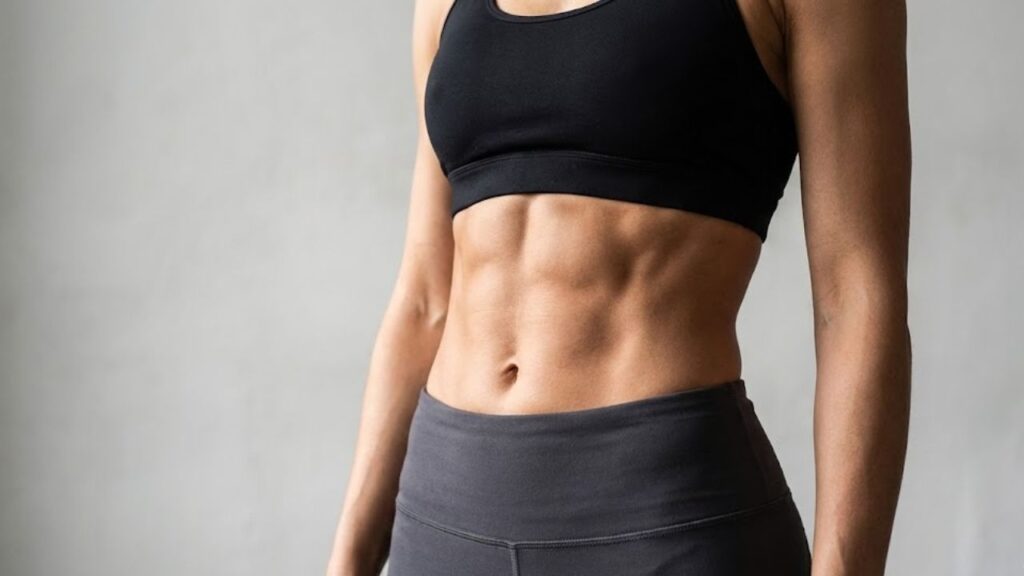
If you are tired of sit-ups or just want an ab workout that targets your entire core, this eight-move routine from 53-year-old personal trainer and mother of two Caroline Idiens is a great option. Even better, you only need a yoga mat and a pair of light dumbbells. This type of session works well for this time of year when you might be traveling or staying with family or dealing with gym closures. Core workouts are some of the simplest strength sessions to do from home because they need very little equipment. It provides a good burn that feels satisfying. If you want an ab finisher after a gym session or just a quick workout Caroline’s eight-move routine covers everything. It has no sit-ups and is easy to follow and delivers a serious burn.
Caroline’s Core Circuit Workout Overview
Caroline’s circuit features eight core-focused exercises performed continuously, one after the other. Each move is done for 50 seconds, followed by a short 10-second rest before transitioning to the next exercise. This structure keeps your heart rate elevated, increases calorie burn and challenges your abdominal muscles from multiple angles.

While the workout uses only light dumbbells and body weight, proper form is crucial. Slow, controlled movements ensure the correct muscles are activated and help prevent strain on the lower back.

Perform each exercise for 50 seconds with 10 seconds of rest in between. Complete one full round or repeat the circuit if time and fitness level allow.
Exercise 1: Weighted Crunch and Hip Curl
Lie on your back with knees bent and feet lifted off the floor. Hold a dumbbell in both hands, arms straight and extended behind your head. Engage your core and lift your shoulders off the mat as you crunch your upper body toward your knees. Simultaneously curl your hips upward, drawing your knees closer to your chest. Slowly lower back down with control, keeping your abs engaged throughout.
Expect to feel this in your deep core muscles. This slow, controlled movement builds stability without placing stress on the lower back.
Exercise 2: Dead Bug with Dumbbell
Lie on your back with arms extended toward the ceiling, holding dumbbells in both hands. Bend your hips and knees to 90 degrees so your shins are parallel to the floor. Brace your core and press your entire spine firmly into the mat. Slowly extend your left arm overhead while straightening your right leg away from your body. Pause just before your heel touches the floor, return to the start, then switch sides with control.
Expect to feel this in your transverse abdominis, rectus abdominis, obliques and hip flexors.
Exercise 3: Alternating Straight-Leg Raises
Lie on your back holding a single dumbbell above your chest with arms straight. Press your lower back firmly into the floor and slightly tilt your pelvis. Lift your right leg to roughly 60 degrees while keeping the left leg hovering just above the mat. Lower the raised leg without touching the floor, then switch sides. Keep both legs straight and your core tight throughout.
Expect to feel this mainly in your obliques, the muscles running along the sides of your waist.
Exercise 4: Seated Russian Twist
Sit on the floor with knees bent and feet flat. Hold a dumbbell in both hands and lean back until your torso forms approximately a 45-degree angle. Lift your feet off the floor, creating a V-shape with your body while keeping knees bent. Holding the dumbbell in front of your chest, rotate your torso to one side, then through the center to the opposite side. Maintain a long spine and keep your legs as still as possible.
Expect to feel this in your superficial core muscles, particularly the rectus abdominis, along with a gentle hamstring stretch.
Exercise 5: Toe Reach
Lie on your back with arms by your sides, palms facing down. Slowly straighten your legs so they point straight up above your hips. Reach your right hand upward as you exhale, lifting your shoulders off the mat toward your toes. Inhale as you lower with control. Alternate hands, keeping your core engaged and movements steady.
Expect to feel this in your upper abs and hamstrings.
Exercise 6: Low Plank Knee Taps
Hold a low plank position on your elbows with your core braced and belly button drawn toward your spine. Without shifting your torso or hips, lower one knee to lightly tap the floor, then lift it back to plank. Alternate sides slowly, maintaining full-body tension throughout the movement.

Expect to feel this in your abs, shoulders and quads. Keeping hips level is key to maximum core engagement.
Exercise 7: Jackknife
Lie on your back with arms extended overhead. Brace your core and lift your legs off the mat, drawing them upward toward the ceiling. At the same time, bring your arms forward and lift your head, shoulders and upper back to meet your legs. Slowly reverse the movement to return to the starting position.
Expect to feel this in your rectus abdominis and deep transverse abdominis. This advanced movement also engages the hip flexors.
Exercise 8: Plank Pass
Start in a high plank position with hands gripping a pair of dumbbells directly under your shoulders. Engage your core and glutes to form a straight line from head to heels. Lift one dumbbell with your right hand and pass it underneath your body to the left side. Place it down, then use your left hand to pass the other dumbbell back to the right. Continue alternating, keeping hips stable and minimizing rotation.
Expect to feel this in your shoulders, obliques and core as it challenges stability and coordination.
Beginner Modifications
If you are new to core training, extend rest periods or reduce work intervals to 30–40 seconds. The focus should always be on proper form and controlled execution rather than speed.
Why This Abs Routine Is Effective
While sit-ups can be useful, a strong and functional core requires variety. This workout targets deep stabilizing muscles responsible for posture and spinal support, including obliques for rotational control, rectus abdominis for visible strength and lower abs for pelvic stability.
By combining dynamic movements like dead bugs with stabilization exercises such as plank knee taps, the routine effectively challenges the entire core. As Caroline explains, building core strength is essential for balance, posture and everyday functional movement.
Does This Workout Build Visible Abs?
Visible abs don’t come from workouts alone. Sustainable results require a balanced approach that includes a nourishing diet, consistent physical activity, quality sleep and stress management. Consistency remains the most important factor.
Caroline emphasizes that once exercise becomes a habit, long-term results follow naturally.
Additional Training Recommendations
If time allows, adding compound exercises such as squats, overhead presses and deadlifts can further enhance strength. These movements support bone health and help preserve muscle mass as we age.
Caroline notes that muscle loss can begin around age 35, making resistance training vital for muscles, bones, brain function and heart health. Short, functional at-home workouts can be just as effective as long gym sessions when performed consistently.