
A slow line of silver hair and walking sticks moves around the lake, step counters blinking, arms swinging with quiet resolve. Some walkers move easily, chatting about grandchildren and family plans. Others grit their teeth with every step, refusing to abandon the habit their doctor encouraged years ago.

Watch closely and something unusual stands out. Two men, both over 70. One appears frail and cautious despite his daily walk. The other moves with ease, as if his body still answers him. They aren’t doing the same thing at all. The difference isn’t distance or steps. It’s how well their bodies still remember how to move.
 Best Cleansing Balms for All Skin Types How They Work Key Ingredients and Proper Usage Tips
Why Daily Walking Loses Its Power After 70
For decades, the advice has sounded reassuringly simple: walk every day. It’s gentle, safe, and easy to track. Yet many older adults who walk faithfully don’t look stronger month after month. They often just look more careful.
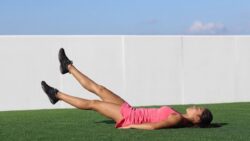
Walking mainly trains a very narrow movement pattern. It’s forward motion, one speed, flat ground, repeated endlessly. It supports heart health and mood, yes. But joints, balance, and fast-reacting muscles are barely challenged.
Take Denise, 74, who proudly hits 8,000 steps a day on her smartwatch. She loops the same familiar block near her building, even in bad weather. When her daughter suggested traveling abroad, Denise hesitated. “What about stairs? What if there’s no elevator?”
One icy winter morning, she slipped stepping off a curb she’d navigated countless times. Her hip survived, but her confidence didn’t. Her doctor later explained, “Your walking helped your health. But your body stopped practicing the unexpected.”
The Quiet Abilities We Lose Without Noticing
Our bodies adapt to what we repeat. When movement is limited to flat, forward walking, we slowly lose the ability to twist, reach, lower ourselves, or recover from a stumble. This decline doesn’t announce itself loudly. It whispers.
You feel it when standing up from a low car becomes a struggle. Or when getting down to play with a grandchild suddenly feels risky. Walking still matters, but it’s just one chapter in a much larger movement story.
After 70, healthspan isn’t about how far you move, but how many ways you can still move without fear.
The Movement Pattern That Protects Independence
The most powerful pattern after 70 isn’t more cardio or heavier weights. It’s something simpler and far more practical: getting up and down from different heights, several times a day.
This is your vertical range. Moving from floor to standing, from a low chair to upright, from a step back to the ground. This single pattern blends strength, balance, flexibility, and coordination in one motion.
It’s the movement that helps prevent falls, reduces hospital stays, and eases the fear of being stuck. And it requires no gym, no machines, no membership. Just gravity and a stable surface.
A Simple Daily Routine That Works
Luis, a 79-year-old retired carpenter, practices this quietly at home. No treadmill. No weights. Just his living room and steady determination.
Twice a day, he follows a short sequence. He sits on a sturdy chair and stands up, then sits again, five times. He repeats the same from a sofa, another five repetitions. Finally, using a cushion and a coffee table, he practices going from kneeling to standing three slow times.
The entire routine takes less than seven minutes. Within six months, the stairs to his third-floor apartment felt less like a threat and more like a warm-up.
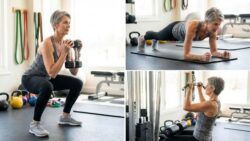
Why “Up and Down” Movement Is So Effective
Every controlled rise and descent forces your body to coordinate legs, hips, core, and balance together. You’re not just exercising; you’re rehearsing the exact movements needed to get off the floor, rise from bed, or stand from the toilet without strain.
Your thigh muscles learn to react faster. Joints revisit deeper, safer angles instead of locking at ninety degrees. Your brain keeps practicing the tiny corrections that turn a stumble into a recovery.
You don’t need perfection. Even practicing this three or four days a week can protect years of independent living.
How to Practice Safely at Any Age
Begin where you are, not where you think you should be. If the floor feels impossible, start with the highest surface you can manage comfortably, such as a firm chair, bed edge, or stair step.
Sit with your feet flat, slightly behind your knees. Lean your chest forward, press through your feet, and stand up, using your hands only if needed. Lower yourself slowly, as if the seat were fragile.
Perform five to eight repetitions, once or twice daily. Rest freely between attempts. If it becomes easy, lower the surface slightly the following week.
Avoid rushing or turning this into a challenge. The goal at 70, 80, or 90 is calm control and joint safety, not proving strength.
Using Support Without Shame
Tables, counters, rails, and furniture are tools, not weaknesses. Adjust heights if knees complain. Pause and breathe if dizziness appears. Listen to your body’s signals without abandoning movement altogether.
“After my stroke at 72, I was terrified of falling,” says Marie, now 81. “I practiced standing up and sitting down endlessly. Six months later, I realized I’d stopped planning my life around handrails.”
Building a Gentle Progression
- Chair to standing: 5–10 slow repetitions, hands allowed
- Low sofa or bed to standing: 3–8 controlled repetitions
- Kneeling to standing: Use cushions and support, 2–5 attempts
- Floor to standing: Rise in stages using the safest route
- Step-ups: Lowest stair, 5 repetitions per leg with support
From Counting Steps to Preserving Abilities
Imagine a check-up that asked not only about blood pressure, but also: Can you get off the floor alone? Can you stand up repeatedly without stopping? These answers predict long-term independence better than any fitness tracker.
Healthspan after 70 is about staying capable. Sitting on a bench is pleasant. Walking there, standing up again, and choosing the longer route home because you feel steady is a different kind of freedom.
Shift the focus from guilt about exercise to curiosity about abilities you want to keep. Each “up and down” session is a quiet investment in those futures.
Key Takeaways
- Train up-and-down movements: Builds strength, balance, and independence together
- Start at your current level: Reduces fear, pain, and the risk of quitting
- Focus on abilities, not steps: Directly protects autonomy and quality of life after 70
