
You grab your usual exfoliating scrub that smells like vacation and has small grains you can feel on your skin. You rub it in circles on your cheeks and spend extra time on your nose and chin because you think it will help your pores. Then you rinse and expect your skin to look perfect like the product claims. But your face feels tight & almost squeaky clean. It looks smooth for a moment but then turns a bit red & strangely shiny. Your makeup sticks to dry spots that appeared out of nowhere. So the next night you do it again and scrub even harder because you want to remove the rough texture & dull appearance and small bumps. This is when something that feels good starts causing problems without you realizing it.
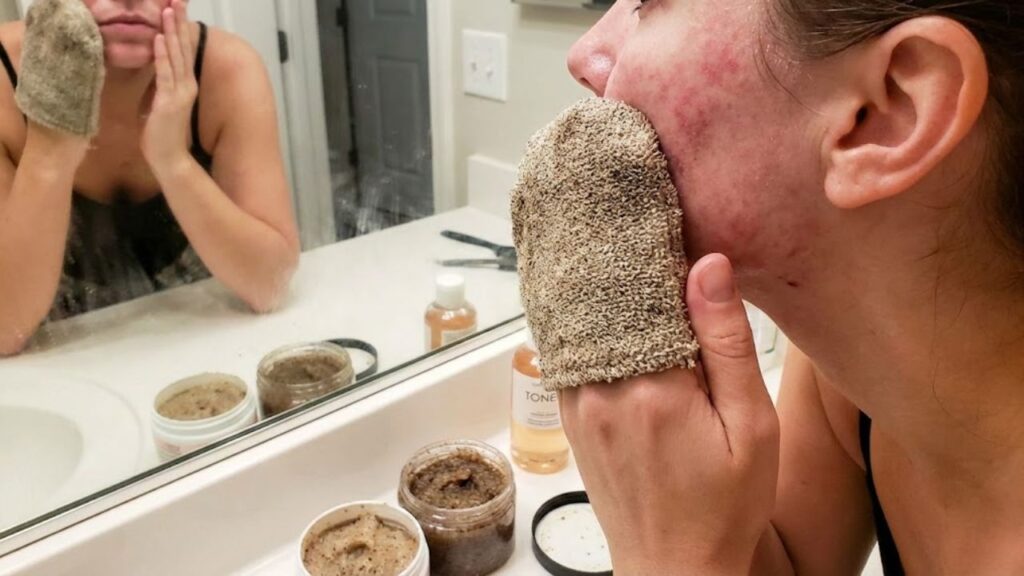
The exfoliation habit that backfires
The common habit that weakens skin instead of smoothing it is exfoliating too often & too hard with the wrong tools. Most people think they are just scrubbing until their skin feels clean or using a peeling toner every night because social media promised them glowing skin. What seems like good skincare is actually slowly damaging your skin’s protective barrier. The damage does not appear immediately. It shows up as increased sensitivity and tightness after washing your face. You might notice redness that does not go away or have a shiny forehead with a flaky nose at the same time. The more you try to make your skin smooth this way the rougher it can actually become. A young woman visits a dermatology clinic in London on a Tuesday. She wears carefully applied makeup that does not quite hide her red skin. She tells the doctor her skin feels textured & dirty. She exfoliates every night with a grainy scrub and uses a peel mask twice a week plus a glow toner she bought online. Her phone contains many screenshots of influencers with perfect skin and before-and-after photos & lists of acids she should try.

Her own results look different. Her skin stings when she washes it and her foundation separates on her cheeks. She gets small breakouts in new places. She cannot understand why her skin feels worse when she works so hard on it. She is not alone in this problem. A study in the UK found more irritation reactions linked to overusing acids & scrubs in people under 35. The routine looks like proper skincare but the skin experiences it as damage. To understand why this happens you should think about your skin like a building structure instead of something that needs deep cleaning. Your outer skin layer called the stratum corneum works like a brick wall.

It has flat dead cells as bricks held together by fats as mortar. This wall protects your skin by keeping moisture inside and keeping out irritants and pollution and germs. Exfoliation should gently remove a few loose bricks from the surface. Over-exfoliation tears at the mortar and removes too many bricks at once. Physical scrubs with sharp particles create tiny tears you cannot see but can feel as roughness & stinging. Using strong acids or peel pads every day makes the barrier thinner & leaves nerves and blood vessels more exposed.
How to exfoliate without wrecking your skin
The solution is not to stop exfoliating completely but to treat it like caffeine. It is powerful & useful but can cause problems if you overdo it. The best approach is to move away from scrubbing until your skin feels smooth and instead focus on minimal & gentle exfoliation. For most people with normal skin this means exfoliating one to three times per week instead of every night. Replace rough scrubs with gentler alternatives like enzyme powders or lactic acid toners with low concentrations or chemical exfoliants made for sensitive skin. Let the product do the work rather than applying pressure with your hands. Use your fingertips lightly as if you are spreading cream on a balloon rather than scrubbing a pan. A slight tingling sensation for a few seconds can be normal but burning or itching is a warning sign. Many dermatologists share a simple rule. If your foundation clings to dry patches the answer is more moisture rather than more exfoliation. This means combining any exfoliation with something soothing and nourishing like a fragrance-free moisturizer with ceramides or glycerin or panthenol or squalane. Healthy skin does not come from stripping away layers but from maintaining a strong and hydrated barrier.
One woman I spoke to who was 29 thought her weekly self-care routine should include a hot shower followed by a salt body scrub and a face scrub and a clay mask and then an AHA peel. Her legs burned after shaving and her cheeks turned red in cold weather & every product labeled for sensitive skin still caused stinging. When she stopped all exfoliation for three weeks and only used gentle cleansing & a thick cream people started asking what she had done to look so rested. Sometimes the most effective routine is the one that feels surprisingly simple. Let’s be honest. Nobody actually does this every day despite what perfect routines on social media suggest. Most of us rush through our routine or overuse one product to compensate for skipping another and then blame our skin when it reacts badly. Skin follows a logic that does not match our desire for instant results.
Skin renews itself roughly every 28 days and this happens faster when you are younger and slower as you age. When you exfoliate aggressively every night you are not helping this natural cycle but interrupting it. The cells do not have enough time to mature properly before they are removed which is why the surface can start to look shiny and thin and almost plastic-like. Barrier damage is not always obvious. It can show up as a persistent feeling that everything tingles now or that your cheeks react to the same moisturizer you have used for years or that the sun feels harsher on your face than it used to. Over time repeated inflammation can make redness more permanent & trigger flare-ups of rosacea or eczema & leave the skin less resilient overall. The habit that feels like taking control of your skin by scrubbing and peeling and chasing that perfect result actually removes the one thing you need for long-term healthy skin. That thing is a calm & functional barrier that does not react every time you touch it.
The gentle routine that actually smooths
A good exfoliation routine begins with doing less. Start by keeping only one exfoliating product in your bathroom at a time. Don’t use a scrub and a peel and a glow toner all together. Choose just one option:

either a gentle chemical exfoliant like lactic acid at 5-10% concentration or polyhydroxy acids or a mild BHA. You could also use a very soft scrub with smooth rounded particles but only occasionally. Apply your chosen exfoliant at night on clean dry skin. Use it only two or three nights each week.
Afterward apply a simple moisturizer without fragrance or strong active ingredients. Just use something that supports your skin barrier. On the nights when you don’t exfoliate keep everything simple. Just cleanse your face and add hydration. You might use a serum with niacinamide or hyaluronic acid & then apply your cream. Your skin needs consistency more than it needs complicated steps. What you avoid after exfoliating matters just as much as what you do. Don’t use hot water or facial cleansing brushes right after.
Don’t apply vitamin C or retinoids in the same routine unless your skin already handles them well and a professional has advised you to do so. Think of your newly exfoliated skin as more sensitive than usual. It still has protection but it feels everything more intensely. If you notice your skin feels tight in the morning or looks redder than normal or has that overly clean feeling then treat it carefully. Stop all exfoliation for at least one week. Use only gentle products like milk or gel cleansers and thick cream. Apply SPF 30 or higher every morning.
This simple break often improves your skin texture better than more exfoliating would. There’s also an emotional side to exfoliating. Many people feel their skin needs to be fixed or scrubbed into smoothness. On difficult days scrubbing extra hard around your nose might feel like taking control. On better days being gentle with your skin can feel strangely vulnerable.
A new way to think about “smooth” skin
Once you understand what over-exfoliation looks like you notice it constantly. You see the shiny tight cheeks on a coworker who uses daily peel pads. You notice the friend whose forehead stays slightly pink all the time. You hear the influencer mention that their skin hurts after applying their fifth product. It feels oddly reassuring to realize your skin isn’t damaged but simply exhausted. A barrier that has been stripped too frequently can heal if you allow it proper time and treatment. This often means stopping your most exciting products and switching to boring ones like basic cleansers & thick moisturizers and daily sunscreen. It might also mean questioning why being harsh with your skin sometimes feels more normal than being gentle. Gentleness doesn’t stand out among crowded bathroom shelves. It means skipping a scrub when your face feels sensitive. It means using three products instead of eight. It means resisting that new acid toner even when you want to try it. When you make those choices you aren’t being careless about skincare. You’re doing something your skin cannot do alone by telling it that constant fighting isn’t necessary.

| Point Clé | Détail | Intérêt pour le Lecteur |
|---|---|---|
| Le vrai problème | Exfoliation excessive ou trop agressive affaiblit la barrière cutanée | Comprendre pourquoi la peau devient rouge, sensible, brillante ou granuleuse |
| La bonne fréquence | Limiter l’exfoliation à 1–3 fois par semaine avec des produits doux | Réduire les irritations tout en conservant une peau lisse et confortable |
| Le réflexe gagnant | Associer chaque exfoliation à une hydratation riche et apaisante | Retrouver un teint uniforme sans fragiliser la peau à long terme |
