When you purchase through links on our site we may earn an affiliate commission. Here’s how it works.
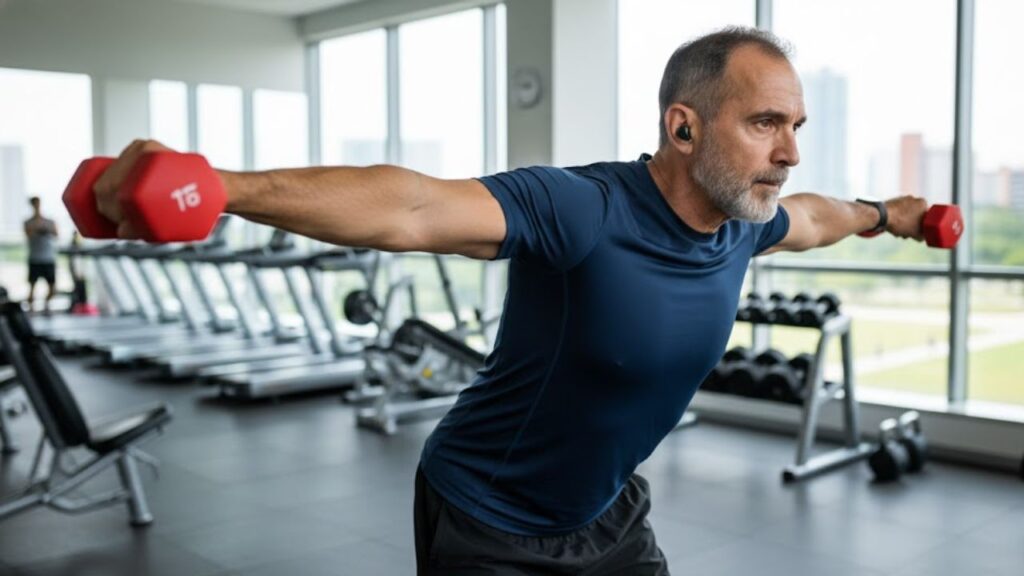
I admit that I can be a bit pushy when it comes to giving my parents exercise advice. There are five strength exercises that I regularly encourage my loved ones to do so they can stay strong & mobile as they get older.
You don’t need much equipment to do these exercises but I would suggest investing in a good set of kettlebells or adjustable dumbbells. This allows you to increase the resistance as you build strength over time. The ability to adjust the weight means the exercises will continue to challenge you since you can modify the load and the number of repetitions and sets based on your fitness level.
If you’re ready to get started you can check out the exercises and their benefits below.
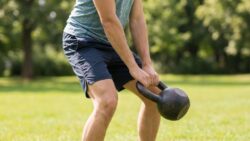
Your calf muscles play an important role in keeping your lower body joints stable & they help you walk and run by pushing you forward. The tip-toe farmers walk is different from calf raises because it requires you to stay up on the balls of your feet the entire time you walk. This keeps your calf muscles contracted throughout the exercise.
I recommend using lighter weights for this movement because your balance will be tested and you need to keep your body stable. This variation activates the smaller stabilizer muscles throughout your body including your core muscles. The technique involves walking at a consistent pace while holding two weights at your sides as shown in the video above. Then you lift up onto the balls of your feet and keep walking in that position. If you are just starting out you can switch between normal walking and tip-toe walking. When you feel more comfortable you can progress to walking on your tip-toes for the full distance.
Prisoner Squats: A Full-Body Mobility Challenge Prisoner squats work your upper body more than regular squats while testing how well your thoracic spine can move. They also challenge the flexibility of your hips and the range of motion in your knees and ankles. All of these elements work together to help you maintain an upright position as you lower yourself down. Many people have a tendency to lean forward when they squat. This forward lean usually indicates limited mobility in key areas of the body.
Prisoner squats are done by placing your hands gently behind your head as you squat down. Focus on pressing your weight into your heels & keeping your chest lifted while lowering your hips as close to the floor as possible. Occasionally I add variety by having people push their hips backward at the lowest point of the squat and then lean forward from the hips until their chest becomes parallel with the floor. This position resembles the bottom part of a good morning exercise and effectively works the hamstrings. Make sure to return to the regular squat position before standing back up. When you build more strength you can add challenge by wrapping a resistance band around your thighs or holding a weight behind your head.

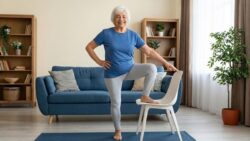
Split squats work well for beginners who struggle with lunges because you keep your feet in one position instead of stepping forward or backward with each repetition. This makes it much easier to stay balanced. You start by placing your legs in a split stance and then lower your back knee toward the floor before pushing yourself back up to the starting position. After you get comfortable with both feet on the ground you can try putting your back foot on an elevated surface. This makes the exercise harder and targets your glutes more effectively. Adding weights to each hand can actually help with balance while also increasing the challenge for your leg muscles. This extra resistance makes the lower body work harder during the movement. One effective technique is to slow down the lowering portion of the movement and then push up quickly. Taking three to four seconds or longer to lower yourself creates more time under tension for your muscles. This approach builds stronger legs and glutes efficiently. If you want to emphasize your glutes even more you can lean your torso slightly forward while maintaining a straight back throughout the exercise.
Pike push-ups work your shoulders and triceps by using your own body weight in a vertical position. Think of it as doing an overhead press while upside down. You don’t need any equipment for this exercise and it challenges your upper body strength along with your hamstring and shoulder flexibility. Begin by getting into a downward dog position and move your hands and feet a bit closer to each other. Then shift your weight forward while keeping your hips elevated. Remember that this is different from a regular push-up so try to maintain a vertical angle. Lower the top of your head until it lightly touches the ground just ahead of your hands. Push yourself back up to the starting downward dog position.
Overhead squats work your upper body more than prisoner squats and challenge your thoracic mobility and squat depth. Keep your chest up and back straight while holding your arms locked overhead near your ears.
Start with bodyweight or light weights. I have my clients hold a barbell plate with both hands. For a harder version try holding weight in just one hand to challenge each side of your body separately.
Maintain an upright torso as you squat and distribute your weight evenly through your feet using the tripod position. This means pressing through three points: your heels and your big toes and little toes. Watch out for your knees caving inward and your chest leaning forward. Gradually try to squat lower over time. Picture yourself holding a tray of drinks overhead that you need to keep steady.
Sam Hopes works as a level 3 qualified trainer & holds a level 2 Reiki practitioner certification. She serves as the fitness editor at Tom’s Guide and is currently completing her Yoga For Athletes training course. Throughout her career Sam has contributed to numerous fitness brands and websites. She has worked with several Future brands including Live Science, Fit&Well Coach & T3. Her background includes coaching at fitness studios such as F45 and Virgin Active where she worked as a personal trainer. These days Sam focuses mainly on teaching outdoor bootcamps and specializes in bodyweight training, calisthenics and kettlebell workouts. She teaches mobility and flexibility classes multiple times each week. Sam believes that genuine strength develops through a comprehensive approach to physical training. Sam has participated in two mixed doubles Hyrox competitions held in London & the Netherlands. She completed her first doubles event with a time of 1:11.